Kentucky’s 201 KAR 9:270 is a barrier to lifesaving care

If a medication prevents overdose deaths,
and a regulation prevents treatment with that medication,
then removing that regulation will save lives.
The lifesaving medication is buprenorphine.
The barrier regulation is 201 KAR 9:270.
So why is 201 KAR 9:270 still on the books?
On Monday, November 10, 2025, the Administrative Regulation Review Subcommittee (ARRS) of the Kentucky General Assembly will ask that question—again. It’s the same question they asked the Kentucky Board of Medical Licensure (KBML) in October, when they urged the Board to work with the many medical and community groups opposing the regulation and return with a compromise.
A Month Wasted
The record speaks for itself.
October 14, 2025 — ARRS Meeting Discussion
KBML President Dr. Thornbury told legislators:
“Mr. Chairman, I think what we’d like to do is work with you and the committee to help our colleagues come together if we can.”
October 16, 2025
Two days later, KBML declined a meeting and asked the Kentucky Society of Addiction Medicine (KYSAM) to submit written amendments instead.
October 24, 2025
KYSAM submitted a detailed 8,000-word, 10-page markup of 201 KAR 9:270, along with an email from KYSAM President Dr. Colleen Ryan extending an open invitation for continued collaboration.
October 31, 2025
No discussion. No dialogue. No compromise.
Instead, KBML submitted two inconsequential edits to its 3,000-word regulation:
• Page 3: deleting “a” and inserting “an”
• Page 7: replacing “best efforts” with “a good-faith effort.”
Honestly, was this a good-faith effort by the medical board?
Dismissive and Counterproductive
KBML’s response to ARRS is dismissive, perfunctory, and contrary to the spirit of collaboration. For two years, the Board has mechanically engaged with Kentucky stakeholders while refusing to seriously consider the overwhelming professional consensus opposing 201 KAR 9:270. Lives are at stake, yet this pattern of disengagement continues unchecked, raising urgent questions about KBML’s priorities.
A Regulation That Costs Lives
Every day, Kentuckians die from preventable overdoses. Buprenorphine is a proven, evidence-based treatment that dramatically reduces overdose deaths and supports recovery. Yet 201 KAR 9:270 erects unnecessary barriers that make it harder for physicians to prescribe and for patients to receive this lifesaving medication.
When bureaucracy stands between patients and proven treatment, people die.
On October 14, to the ARRS and a televised audience watching on KET (Watch the video at 1:17:28), KBML President Thornbury said the thinking part out loud when he qualified his testimony with:
I want the committee to understand, and
I UNDERSTAND HOW POLITICS IS.
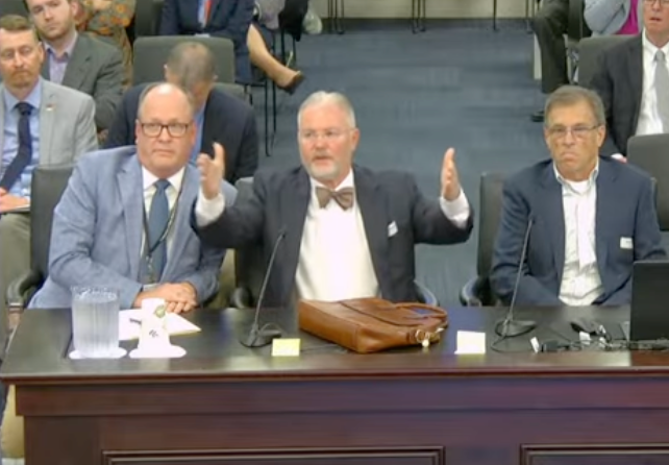
Well, I understand this: with so many Kentuckians dying needlessly every year, reforming this regulation isn’t politics—it’s a moral imperative.
A Call to the ARRS
On November 10, the ARRS will again consider 201 KAR 9:270. I cannot see how anyone in good conscience could support advancing such a deeply flawed regulation.
I respectfully urge the ARRS to return 201 KAR 9:270 to KBML with explicit instructions to engage meaningfully with the medical and addiction-treatment communities—and to seriously consider overhauling or repealing it in favor of a solution that saves, rather than costs, lives.
As ARRS Co-Chair Senator Stephen West said last month:
“My hope is that maybe after the discussions today there would be some possibility of compromise…the reason we’re even asking for this is we realize how very important this decision is…We need to get this right.”
Licensure Board, tear down that regulation — and let Kentucky’s clinicians save lives.
Dr. James Patrick Murphy, MD
Dr. James Patrick Murphy, Region X Director for the American Society of Addiction Medicine, is a Louisville resident and professor at the University of Louisville School of Medicine.
Learn more about this issue here: https://ket.org/program/kentucky-health/managing-the-disease-of-addiction/

 Confluential Truth