Weather the Storm with OPIOID

OPIOID Helps Caregivers Weather the Regulatory Storm

perfect-storm

Healthcare is engulfed in a torrent of regulations raining down upon caregivers. Nowhere is this more evident than in the delivery of pain care. Perhaps OPIOID is the way to weather this storm.

Allow me to explain…

Recently, I was talking with a sales rep from a drug screen lab, and our conversation naturally veered into a discussion about how states were beginning to require urine drug screens for patients receiving pain medication.

To a drug screen lab these regulations are like liquid gold.

But as easily as regulations are passed, they can be erased. And if the success of a lab is based on the existence of a regulation, then the business model is built on thin ice and for the wrong reasons.  If the regulations dry up, so does lab.

I’m a physician, and – like the lab – I expect compensation for what I do.

What I do is care for people by applying factual knowledge, energized by creativity, in accordance with evidence-based protocols, while remaining cognizant of the mysteries still misunderstood and the mysteries awaiting discovery. It’s a marriage of science and art.

I know that following regulations goes along with the territory. But following regulations does not make me jump out of bed every morning with passion and determination. A regulation never delivered a baby, bypassed a clogged artery, or discovered a cure. People do these things.  People need these things. I’d rather work for people than a regulation.

The delivery of pain care is perhaps the most regulated activity in medicine. And depending on the state, the regulations can seem foreboding to the caregiver.  The message is clear. Either get on board or the Board will get on you.

The thought of abandoning our suffering patients out of fear is bitter. The thought of losing our licenses is chilling. And the thought renouncing our calling as patient advocates to blindly follow regulations we don’t even understand…  is demoralizing.

It doesn’t have to be this way.

Remember my lab rep? My advice to her was to go back to her supervisors and suggest that they promote their product primarily as a means to help patients by helping prescribers. Then they would be serving the best interest of millions of people, as opposed to serving at the pleasure of a few hundred lawmakers. In other words, make improved quality of life the real goal – not adherence to regulations.

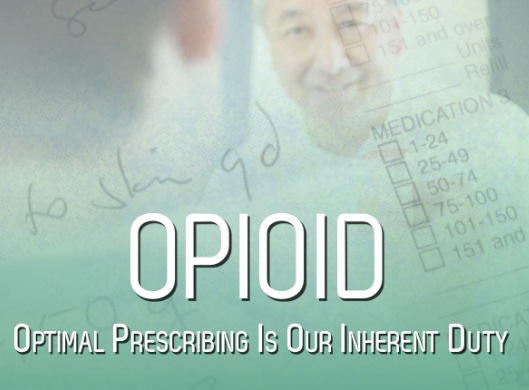
OPIOID picture

That’s what OPIOID is all about.   OPIOID means Optimal Prescribing Is Our Inherent Duty – a seminar conceived by physicians, approved by Kentucky’s Medical Board, and produced by the Greater Louisville Medical Society in association with the University of Louisville – February 7 – 9, 2014.   The goal of OPIOID is to empower prescribers to optimally care for suffering patients and adhere to the governing regulations.  People can register by email: physician.education@glms.org or call: 502-736-6354 or visit online at: https://www.glms.org/Home.aspx (and click on the “OPIOID” tab).

OPIOID is a prime example of caregivers holding steadfast to their calling in the regulatory storm.  Please spread the word. Together we can weather this.

rainbow-500x375

James Patrick Murphy, MD, MMM

January 26, 2014

Note: This article was first published January 27,2014  on http://www.drjohnmdthe blog by John Mandrola, M.D.


The Urgent Need for OPIOID

two tangential universes: therapeutic and pathologic

tangential u darko

In the therapeutic universe suffering is relieved, lives are enhanced, and hope is restored. Central to this universe are the pain care needs of 100 million suffering Americans.

In the pathologic universe suffering is unleashed, lives are enslaved, and hope is shattered.  Ruler of this realm is drug abuse – now killing even more Americans than automobile accidents.

Common to both universes is the prescriber – and the tangent point is OPIOID.

OPIOID picture

OPIOID means Optimal Prescribing Is Our Inherent Duty – a seminar conceived by physicians, approved by the medical board, and produced by the Greater Louisville Medical Society in association with the University of LouisvilleFebruary 7, 8 & 9.

American Medical Association Board Chair (and Kentuckian) Steven J. Stack, MD says:

Physician education on responsible opioid prescribing is a critical element in addressing the epidemic of prescription drug abuse.

Todd Cook, MD, Chief Medical Officer of St. Elizabeth Physicians (Northern Kentucky) says:

This is one of the times when sending a responsible party proactively may provide a great return on the investment for all of us.

Participants in this two and a half day course will gain insight on how to: (a) best prescribe controlled substances for chronic pain, (b) minimize the risks of drug abuse, and (c) safeguard their communities. These goals are achieved through lectures, coaching sessions, and face-to-face interaction with individuals battling addiction.

louisville skyline

Louisville is a point shared by two states (Kentucky & Indiana) that, like many other states, have recently enacted laws to address prescription drug abuse. When such well-meaning laws give legitimate prescribers the chills, a dose of OPIOID is the right prescription.

Finally, an OPIOID epidemic we can all get behind.

Please make it contagious. Pass along this info, refer someone, or even better – sign up yourself.

OPIOID  February 7 – 9, 2014

Register by

Email: physician.education@glms.org

Or call: 502-736-6354

opioid tab

Or visit online at: https://www.glms.org/Home.aspx (and click on the “OPIOID” tab).


enterprise

Boldly go where no prescriber has gone before.

Take back your universe.

take back universe

OPIOID

James Patrick Murphy, MD, MMM  is President of the Greater Louisville Medical Society.

rx and pen and pad

NIDA & the Facts on Marijuana

The National Institute on Drug Abuse Offers the Facts on Marijuana

NIDA1

From the website:

http://www.drugabuse.gov/publications/drugfacts/marijuana

marijuana-smoker1

Marijuana…

Use is rampant:

“Marijuana is the most common illicit drug used in the United States.”

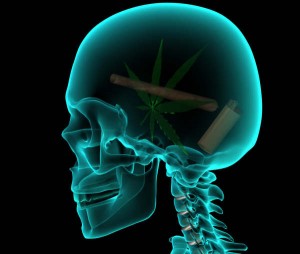
brain damage

Has a powerful effect on the brain:

“Marijuana overactivates the endocannabinoid system, causing the high and other effects that users experience. These include distorted perceptions, impaired coordination, difficulty with thinking and problem solving, and disrupted learning and memory.”

Interferes with successful lives:

“Heavy marijuana users generally report lower life satisfaction, poorer mental and physical health, relationship problems, and less academic and career success.”

Damages the brains of young people:

“Research from different areas is converging on the fact that regular marijuana use by young people can have long-lasting negative impact on the structure and function of their brains.”

Permanently lowers IQ:

“A recent study of marijuana users who began using in adolescence revealed a profound deficit in connections between brain areas responsible for learning and memory. And a large prospective study (following individuals across time) showed that people who began smoking marijuana heavily in their teens lost as much as 8 points in IQ between age 13 and age 38; importantly, the lost cognitive abilities were not restored in those who quit smoking marijuana as adults.”

Causes heart disease:

“Marijuana raises heart rate by 20-100 percent shortly after smoking; this effect can last up to 3 hours. In one study, it was estimated that marijuana users have a 4.8-fold increase in the risk of heart attack in the first hour after smoking the drug.” 

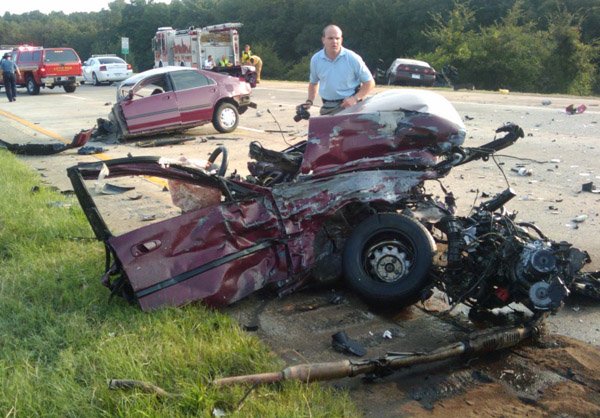
car wreck

Causes car wrecks:

“A recent analysis of data from several studies found that marijuana use more than doubles a driver’s risk of being in an accident.”

Damages the lungs:

“People who smoke marijuana frequently but do not smoke tobacco have more health problems and miss more days of work than nonsmokers, mainly because of respiratory illnesses.”

Causes psychiatric illness:

“A series of large prospective studies also showed a link between marijuana use and later development of psychosis. Associations have also been found between marijuana use and other mental health problems, such as depression, anxiety, suicidal thoughts among adolescents, and personality disturbances.”

fetus

Damages babies:

“Marijuana use during pregnancy is associated with increased risk of neurobehavioral problems in babies. Consequences for the child may include problems with attention, memory, and problem solving.”

Medical-Cannabis

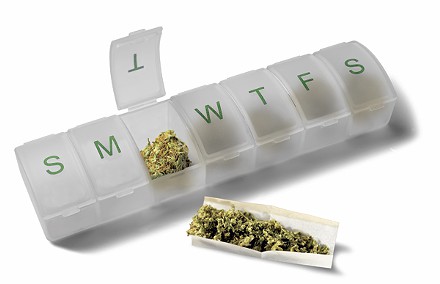
Is NOT a legitimate medicine:

“The FDA requires carefully conducted studies in large numbers of patients (hundreds to thousands) to accurately assess the benefits and risks of a potential medication. To be considered a legitimate medicine, a substance must have well-defined and measureable ingredients that are consistent from one unit (such as a pill or injection) to the next.”

Is definitely addictive:

“Contrary to common belief, marijuana is addictive. Estimates from research suggest that about 9 percent of users become addicted to marijuana; this number increases among those who start young (to about 17 percent, or 1 in 6) and among daily users (to 25-50 percent).”

And is more potent that ever:

“The amount of THC in marijuana samples confiscated by police has been increasing steadily over the past few decades.”

Read more:  http://www.drugabuse.gov/publications/research-reports/marijuana-abuse

drug facts week

Leadership Louisville Comes to The Old Medical School

old school now

On January 7, 2014 the current Leadership Louisville class met at the Greater Louisville Medical Society Foundation’s “Old Medical School Building.” Here is a portion my welcome…

white coat

There is a lot of history in this room.

old_military at med school

The building was opened as a medical school in 1893 and has withstood The Great Depression, floods, two world wars, and the wrecking ball. It stands as a testament to the passion, resiliency and dedication of the medical profession. Today Leadership Louisville adds to that legacy.

Your director, Aaron Miller, asked me if I was “glad to be standing on this side of the podium” since I was a member of last year’s Leadership Louisville class.

“Sure,” I said. But I also enjoyed my time sitting in front of the podium in 2013. My days with Leadership Louisville were great. It was fantastic hanging out with dynamic people, focusing on topics relevant to the success of our city, making new friends outside of my medical cocoon, and taking a break from my cell phone to engage personally with diversely talented people.

So, why here? Why today?

In the last decade Louisville has shifted from an industrial to a service economy; with an emphasis on health care delivery. In fact, six of Louisville’s ten largest employers are in health care.

The Greater Louisville Medical Society is out in front of this transformation.

Our success is tied to our mission: “…to promote the art and science of medicine; to protect the patient-physician relationship; and to ensure the health of our community.” This journey is comprised of advocacy, education, creativity, mission work, public health, and philanthropy.  Our vehicle is our organization. Our structure is built by bonds of trust.  And our engine is fueled by our passion.

There are many illustrations of our commitment to this mission. These include the cutting-edgePulse of Surgery” program for students at the Louisville Science Center; the world-renowned Healing Place Addiction Recovery program; Supplies Over Seas, sending life-saving medical supplies and equipment to impoverished countries; and the OPIOID safe prescribing initiative, combatting prescription drug abuse. These and other efforts were born of GLMS member collaborations.

There is one program in particular of which you should take note – our “Wear the White Coat” internship program. Every year we team community leaders with physicians from various specialties and allow them to spend a day walking in the shoes of a physician. Later the group reconvenes in the very room you are in now to share. We physicians learn as much from our “interns” as they learn from us. At the end, everyone feels connected, hopeful and inspired.  Each of you will be invited this year.

old school postcard

So, there is a lot of history in this room. But there is a lot of future too.

Thanks for being here and being a part of that future.

 me and business with the residents

James Patrick Murphy, MD, MMM is President of the Greater Louisville Medical Society, Medical Director of Murphy Pain Center, and Assistant Clinical Professor at the University of Louisville School of Medicine. He is an alumnus of the Leadership Louisville Class of 2013. On his application to Leadership Louisville, he answered the question: “What is the best kept secret about Louisville?” with The Greater Louisville Medical Society. If you are reading this, hopefully it is not a secret any longer.

Is This Future Unstoppable?

Recently I sent an email asking people to describe where they see medicine heading in the next ten years. Most responses were pretty bleak: long lines, rationing, impersonal care, managing populations instead of individuals, physicians being absorbed as simply cogs in a large machine.

Is this future unstoppable?

floating granite ball

It reminds me of this huge granite sphere outside the Ripley’s Believe It or Not Museum in Gatlinburg. It’s extremely heavy and is rotating with tremendous momentum on a fountain of water.  There are always people putting their hands on the slick ball of rock trying to spin it faster or slow it down. But the rock is too heavy with too much inertia.  I want you to remember that image. We’ll come back to that.

Dave Logan is a professor at the University of Southern California Marshall School of Business.  He taught me many things but perhaps nothing as practical as this tip on how to answer to any question and seem enlightened. You know the scene; you are standing in that semicircle, pretending to be engaged in the conversation. But your mind is on basketball recruiting, your sixteen year old driving on her new license, what you are going to get your wife for your tenth anniversary next week. And then you suddenly realize the conversation has stopped and everyone is looking at you, because you‘ve just been asked: “And what do you think about that?”

Instead of panicking, Dave said to look off in the distance, take a sip of your drink, a deep breath, look the person right in the eye and say, “It all comes down to trust and communication.”  I’ve actually used that line.  It does work, because it’s true.

Let’s talk about trust.

When my son was three years old, he needed a pretty big surgery. Since I am an anesthesiologist I got to go back to the OR and hold him as he went to sleep. As I placed that mask over his face for him to breathe the gases, as he looked right at me, the trust he had in me was overwhelming. And when he was asleep, and I gave him to the anesthesiologist, Steve Auden, I had entrusted him with what was most precious in my life.

Time and again we are privileged and honored with the opportunity to hold the lives of our patients in our hands. And no matter what you do in this profession, there is always a doctor-patient relationship.  It is based on trust, it is sacred, it is worth fighting for, and it is in jeopardy unless we unite and lead.

Physician leadership is powerful.  And our leadership is not just needed in the boardrooms of the private sector. It is needed were our laws are made.  I am not here to debate the merits of things like Affordable Care Act, Kentucky’s House Bill One, the Optometrist Bill, and others.  I will tell you that I am not comfortable with the way these laws affecting health care are passed.  Are you?

We need to be there to defend the rights of our patients – in the boardrooms, in the executive suites, in Frankfort, in Washington. Like my son, trusting me with that anesthesia mask over his face, our patients, our loved ones, our neighbors, our city, our state, our country, our world trusts us.  They count on us to be there.  They assume we are there.  And we can’t let them down.

The Greater Louisville Medical Society offers leadership development opportunities that can help you feel comfortable in your own skin when you might be outside your comfort zone. My experience is a prime example of how this works. In 2002, Dr. Fred Williams asked me to take over the medical student mentoring program. I enjoyed it. This led to my being asked to run for secretary.  Later, Dr. Rob Zaring arranged a leadership class at GLMS with the American College of Physician Executives, which got me interested in their other courses. Then on this past Friday I graduated from USC with a Masters degree in Medical Management.  And today I begin the journey as your president.

So how in the world do we change things?

We have to be united and effective.

Another valuable lesson from Professor Logan is from his book titled Tribal Leadership. In it he talks about the evolution of effective organizations or “tribes.” A level one tribe would wear t-shirts that say, “Life sucks.” They are like cave men or prisoners.  A level two tribe has t-shirts that say, “My life sucks.” Picture the DMV on a bad day.  A level three tribe says, “I’m great and you’re not”.  This is how too many professional organizations operate. The focus is on getting ahead, awards, and accolades. It is very competitive.  The jump from “I am great” to “WE are great” is huge. This is a level four tribe. Level four tribes share common values and have focus. For these tribes the sky is the limit.

When I was accepted into the pain fellowship program at the Mayo Clinic, I was at first intimidated. Did I measure up? Was I good enough? How would I stand out?  One day, during my first month, Dr. Ronald MacKenzie stopped me in the hall to see how things were going. After a little small talk, he asked, “Do you know what makes this place great?”  I expected him to quiz me about the many discoveries and Nobel prizes. And then he pointed over my shoulder to a janitor sweeping in the hallway. “It’s because that person, and everyone else who works here, believes what they do is important to our mission.”  That’s level four culture – the secret to the Mayo Clinic. It’s that simple.

Remember that huge granite ball spinning in front of the Ripley’s Museum? A couple of years ago I was standing across the street watching this little kid who was determined to stop that rock from spinning. He had both hands on the rock but nothing appeared to be happening. Eventually some other kids thought it looked like fun and started pushing the sphere as well. Nothing changed.  Eventually some teenagers came over and joined in.   Now there were kids on all sides of the rock. I could tell, even from across the street, that the spinning rock was beginning to slow down. Until it happened! The rock quit rotating, stopped, and then began moving in the other direction.

We have all that we need: ability, passion, work ethic, and trust. But we must be nimble, be flexible, able to improvise. We MUST BE UNITED. We can choose not to accept the future as inevitable. We can put our hands on that huge granite ball and start turning it back in the other direction.

The final passage of Rudyard Kipling’s poem “If” contains perhaps my favorite line of poetry:

If you can fill the unforgiving minute with 60 seconds worth of distance run,                                      yours is the Earth and everything that’s in it.

That unforgiving minute is now. It all comes down to trust and communication. We know we have the trust. We MUST communicate. We must unite. Here are the actions you can do today which will help unite us:

Number 1: Download the GLMS smartphone app now (members only).

Number 2: Follow me this year on TWITTER (@jamespmurphymd). If you don’t know, ask any teenager and they’ll walk you through it.

Number 3: Because communication is a two-way street, email me at president@glms.org and tell me what you want our future to look like.

If all else fails, call me (502-589-2001).

The Greater Louisville Medical Society is our organization, our tribe, our road to a place where medicine is both science and art, where our community enjoys wellness, and the sacred bond between us and our patients is secure.

Imagine that future. Let’s go there together. Let’s get connected. Let’s unite. Let’s start the journey today.

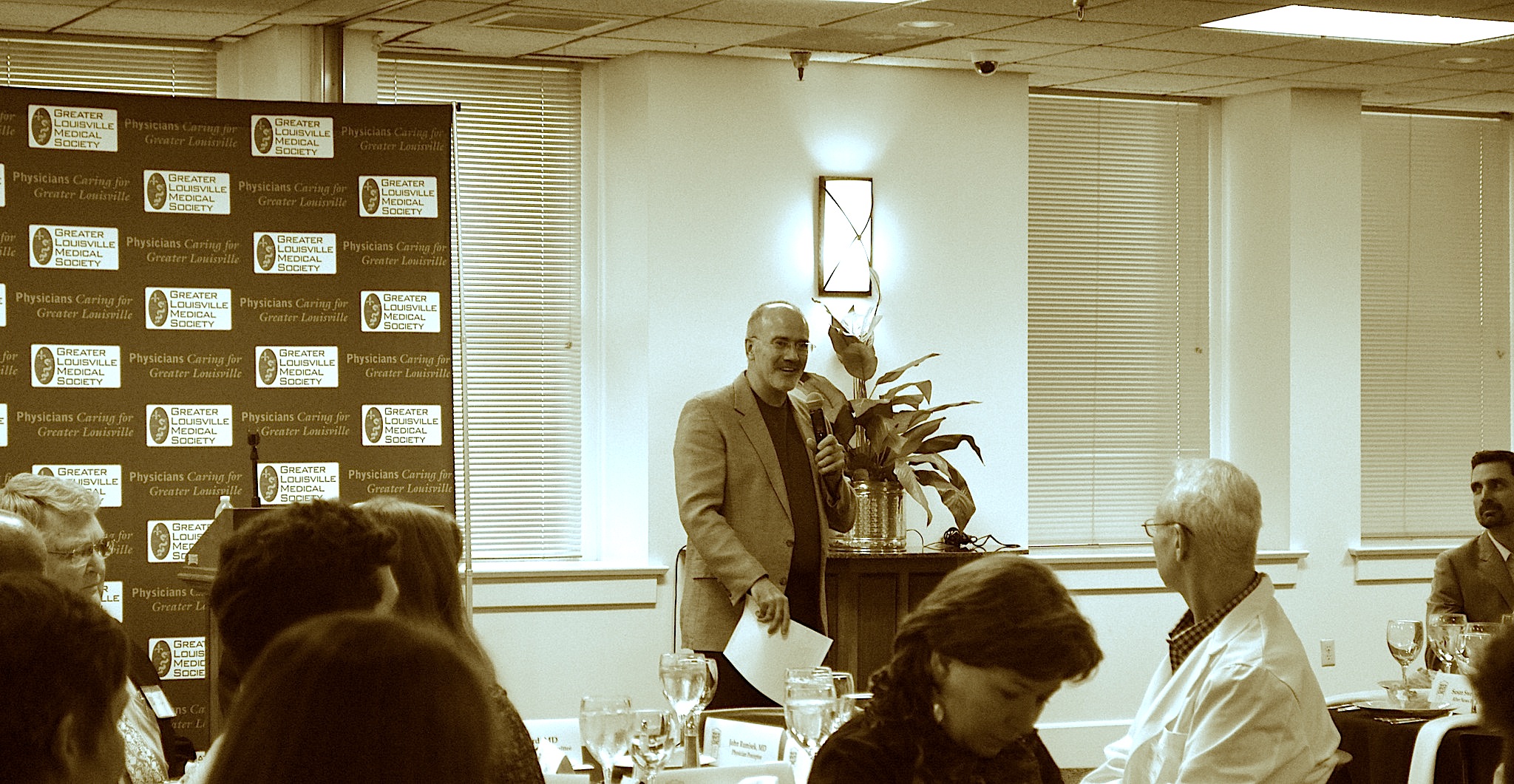
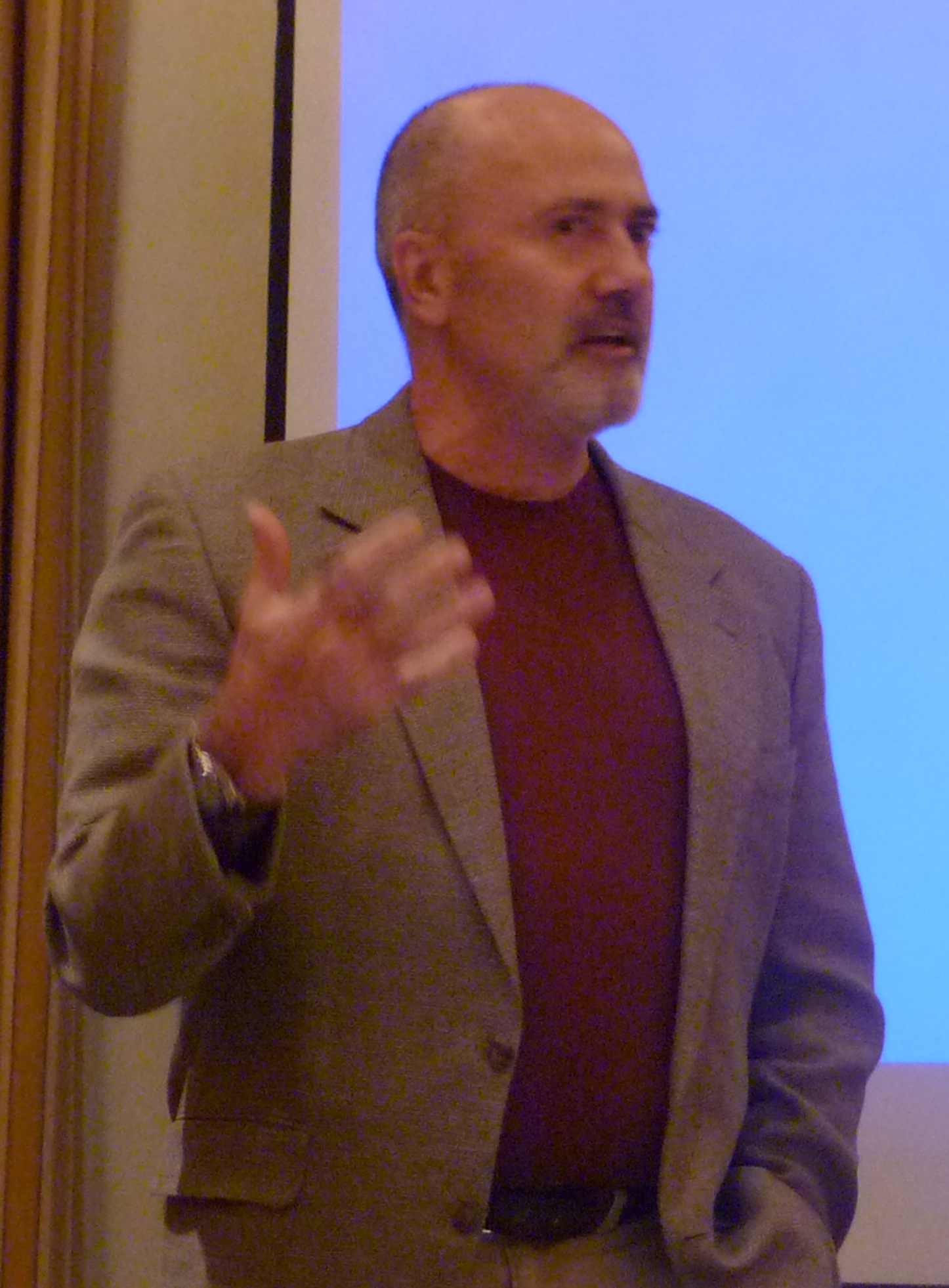
Dr M speaking

Note: This article is the text draft of an address I made to the members of the Greater Louisville Medical Society on May 19, 2013. It was first published in the July 2013 issue of Louisville Medicine and the speech can be viewed online at the GLMS Vimeo Channel.

A new year… A new name

hugs

If you searched the Internet in 2013 for “the painful truth,”  you found a lot of it. However, you probably did not find my The Painful Truth website.

To be fair, my posts are hopefully more truthful than painful.

G.B.Y.Logos.1

A new year…  a new name.

evoice

In my October 2013 President’s eVoice, the phrase “confluential truth” was coined:

Imagine your message as a sphere with the purest and most intense truth radiating from its center. The recipient interprets your message and develops his or her own truth-sphere. Like the overlap in a Venn diagram, the effectiveness of communication is defined by the degree to which these unique spheres share the same truth. This overlap is the confluential truth.

Search and I doubt you will find “confluential” and “truth” joined in a phrase – probably because “confluential” is not even in the dictionary.

Thus, there is only one definition for “confluential truth” and now only one website using the phrase as its title.

My hope is that when we look for confluential truth, we find it.

Thanks for searching with me.

journey for truth

Greater Louisville Medical Society President’s eVoice, Oct 2013

http://archive.constantcontact.com/fs105/1101098564175/archive/1115193404761.html

‘Twas The Audit Before Christmas

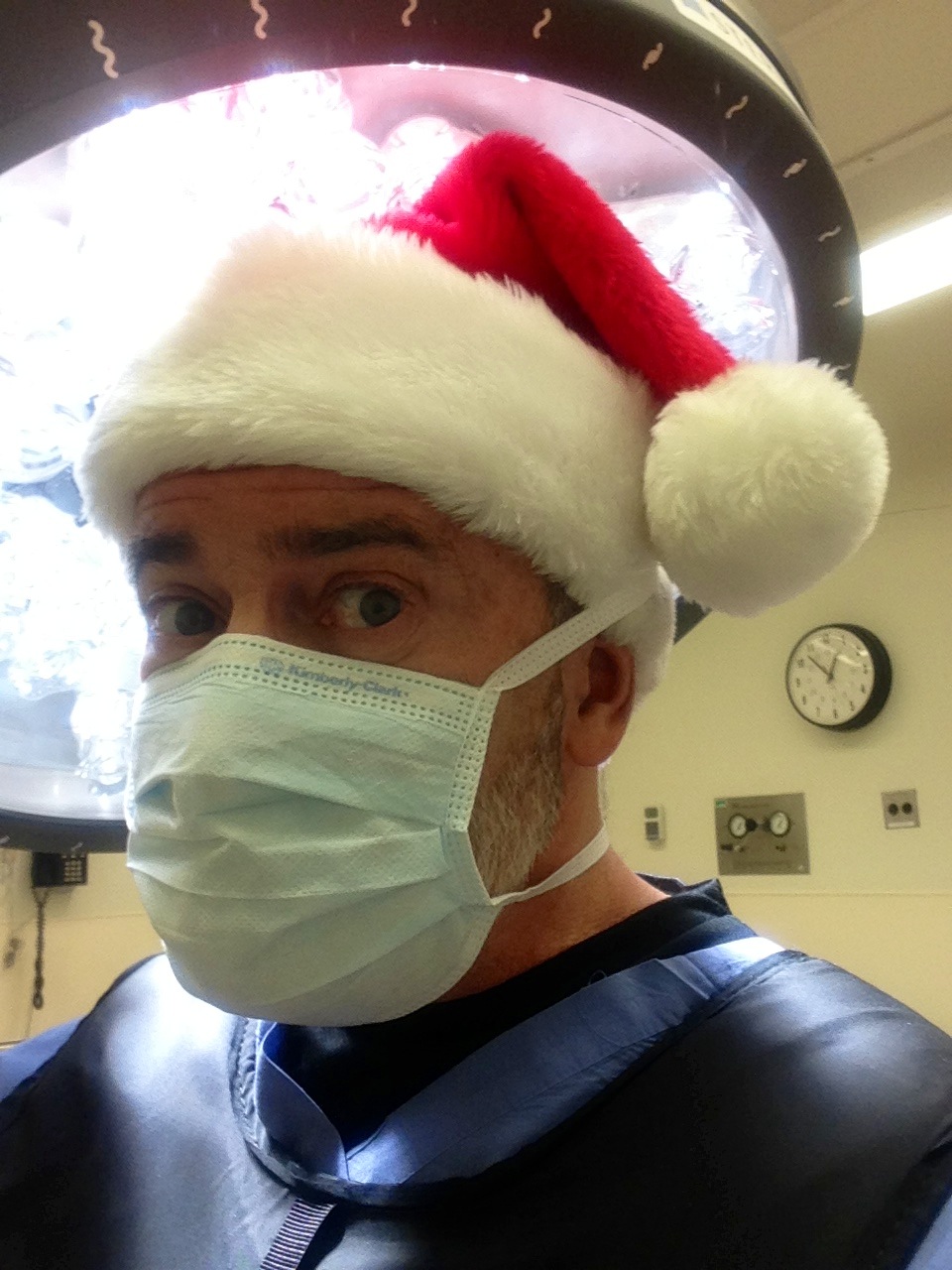
surgeon santa

‘Twas the day before Christmas, and all through the clinic,
My patients were fuming, and I was a cynic.
My routine was stung by Affordable Care.
I’d hoped the ridiculous rules would be fair.

In precerting drugs, how the auditors hovered.
Prescriptions for sugar pills only were covered.
The managed care mischief and benefits cap,
That sounded so good, was merely a trap.

Then out in the foyer arose such a clatter,
A patient’s co-pay was the crux of the matter.
Away to the window I flew like a flash,
Shut down the computer and asked him for cash.

He wasn’t abreast of the new plan in place,
That had cut off his nose in spite of his face.
When what to my wondering eyes did appear,
But a government man, just a tiny bit weird.

He showed me a warrant so lively and quick,
That I prayed to the Lord, “This must be a trick.”
More than just illegal, this wasn’t a game.
And he whistled and shouted transgressions by name.

“You downcode! You miscode! You don’t even fix ‘em!
You’re sloppy! You’re stupid! More crooked than Nixon!
I will file my report! From on top you will fall!
Now cash you’ll pay! Cash you’ll pay! Cash you’ll pay! All!”

As dry heaves, that before a wild emesis fly,
When I met this obstacle, thought I would die.
So onto his ribcage, my fingers they flew,
Which gave him no joy. He ain’t ticklish too.

And then in a twinkling, he wanted the proof,
And documentation for each little goof.
So I drew in my head what I thought would astound,
But this audit’s ridiculous claims did abound.

He addressed all inferred, and he read what was put,
In our policy manual, which was thick as a foot.
A bundle of charges he wanted paid back,
‘Cause this was an audit, and he was a RAC.*

His knee, now it bucked! It’s simple, so very.
It started to hemorrhage and looked downright scary.
It no-mattered at all was he friend or a foe,
For the loss of his blood made his suffering show.

His stump of a leg I held tight, no conceding.
My hands they encircled his thigh to stop bleeding.
He’d had a bad cut, from his leg to his belly.
His bandage was only petroleum jelly.

I asked why he’d only done something to soothe.
“ ‘Cause that’s all,” he said, “that my plan would approve.”
An i.v. for fluids and lowering his head,
Soon gave him to know he had nothing to dread.

He spoke not a word, nor called me a jerk.
Physicians just do this. It’s just how we work.
Then thinking about his life saved, I suppose,
Giving a nod, from the stretcher he rose.

He then took his report, his scathing epistle,
And into the trash, threw it down like a missile.
And I heard him exclaim, as he drove out of sight,
“Don’t ever give up. We need you in the fight.”

doctor santa

Adapted by James Patrick Murphy from the poem “A Visit from St. Nicholas,” a.k.a. “‘Twas the Night Before Christmas” by Clement Clarke Moore

*RAC stands for Recovery Audit Contractor

TWITTER at @jamespmurphymd

Dr Gupta, Seriously?

04C No truth sign

On December 21, 2013 at 12:28 am, in response to a story on Anderson Cooper 360 by CNN’s Chief Medical Correspondent Dr. Sanjay Gupta, about Dr. Lynn Webster,  I posted the following comment. 

RE:
December 19th, 2013 10:00 PM ET

Pain doctor investigation


Dr. Gupta, seriously?

You know that treating chronic pain is challenging. There is no pain “thermometer” or lab test to measure, monitor, or prove pain.  It is inherently personal and subjective.  Your implied dismissal of a mode of therapy (i.e. opioids) just because it is not “proven,” smacks of hypocrisy.

You know physicians offer treatments every hour of every day that have not been proven by ivory tower standards (e.g. Many of the drugs used in Pediatrics have only been researched in adult studies and are not FDA approved for children).  Medicine is as much art as it is science. At the end of the day, it comes down to the caring personal connection between the physician and the patient – understanding that the outcome is not guaranteed.

My knowledge of Dr. Lynn Webster is indeed that of a caring, expert, and passionate physician. I wish he could have given his candid opinions, but (again, you know) when there is a lawsuit the doctor is advised to keep silent.

Your CNN piece was anecdotal, unconvincing, sensational, and seemed like “gotcha” to me. I expect better from CNN and you.

Opioid therapy for chronic pain is not without risks.  Dr. Webster has been part of the solution exponentially more than he has been part of the problem. One-sided stories (like yours) cause harm by keeping silently suffering pain patients in the shadows and by discouraging physicians (like Dr. Webster) from taking on the challenge of chronic pain care.

Dr. Gupta, you have such an influential platform. Don’t give in to sensationalism.


James Patrick Murphy, MD, MMM

Certified, American Board of Pain Medicine
Certified, American Board of Anesthesiology
Subspecialty Certified in Pain Management
Certified, American Board of Addiction Medicine

 
jamespmurphymd.com
@jamespmurphymd

FOR UNTO US PAIN LAWS ARE GIVEN… AND THE GOVERNMENT SHALL BE UPON OUR SHOULDERS

winter sunrise in indiana

Today is December 15, 2013… For Indiana pain sufferers, and the physicians who care for them, it is the dawn of a new era.

Everyone has an opinion, but the only opinion that matters is that of the Medical Licensing Board of Indiana. Nevertheless, I thought it might be useful to offer the opinion of an Indiana-Kentucky licensed / interventional pain-addiction specialist / full-time Jeffersonville, Indiana-based / Greater Louisville Medical Society President / independent private practice physician (i.e., The Painful Truth).

Regulations provide boundaries. Guidelines provide guidance. As written, Indiana’s Emergency Pain Regulations are instructive as to how physicians should prescribe opioids for chronic pain and would serve as adequate guidelines. However, as regulations they are problematic due to their frequent inclusion of unclear phraseology. These “emergency” regulations are subject to revision and permanent regulations must be adopted by November 1, 2014.

When faced with unclear regulations, prescriber anxiety is heightened. This may deter physicians from prescribing the most appropriate medications, causing patients to endure avoidable pain and unnecessary suffering.

So, I guess I was wrong. If you, or anyone you care about, has been or might be touched by pain, drug abuse, or addiction – and that pretty much includes everyone;

YOUR opinion DOES matter.


Here we go…

The Painful Truth does not wish to over-simplify the matter, but after careful study the regulations one could say that prescribing opioids boils down to:

DRAMATIC at the start (Section 4);

FACE-TO-FACE every 2 – 4 months (Section 6);

INSPECT & DRUG SCREEN annually (Sections 7 & 8);

REVIEW, REVISE & REFER at higher doses (Section 9).

One should begin this journey by understanding the difference between a law, a regulation, and a guideline.

A law is a rule that has been passed by elected officials. Violation of a law may be viewed as a criminal act.

Indiana’s new pain law (a.k.a. additions to Senate Bill 246) is fairly concise and does not directly apply to physicians. Instead, it says the medical board must come up with regulations – which they did.

A regulation is a rule that is usually created by a government agency (i.e. a “bureaucracy”) as opposed to the legislature. Regulation determines how laws will be enforced. Violation of a regulation may not be a criminal act but can incur a wide-range of penalties.

As previously stated, Indiana’s Emergency Pain Regulations go into effect on December 15, 2013 and are subject to revision until November 1, 2014, at which time the permanent regulations are due.

A guideline, especially when endorsed by a governing body, is a set of opinions that offer insight into the manner in which regulations and laws can be properly followed. Violating a guideline may or may not be considered a wrong move, but generally will require a legitimate explanation as to the decision-making process.

The Indiana State Attorney General’s Office has published a detailed set of guidelines, called “First Do No Harm,” which offer insight as to what regulators will consider as proper medical practice, should they be called upon to investigate a controlled substances related issue.

In summary, Indiana physicians who prescribe controlled substances do not need to know details of the new law, as it does not apply directly to them.

However, physicians should clearly understand the Emergency Pain Regulations and how these regulations will affect their practice after December 15, 2013.

Also, physicians are strongly urged to become familiar with the “First Do No Harm” guidelines and to start incorporating as many of the recommended practices as possible.

SECTION-BY-SECTION BREAKDOWN (12 Sections) – The Painful Truth is my opinion.


SECTION 1

These REGULATIONS are from the Medical Licensing Board of Indiana and are applicable to PHYSICIANS only; and specifically with regards to OPIOIDS for CHRONIC PAIN.

The Painful Truth: In my opinion, every provider (i.e. dentists, podiatrists, nurse practitioners, physicians, etc.) should understand that the Attorney General’s Office supports the “First Do No Harm” guidelines for every provider.

SECTION 2

This section offers definitions, some of which I examine below:

* Chronic Painmeans a state in which pain persists beyond the usual course of an acute disease or healing of an injury, or that may or may not be associated with an acute or chronic pathologic process that causes continuous or intermittent pain over months or years.”

The Painful Truth takes this as meaning any type of pain, for whatever reason, regardless of the severity, that is a problem for two months or longer; even if it is intermittent pain. This encompasses a generous range of chronic pain scenarios.

* Morphine Equivalent Dose “means a conversion of various opioids to a standardized dose of morphine by the use of accepted conversion tables.”

The “First Do No Harm” Toolkit gives some examples of equianalgesic doses to SIXTY MGM of MORPHINE (i.e. hydrocodone 50 mg; oxycodone 40 mg; fentanyl patch 25 mcg/hr), and notes “Equianalgesic tables should only serve as a general guideline to estimate equivalent opioid doses.”

The Painful Truth believes this is an inexact science, and there are many “accepted” morphine equivalent conversion tables from which to choose – none of which are perfect. The Toolkit references an online calculator from GlobalRPH. I also like the one from Practical Pain Management. The state of Washington has a nice one as well. When making these conversions try to err on the low side. Better to underestimate than overestimate (i.e. Once someone takes a medicine it is impossible to get it back). Murphy’s laws:  (1) Start low and go slow; (2) Every dose is a test dose.

* “Outset of an opioid treatment plan” refers only to a patient who has been prescribed: (1) more than sixty opioid-containing pills a month; or (2) a morphine equivalent dose of more than fifteen (15) milligrams per day; for more than three consecutive months.

The Painful Truth believes this is very important, somewhat confusing, and will be discussed again later in SECTIONS THREE & NINE. For now, just realize that there is a definitely a threshold where these regulations become relevant.

SECTION 3


This section explains which patients are exempt from the regulations.

(1) With a terminal condition

(2) Living in a licensed health facility

(3) Enrolled in a licensed hospice program

(4) Enrolled in a palliative care program of a licensed hospital

Note: If a non-terminal patient eventually leaves the health, hospice, or palliative facility the opioid use during that time still counts in the threshold calculation (see below).

This section also establishes thresholds that trigger the requirements of the Emergency Regulations.


(1) “More than sixty (60) opioid-containing pills a month.”

(For more than three consecutive months*)

OR

(2) “A morphine equivalent dose of more than fifteen (15) milligrams per day;

for more than three (3) consecutive months.”


The Painful Truth believes with a little creativity and a literal interpretation, these thresholds allow a wide range of unintended prescribing options.

For example: You could prescribe 60 pills for the month and tell the patient to break each pill in half – effectively offering FOUR doses per day without exceeding the 60 pill per month threshold.

You could even prescribe a drug as potent as Oxycontin twice per day for 89 consecutive days and avoid the THREE CONSECUTIVE MONTH threshold.

In contrast, prescribing a relatively benign sixty-one codeine pills for three consecutive months**  exceeds the threshold and triggers all of the requirements spelled out in the regulations.

This should not encourage anyone to “game the system.” It only illustrates how difficult it is to establish dosing thresholds that are clinically relevant and enforceable.

I addressed dosing thresholds in a letter (and blog post) from October of this year. Hopefully there will be some changes to the thresholds when the final regulations are enacted in 2014.

Be advised that the Attorney General’s “First Do No Harm” provider Toolkit does not explore these initial thresholds or the concept of exempted patients in any detail.  The Toolkit seems to imply that any use of opioids carries enough danger to warrant risk stratification, surveillance, and a cautious approach when prescribing.

The Painful Truth advises prescribers to conservatively interpret the measures outlined in the Emergency Regulations.

And stay tuned, because a 60 mgm morphine equivalent dose threshold becomes an important issue in Section NINE (to be discussed later by The Painful Truth).

Note:

*  On December 17, 2013 at 2:40 p.m. I spoke by telephone with Michael Minglin, J.D. (Board Director, Medical Licensing Board of Indiana). Regarding the sixty-pills-per-month threshold and the fifteen mgm morphine-equivalents-per-day threshold, he told me: “It is clear; the three consecutive months interval applies to both.”

**  This sentence was updated on 12/17/2013 to reflect the above mentioned clarification (*) by the Board Director.

SECTION 4 

This section deals with the Physician’s responsibility for performing the initial evaluation, including determination of level of risk.

It is clearly stated that the physician shall do the physician’s OWN evaluation and risk stratification of the patient by doing the following:

  1. Perform an APPROPRIATELY focused history and physical exam
  2. Obtain or order APPROPRIATE tests “as indicated”
  3. Make a DILIGENT effort to obtain and review records & document the effort.
  4. ASK the patient to complete an OBJECTIVE pain assessment tool
  5. Use a VALIDATED screening tool for mental health and substance abuse
  6. Establish a “working diagnosis”
  7. Tailor a plan with MEANINGFUL and FUNCTIONAL goals (to be reviewed “from time to time”)
  8. WHERE MEDICALLY APPROPRIATE use non-opioid options instead of or IN ADDITION TO prescribing opioids.

The Painful Truth believes the requirements of Section Four lend themselves to creation of a checklist. Therefore, at the initial evaluation a Hoosier physician must be DRAMATIC

o          D         diagnosis made (“working diagnosis”)

o          R         records obtained (a diligent effort made to obtain & review)

o          A          assessment of pain

o          M         mental health (and substance abuse) screen

o          A          activity goals established

o          T          tests ordered if indicated

o          I           instead of opioids, use non-opioid options

o          C         conduct focused history and physical

The Painful Truth notes that the terms “appropriate,” “as indicated,” “diligent,” “meaningful,” and “from time to time” are subjective. Physicians are advised to be able to defend his or her interpretation of these terms.

The Painful Truth believes it is acceptable for a prescribing physician to use historical information obtained by sources other than the prescribing physician (i.e., office staff) as long as the physician personally verifies the information with the patient.

The Painful Truth points out that the initial physical exam must be done by the prescribing physician and cannot be delegated.

The Painful Truth notes that a truly “objective pain assessment tool” does not exist, as pain is personal and subjective. Nevertheless, at minimum, a visual analog scale (i.e., 0 to 10) or similar documentation aid should be employed in order to satisfy the regulatory requirement.


The Painful Truth believes that only in rare circumstances would a non-opioid treatment option fail to exist.

SECTION FIVE


This section deals with treatment agreements and informed consent.


Although the term “Informed Consent” (IC) is not mentioned, Section Five clearly deals with elements of informed consent in discussing the requirement for a treatment agreement (TA).

Both the PATIENT and the PHYSICIAN must sign the “agreement.” A copy must be kept in the patient’s chart.


The document(s) must attest to a “simple and clear” explanation of:

  1. Risks and benefits (IC)
  2. Alternatives to opioid treatment (IC)
  3. Consent to drug monitoring and random pill counts (TA)
  4. The requirement to take the drugs as prescribed (TA)
  5. Prohibition of the sharing of drugs (TA)
  6. “That the patient inform the physician about any other controlled substances prescribed or taken”
  7. Treatment goals
  8. Reasons opioid therapy may be changed or discontinued.
  9. COUNSELING FOR WOMEN: Particular attention must be given to “women between the ages of 14 and 55 with child bearing potential” (e.g., has not had a hysterectomy). They must be counseled regarding RISKS TO THE FETUS, specifically including the risks of “fetal opioid dependency and neonatal abstinence syndrome.”

The Painful Truth recommends combining the treatment agreement and the informed consent into one document.

SECTION SIX


This section deals with periodic scheduled visits – PROGRESS, COMPLIANCE & EXPECTATIONS.


  1. “Stable” regimens need a “face to face” at least once every 4 months.
  2. “If changes are prescribed by the physician” – face to face at least every 2 months.

At the visit:

  1. Evaluate progress
  2. Evaluate compliance
  3. “Set clear expectations

– “such as: attending physical therapy, counseling or other treatment options”


SECTION SEVEN


This section deals with INSPECT reports, which must be obtained at the beginning and annually. One must document in the chart if the INSPECT is “consistent with the physician’s knowledge of the patient’s controlled substance use history.”

SECTION EIGHT


This section deals with drug monitoring tests, which must be obtained at the beginning and annually.


There must also be a “confirmatory” test for these drug-monitoring tests.

If a test shows “inconsistent medication use” or “illicit substances” there must be documented a discussion, review, and revision of the treatment plan.

The Painful Truth notes that “confirmatory” is not defined in these regulations. However, this probably means that the specimen must be submitted for a more specific evaluation (e.g. gas chromatography – Still, one could argue that repeating the initial drug screen is a type of “confirmation.”).  Note that the regulations do not specify that every drug-monitoring test have a confirmatory test – rather, only the one at the “outset” and at the “annual” screen.

The Painful Truth submitted an opinion on drug-monitoring tests (October 2013).

SECTION NINE


This section deals with requirements when the morphine equivalent dose (MED) is greater than 60 mgm/day.


When the MED is greater than 60 mgm/day, one must REVIEW, REVISE, & REFER


Note: MED was defined in Section TWO of the regulations.

When the 60 mgm per day MED threshold is exceeded, the following must be done:

  1. A face-to-face REVIEW of the treatment plan.
  2. Document a REVISED ASSESSMENT & PLAN  – including risk of DEATH.
  3. Consideration of REFERRAL to a “specialist.”


The Painful Truth notes that the main goal of the “revised” plan seems to be mitigation of risks (especially DEATH) associated with higher opioid dose regimens.

The Painful Truth notes that while the non-specific wording (i.e., “revised,” “consideration,” and “specialist”) allows application of a physician’s clinical judgment, it remains important that documentation adequately justify therapeutic decisions.


The Painful Truth recommends addressing the increased risks (including death) associated with MED greater than 60 mgm/day in a combined opioid INFORMED CONSENT & TREATMENT AGREEMENT (see section FIVE).

SECTION TEN


This section deals with Physician Assistants (PA) and Advanced Practice Registered Nurses (APRN).

The Painful Truth notes the EMERGENCY REGULATIONS are from the Medical Licensing Board of Indiana, which only has jurisdiction over PHYSICIANS. Physician Assistants and Advanced Practice Registered Nurses each have separate licensing boards.

Regarding Physician Assistants, Section 10 notes that PA duties and responsibilities must be “within the supervising physician’s scope of practice.”

The Painful Truth believes the Regulations could be interpreted as delineating a physician’s scope of practice. By this interpretation, physician assistants would be required to follow the Board of Medical Licensure’s Regulations.


The Painful Truth also believes that, since they do not place limits on opioid prescribing, the Regulations could be interpreted as not delineating a physician’s scope of practice. By this interpretation, physician assistants would not be required to follow the Board of Medical Licensure’s Regulations.


Regarding Advanced Practice Registered Nurses, Section 10 does not mention “scope of practice.” Thus, APRNs (considered more independent of physician supervision than PAs) would not be required to follow the Board of Medical Licensure’s Regulations.

Lending more credence to the concept that the Regulations do not apply to PAs and APRNs is language from Senate Bill 246 that was passed in this year’s Indiana State Legislature:

The state board of pharmacy or any licensing board, commission, or agency that controls, authorizes, or oversees controlled substance registrations under IC 35-48-3 shall adopt rules necessary to complement the rules adopted by the medical licensing board under this chapter.


If PAs and APRNs were subject to the rules of the Medical Licensing Board, there would be no need for a law requiring their boards to adopt complementary rules. Note: As of today – December 12, 2013 – no other boards have adopted any complementary rules.

The Indiana Board of Pharmacy will consider emergency rules at its meeting in January 2014.

The Painful Truth reminds physicians that requisite supervisory agreements allow PHYSICIANS to place limits on prescriptive practices for the PA’s and APRN’s they supervise. To illustrate this point, The Painful Truth received an email on December 12, 2013 sent by the Indiana Professional Licensing Agency stating:


Professionals that hold a license to practice should review all collaborative agreements with Advance Practice Nurses and Physician’s Assistants to assure that they are in compliance with the new rule.”

SECTION ELEVEN


This section describes circumstances allowing waivers of the initial INSPECT and initial drug monitoring test.


The Painful Truth believes Section Eleven was included to ease transition to regulatory compliance for patients currently receiving chronic opioid therapy.


The requirement for an initial INSPECT is waived if, prior to December 15, 2013, a patient has reached the thresholds described in SECTION 3

i.e., prescribed more than sixty opioid-containing pills a month; or a morphine equivalent dose of more than fifteen milligrams per day; for more than three consecutive months.

Regardless, an INSPECT must be done by November 1, 2014.

The requirement for an INITIAL drug monitoring test at the outset of an opioid treatment plan (SECTION 8) is waived if, prior to January 1, 2015, a patient has reached the threshold described in SECTION 3

i.e., prescribed more than sixty opioid-containing pills a month; or a morphine equivalent dose of more than fifteen milligrams per day; for more than three consecutive months.


The Painful Truth believes INSPECT reports and drug screens should be done “early and often.” Include reports from border states (e.g. Kentucky’s KASPER) when available. Also note that (as stated in section THREE) if a physicians does a dug screen or INSPECT… “any subsequent requirements are determined by when the initial evaluation would have been required and not at the earlier date it actually was conducted.”

SECTION TWELVE – These Regulations are effective December 15, 2013.


In Conclusion…


The Painful Truth reminds physicians that there are three vital elements to success when prescribing opioids for chronic pain.

  1. The wellness of the patient
  2. The safety of the community
  3. The security of your practice

If any of these three “balls” are dropped, the outcome can be disastrous. Thorough knowledge of these Emergency Regulations and diligent adherence to their conservative interpretation will make the juggling easier.

Remember…

DRAMATIC at the start (Section 4);

FACE-TO-FACE every 2 – 4 months (Section 6);

INSPECT & DRUG SCREEN annually (Sections 7 & 8);

REVIEW, REVISE & REFER at higher doses (Section 9).

Now go treat some pain.

You may contact the Medical Licensing Board of Indiana by phone at 317-234-2060 or email at pla3@pla.in.gov.

Disclaimer: I represent no organization. All opinions, unless specifically referenced, are my own. This webpage is intended to be a resource. It is NOT intended to be comprehensive or to be legal advice or medical advice. Physicians should always consult with their medical malpractice insurance company for risk management advice and with their private health care attorney for legal advice. If you have a medical condition please seek advice from your personal physician. Every patient, practitioner, and facility should consult its own counsel for advice and guidance. If you rely upon information from this website, you do so at your own risk.