Weather the Storm with OPIOID

OPIOID Helps Caregivers Weather the Regulatory Storm

perfect-storm

Healthcare is engulfed in a torrent of regulations raining down upon caregivers. Nowhere is this more evident than in the delivery of pain care. Perhaps OPIOID is the way to weather this storm.

Allow me to explain…

Recently, I was talking with a sales rep from a drug screen lab, and our conversation naturally veered into a discussion about how states were beginning to require urine drug screens for patients receiving pain medication.

To a drug screen lab these regulations are like liquid gold.

But as easily as regulations are passed, they can be erased. And if the success of a lab is based on the existence of a regulation, then the business model is built on thin ice and for the wrong reasons.  If the regulations dry up, so does lab.

I’m a physician, and – like the lab – I expect compensation for what I do.

What I do is care for people by applying factual knowledge, energized by creativity, in accordance with evidence-based protocols, while remaining cognizant of the mysteries still misunderstood and the mysteries awaiting discovery. It’s a marriage of science and art.

I know that following regulations goes along with the territory. But following regulations does not make me jump out of bed every morning with passion and determination. A regulation never delivered a baby, bypassed a clogged artery, or discovered a cure. People do these things.  People need these things. I’d rather work for people than a regulation.

The delivery of pain care is perhaps the most regulated activity in medicine. And depending on the state, the regulations can seem foreboding to the caregiver.  The message is clear. Either get on board or the Board will get on you.

The thought of abandoning our suffering patients out of fear is bitter. The thought of losing our licenses is chilling. And the thought renouncing our calling as patient advocates to blindly follow regulations we don’t even understand…  is demoralizing.

It doesn’t have to be this way.

Remember my lab rep? My advice to her was to go back to her supervisors and suggest that they promote their product primarily as a means to help patients by helping prescribers. Then they would be serving the best interest of millions of people, as opposed to serving at the pleasure of a few hundred lawmakers. In other words, make improved quality of life the real goal – not adherence to regulations.
OPIOID picture

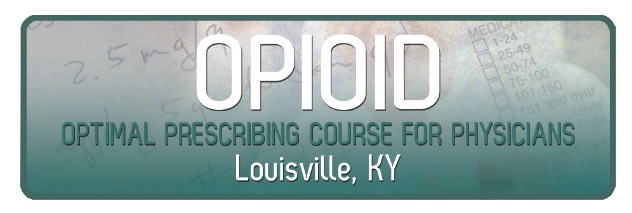
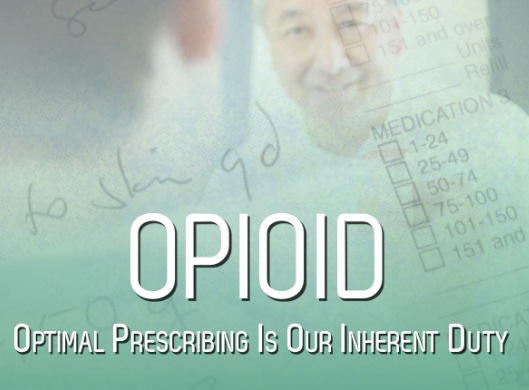
That’s what OPIOID is all about.   OPIOID means Optimal Prescribing Is Our Inherent Duty – a seminar conceived by physicians, approved by Kentucky’s Medical Board, and produced by the Greater Louisville Medical Society in association with the University of Louisville – February 7 – 9, 2014.   The goal of OPIOID is to empower prescribers to optimally care for suffering patients and adhere to the governing regulations.  People can register by email: physician.education@glms.org or call: 502-736-6354 or visit online at: https://www.glms.org/Home.aspx (and click on the “OPIOID” tab).

OPIOID is a prime example of caregivers holding steadfast to their calling in the regulatory storm.  Please spread the word. Together we can weather this.

rainbow-500x375

James Patrick Murphy, MD, MMM

January 26, 2014

Note: This article was first published January 27,2014  on http://www.drjohnmdthe blog by John Mandrola, M.D.
 

The Urgent Need for OPIOID

two tangential universes: therapeutic and pathologic

tangential u darko

In the therapeutic universe suffering is relieved, lives are enhanced, and hope is restored. Central to this universe are the pain care needs of 100 million suffering Americans.

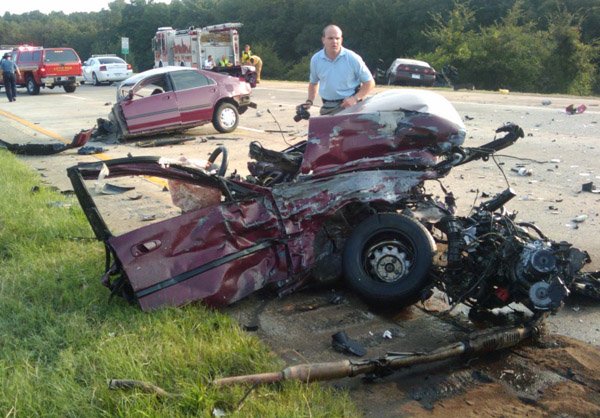
In the pathologic universe suffering is unleashed, lives are enslaved, and hope is shattered.  Ruler of this realm is drug abuse – now killing even more Americans than automobile accidents.

Common to both universes is the prescriber – and the tangent point is OPIOID.

OPIOID picture

OPIOID means Optimal Prescribing Is Our Inherent Duty – a seminar conceived by physicians, approved by the medical board, and produced by the Greater Louisville Medical Society in association with the University of LouisvilleFebruary 7, 8 & 9.

American Medical Association Board Chair (and Kentuckian) Steven J. Stack, MD says:

Physician education on responsible opioid prescribing is a critical element in addressing the epidemic of prescription drug abuse.

Todd Cook, MD, Chief Medical Officer of St. Elizabeth Physicians (Northern Kentucky) says:

This is one of the times when sending a responsible party proactively may provide a great return on the investment for all of us.

Participants in this two and a half day course will gain insight on how to: (a) best prescribe controlled substances for chronic pain, (b) minimize the risks of drug abuse, and (c) safeguard their communities. These goals are achieved through lectures, coaching sessions, and face-to-face interaction with individuals battling addiction.

louisville skyline

Louisville is a point shared by two states (Kentucky & Indiana) that, like many other states, have recently enacted laws to address prescription drug abuse. When such well-meaning laws give legitimate prescribers the chills, a dose of OPIOID is the right prescription.

Finally, an OPIOID epidemic we can all get behind.

Please make it contagious. Pass along this info, refer someone, or even better – sign up yourself.

OPIOID  February 7 – 9, 2014

Register by

Email: physician.education@glms.org

Or call: 502-736-6354

opioid tab

Or visit online at: https://www.glms.org/Home.aspx (and click on the “OPIOID” tab).


enterprise

Boldly go where no prescriber has gone before.

Take back your universe.

take back universe

OPIOID

James Patrick Murphy, MD, MMM  is President of the Greater Louisville Medical Society.

rx and pen and pad

NIDA & the Facts on Marijuana

The National Institute on Drug Abuse Offers the Facts on Marijuana

NIDA1

From the website:

http://www.drugabuse.gov/publications/drugfacts/marijuana

marijuana-smoker1

Marijuana…

Use is rampant:

“Marijuana is the most common illicit drug used in the United States.”

brain damage

Has a powerful effect on the brain:

“Marijuana overactivates the endocannabinoid system, causing the high and other effects that users experience. These include distorted perceptions, impaired coordination, difficulty with thinking and problem solving, and disrupted learning and memory.”

Interferes with successful lives:

“Heavy marijuana users generally report lower life satisfaction, poorer mental and physical health, relationship problems, and less academic and career success.”

Damages the brains of young people:

“Research from different areas is converging on the fact that regular marijuana use by young people can have long-lasting negative impact on the structure and function of their brains.”

Permanently lowers IQ:

“A recent study of marijuana users who began using in adolescence revealed a profound deficit in connections between brain areas responsible for learning and memory. And a large prospective study (following individuals across time) showed that people who began smoking marijuana heavily in their teens lost as much as 8 points in IQ between age 13 and age 38; importantly, the lost cognitive abilities were not restored in those who quit smoking marijuana as adults.”

Causes heart disease:

“Marijuana raises heart rate by 20-100 percent shortly after smoking; this effect can last up to 3 hours. In one study, it was estimated that marijuana users have a 4.8-fold increase in the risk of heart attack in the first hour after smoking the drug.” 

car wreck

Causes car wrecks:

“A recent analysis of data from several studies found that marijuana use more than doubles a driver’s risk of being in an accident.”

Damages the lungs:

“People who smoke marijuana frequently but do not smoke tobacco have more health problems and miss more days of work than nonsmokers, mainly because of respiratory illnesses.”

Causes psychiatric illness:

“A series of large prospective studies also showed a link between marijuana use and later development of psychosis. Associations have also been found between marijuana use and other mental health problems, such as depression, anxiety, suicidal thoughts among adolescents, and personality disturbances.”

fetus

Damages babies:

“Marijuana use during pregnancy is associated with increased risk of neurobehavioral problems in babies. Consequences for the child may include problems with attention, memory, and problem solving.”

Medical-Cannabis

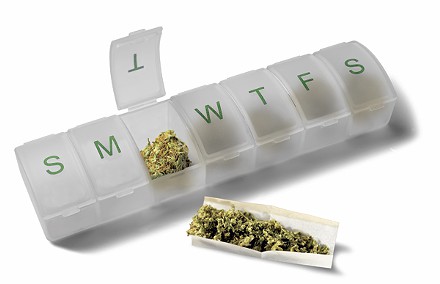
Is NOT a legitimate medicine:

“The FDA requires carefully conducted studies in large numbers of patients (hundreds to thousands) to accurately assess the benefits and risks of a potential medication. To be considered a legitimate medicine, a substance must have well-defined and measureable ingredients that are consistent from one unit (such as a pill or injection) to the next.”

Is definitely addictive:

“Contrary to common belief, marijuana is addictive. Estimates from research suggest that about 9 percent of users become addicted to marijuana; this number increases among those who start young (to about 17 percent, or 1 in 6) and among daily users (to 25-50 percent).”

And is more potent that ever:

“The amount of THC in marijuana samples confiscated by police has been increasing steadily over the past few decades.”

Read more:  http://www.drugabuse.gov/publications/research-reports/marijuana-abuse

drug facts week