Sound the ALARM ! 

3/15/2025 UPDATE – For the time being, the ALARM ACT initiative has been merged with HB 788, which was filed by Representative Kim Moser in the Kentucky General Assembly. For more information check out the KYSAM advocacy HB 788 website:  https://www.kysam.org/news

Kentucky House Bill 788 supports increased access to buprenorphine by empowering Kentucky’s providers to treat patients with evidence-based care. Check out this 9 minute video of Dr. Murphy’s recent testimony in Kentucky’s capital city: https://www.youtube.com/watch?v=3lILI0x4TXo

The salient issues remain consistent with the ALARM ACT initiative, thus I’m keeping this post on the website to provide historical context supporting our efforts to save lives.

On average, overdose kills five Kentuckians every single day.

There is something simple you can do today to help.

A brief call to your legislators, asking them to support the ALARM Act, could help save thousands of lives.

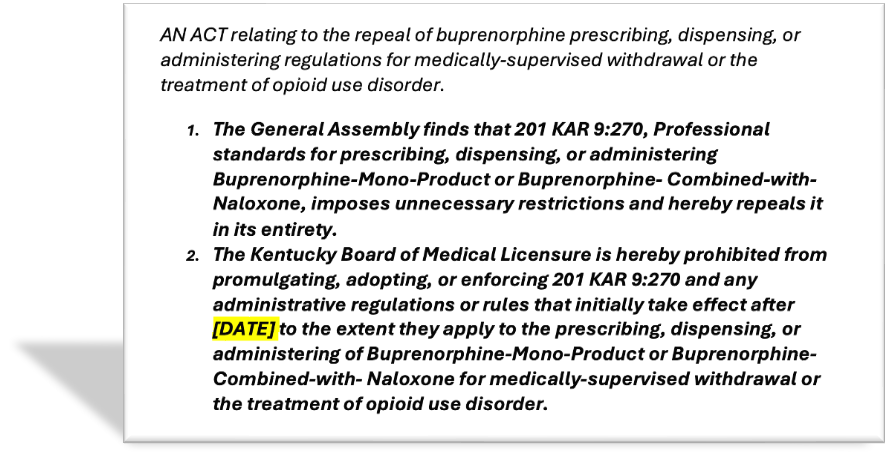
The ALARM Act is a legislative initiative aimed at improving access to buprenorphine – a lifesaving medication to treat opioid addiction – in fact, buprenorphine is our MOST EFFECTIVE measure to decrease overdoses and overdose deaths. The ALARM Act repeals regulation 201 KAR 9:270 – a decade-old KY law that severely hampers our doctors’ ability to prescribe buprenorphine.

Simply dial (800) 372-7181, and your message will be forwarded to your representatives.

You might say something to the effect of: Please help patients get the lifesaving medicine they need to treat addiction and prevent overdose deaths. Please support Dr. James Patrick Murphy and the Kentucky Society of Addiction Medicine by passing the ALARM Act, which repeal KY’s restrictive buprenorphine regulation 201 KAR 9:270.

Thanks! Now that you know my “ask,” please read on for the rest of the story

IN RECORD NUMBERS, KENTUCKIANS CONTINUE TO DIE FROM OPIOIDS.
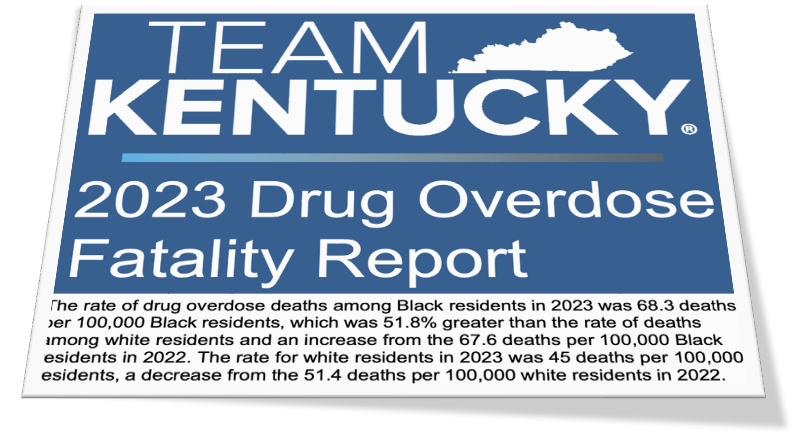
Widespread availability of buprenorphine could decrease overdose deaths by 50% or more. Buprenorphine (sometimes know by the trade name Suboxone) is FDA-approved to treat damaged areas in the brain that cause opioid addiction and can prevent dangerous addictive behaviors that lead to overdose.
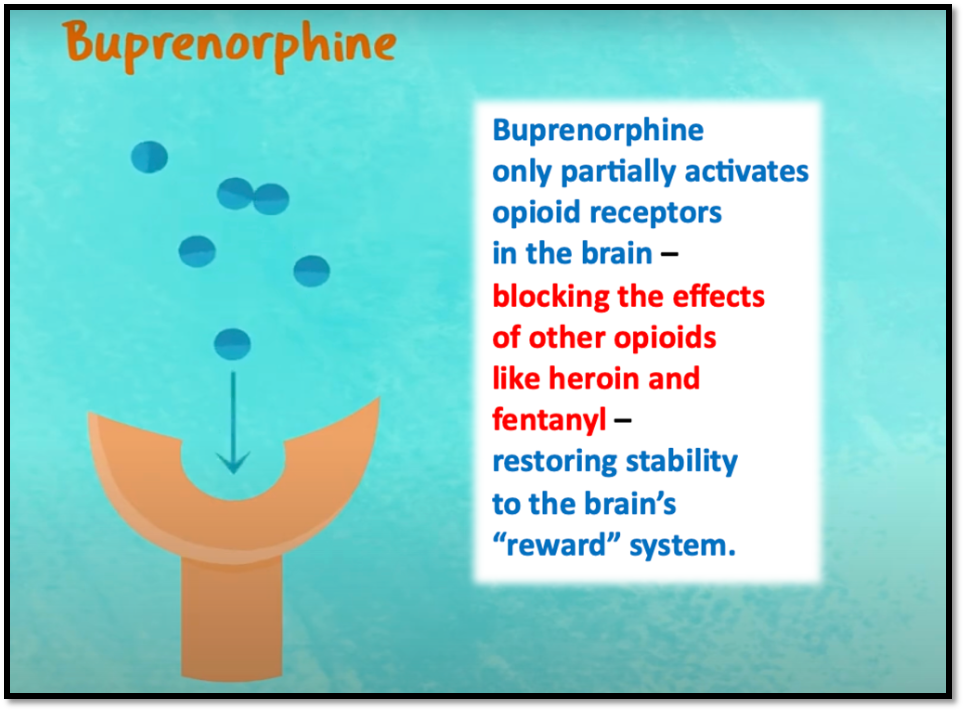
Distinct from NARCAN – which might reverse an overdose but does not treat the actual addiction –buprenorphine treats the root cause of the overdose. Buprenorphine promotes recovery, reduces crime, prevents overdoses, and saves lives.

Buprenorphine treatment is not simply trading one drug dependency for another. Quite the opposite, buprenorphine is a prescription medicine that treats the disease process, allowing patients to lead productive heathy lives – in much the same way that insulin allows people with diabetes to manage their disease and live well.
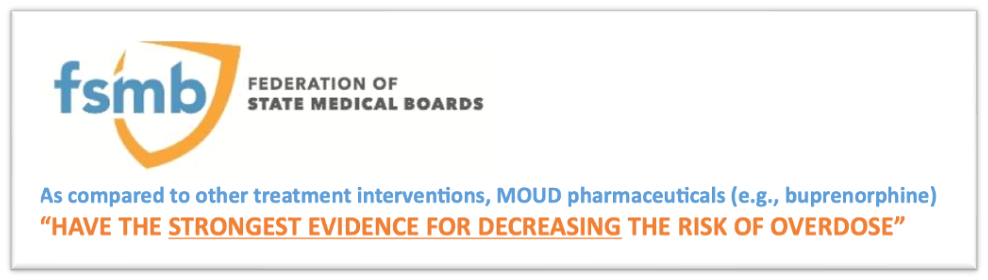
Tragically, barriers to accessing buprenorphine exist, such as regulatory burdens, costs, stigma, and unfounded fear of diversion. Thus, only one in five Kentuckians who need buprenorphine can get treatment.
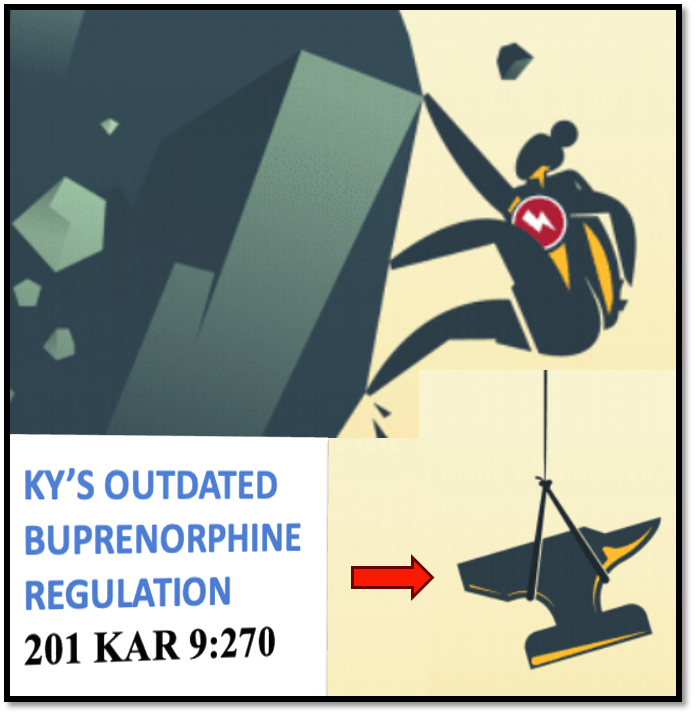
In Kentucky, a major barrier to buprenorphine treatment is 201 KAR 9:270 – an obsolete law that is not aligned with current clinical evidence. This onerous regulation restricts effective dosing and forces doctors and patients to complete costly, unnecessary tasks and imposes unscientific mandates that contradict recommendations of the overwhelming majority of experts. This is beyond illogical – it’s dangerous and deprives suffering people of lifesaving medication.

Ask yourself, would anyone be OK with treating breast cancer this way? Of course not. So why is Kentucky so restrictive with treating ADDICTION ? – the #1 cause of death for adults under the age of forty.

Kentucky is a an outlier. Our federal government and most other states have already done away with antiquated regulations like 201 KAR 9:270, allowing buprenorphine to be regulated like any other DEA schedule 3 controlled substance – as it should be. But Kentucky, despite ranking among the absolute worst states in terms of overdose deaths, somehow is still hanging on to 201 KAR 9:270. This must change. The regulation must be repealed.
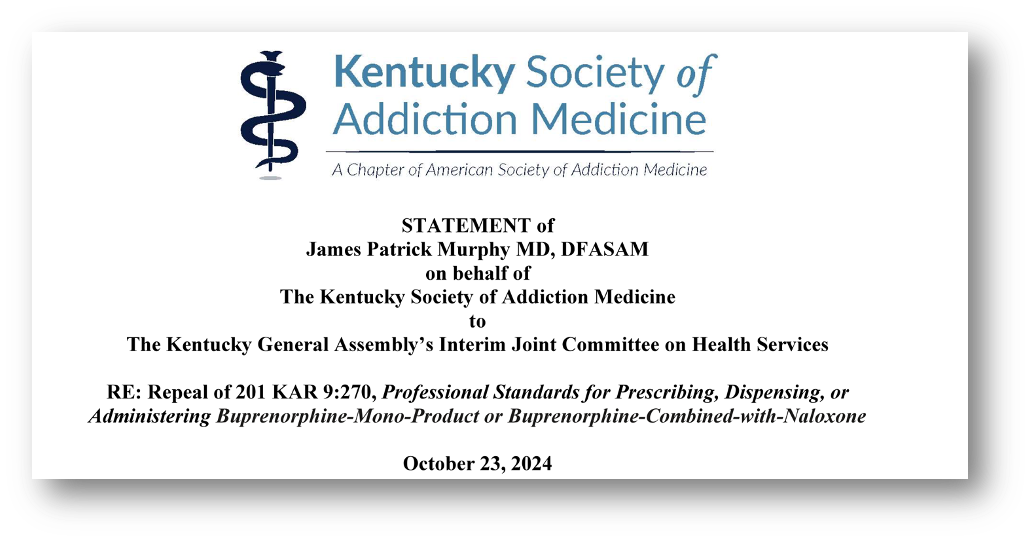
The ALARM Act is a vital grass roots legislative initiative, supported by the Kentucky Society of Addiction Medicine and many others, that will repeal 201 KAR 9:270 and allow all Kentucky doctors to confidently treat their patients with buprenorphine – the “gold standard” medication for treating opioid addiction.
Every overdose death is PREVENTABLE.

Sound the ALARM !

Contact Your Kentucky legislators and ask them to support the ALARM Act.

(800) 372-7181 Monday-Friday 7am to 6pm

or

(502) 564-8100 Monday-Friday 8am to 4:30pm,

And email addresses can be found on their individual bio pages:

Senators

Representatives

Ask them to help save lives by joining you in supporting the Kentucky ALARM Act.
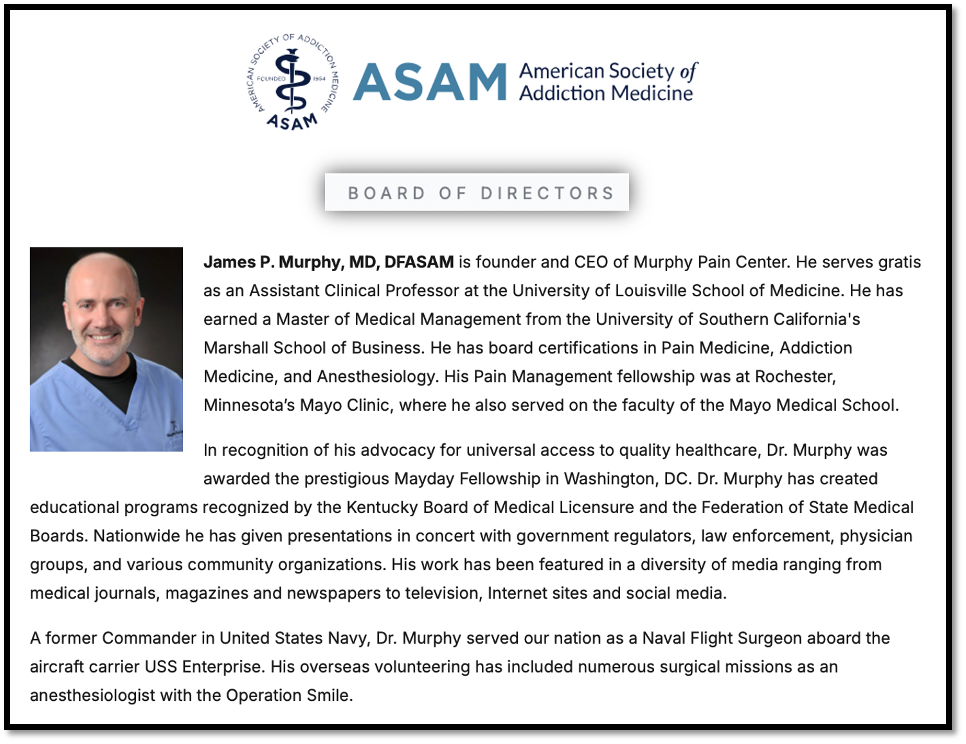
James Patrick Murphy, MD, DFASAM

Email: doctormurphyglms@gmail.com
Nora, we adore ya!

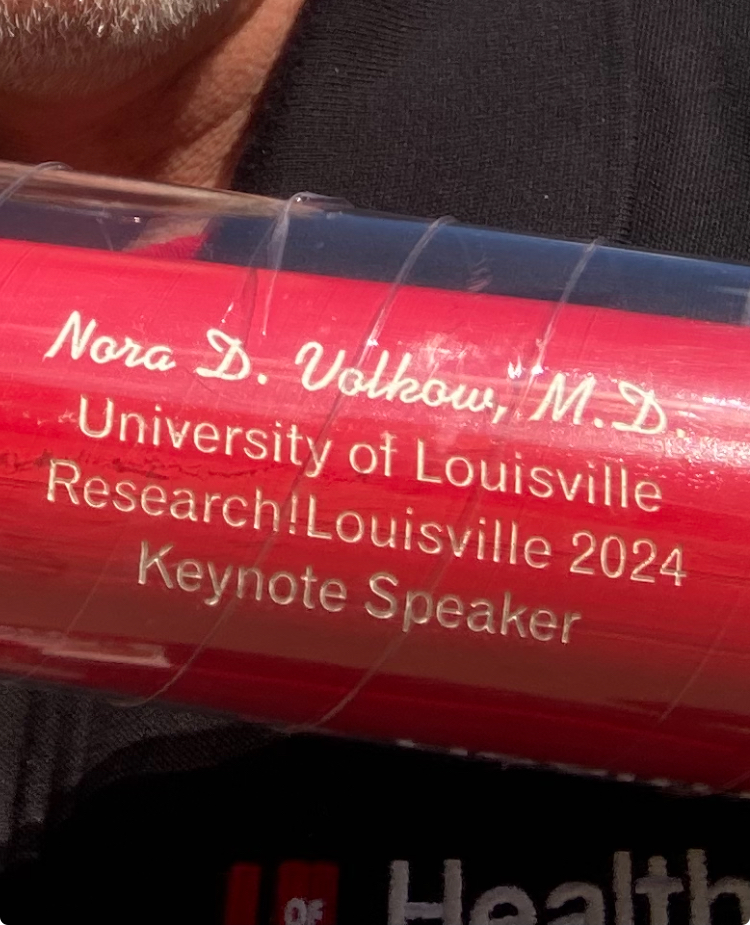
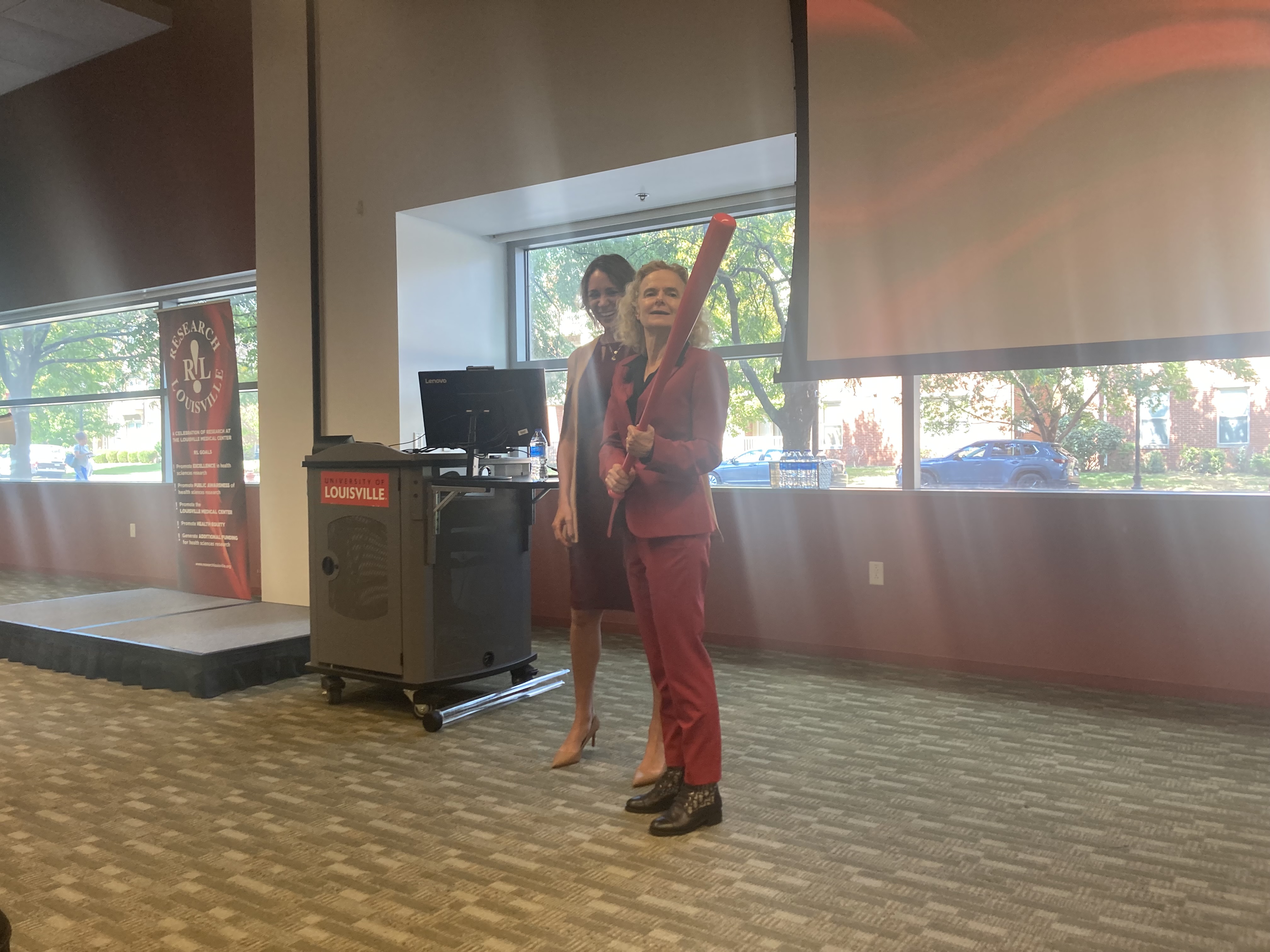
On September 20, 2024, NIDA Director, Dr. Nora Volkow, gave the keynote address at UofL’s Research!Louisville awards ceremony. Here’s some of what our nation’s top addiction researcher had to say…

The opioid crisis started more than two decades ago, and we have not solved it.

It has caused more people dying than COVID itself.

The people that have died from the opioid crisis, all of them could have been prevented. Every single one of them could have been prevented.

We know how to prevent an overdose.

Overdoses are happening throughout all of the ages, throughout the whole life span.

The rise in overdose crisis…they went up to 117,000 in one year, those numbers were driven predominantly by fentanyl

We are seeing the decreases in fentanyl overdoses…the latest numbers are twelve percent (decrease).

Pain medications started the overdose crisis. It basically stabilized and it’s going down.

Similarly, heroin basically is accounting for a very very limited amount of overdoses. And this reflects the fact that the drug dealers actually don’t see any benefit for them, incentive for them, selling heroin. They sell fentanyl.

What has created the turn down of the curve (in overdoses)?

This is what’s likely to be accounting for it… In the field of opioid use disorder, which is different from actually any other field in the substance use disorders, we have extremely effective medications.

To start with, we have an incredible drug, naloxone. Naloxone is an opioid receptor antagonist.

When you give it (naloxone) to someone that overdoses, you reverse that overdose if they overdosed with an opioid…Whether it is fentanyl or heroin or an opioid medication, you need to give the naloxone, for it to be effective, rapidly and at the correct dose.

We are very lucky to have naloxone.

And then we have three different classes of medications, all targeting the opioid receptor system, but with different pharmacological effects, that are very effective in treating opioid use disorders.

Methadone…It has been in existence for, I think, sixty years.

Buprenorphine was approved at the beginning of the 2000s.

And then we have naltrexone, that was approved for opioid use disorder more recently.

Methadone – full agonist at the opioid receptor.

Buprenorphine – partial agonist.

These medications (methadone and buprenorphine) are effective in reducing drug taking, in reducing craving, in reducing withdrawal.

Except for naltrexone.  Naltrexone does not, per se, reduce withdrawal, it reduces craving, and it improves mood.

They are very effective in preventing overdose.

So the challenge is, you say, if you have these medications that are being so effective, why are we having so many people dying of overdoses? And the answer is because we do have the medications, but they are not being given to those that need them.  

Why are they not being used?

There are  multiple issues.

A key one is the stigma and discrimination against addiction.

The healthcare system providers don’t want to treat people with a substance use disorder.

We have generated a specialized system for the treating of substance use disorders that is independent of the healthcare system. Which is a totally lost opportunity.

Across the continuum, how can we improve access to these medications for people that need them?

There’s no evidence, to my knowledge, that any of the harm reduction practices exacerbate or increase the rate of overdose. I don’t know of any evidence. On the other hand, there’s ample evidence to show that harm reduction practices significantly reduces mortality.

There was so much expectation that the removal of the (DEA) waiver would increase the number of practitioners prescribing buprenorphine, but it hasn’t happened. What the research has shown is that the number of prescribers giving buprenorphine has not increased very much…Restrictive practices don’t help…The issue to me, this is discrimination. There is discrimination also in the way that we set up the reimbursement of taking care of someone with a very complex and potentially fatal disease.

Thank you, Dr. Volkow. You knocked it out of the park!

And this statement by our NIDA Director bears repeating, because it is a call to action: “If you have these medication that are being so effective, why are we having so many people dying of overdoses? And the answer is because we do have the medications, but they are not being given to those that need them.

Dear Governor Beshear

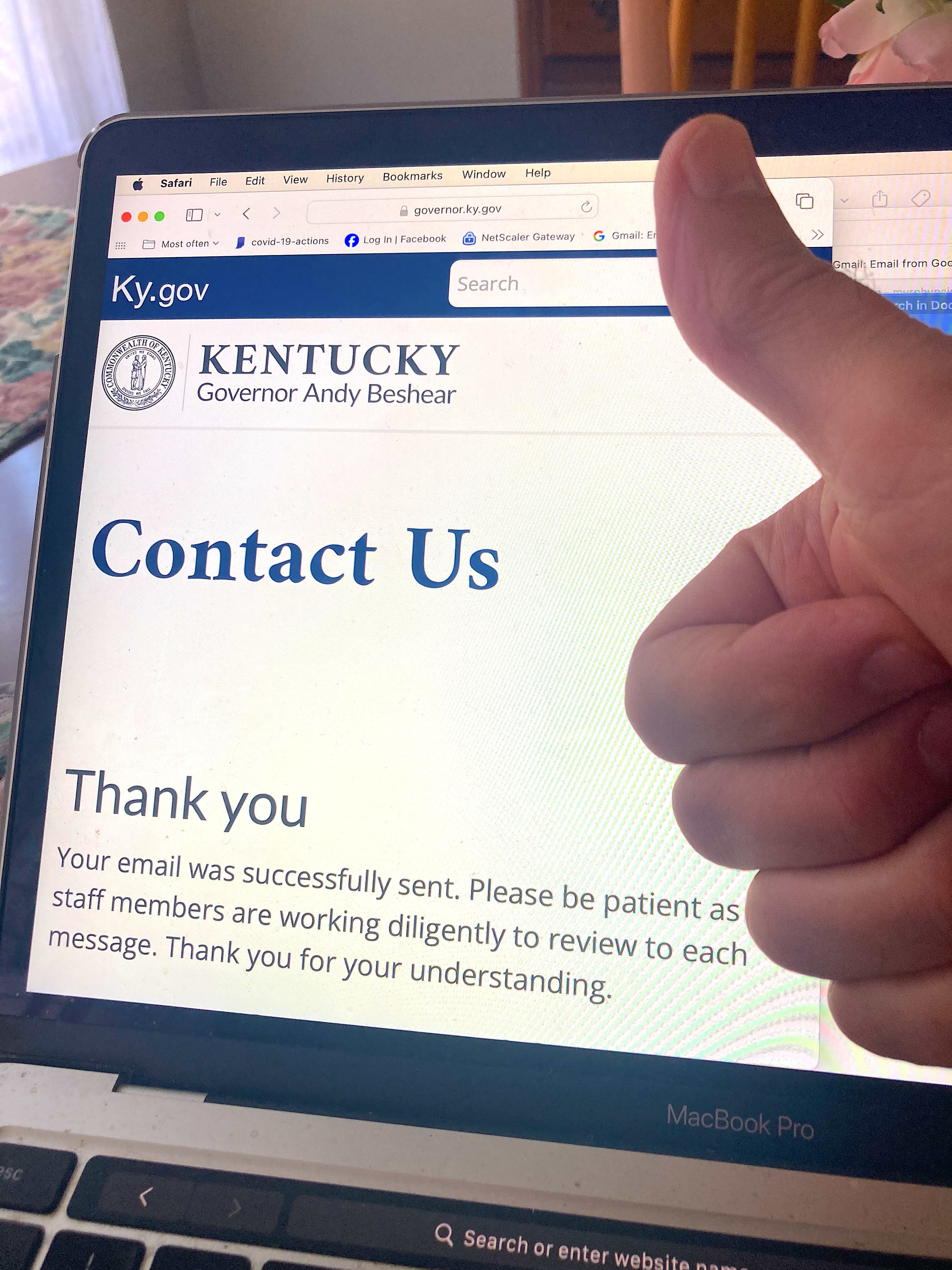
On September 19, 2024, I did two things via the Kentucky Governor’s official website: (1) I requested a meeting, and (2) I sent him an email via https://governor.ky.gov/contact.

Hint: Anyone can do this.

Here’s my email to Governor Andy Beshear.

Dear Governor Beshear,

This could be the most important message you get today. I appreciate you for taking the time to read it. And first of all, let me thank you for your amazing support of patients, families, and caregivers struggling to battle the disease of addiction and its tragic effects on the lives of Kentuckians. 

I was standing in that bright sun on the front row just to your right on Monday’s inspirational Recovery Month event.  After attending, I am more certain than ever that KY in general, and you in particular, are truly dedicated to defeating KY’s opioid crisis — the most deadly public health emergency in our lifetime. 

As I heard you speak, along with the distinguished people to your left and right, and later as I walked along that road between the Capitol and the Annex, meeting the numerous groups representing KY’s amazing response to the crisis, I really felt that united we were standing against this disease, and that we are making some progress.

And as a physician who follows scientific evidence, I’m happy I get to inform you that there is still something you can do. There’s something standing between you and your goal, but it’s fixable. 

That’s good news, Governor! 

I’m referring to KY’s buprenorphine regulation 201 KAR 9:270. It’s outdated and is harming the people it was intended to help. It gets in the way of KY physicians’ willingness and ability to prescribe this lifesaving medication. Something needs to be done about it. It needs to go.

I’m not a politician, not a lawyer, not a regulator. I’m a doctor. I speak for my patients, my colleagues, and the thousands of Kentuckians who could be saved by universal access to buprenorphine. 

But you don’t have to take my word for it. I am certain you know of NIDA Director, Dr. Nora Volkow. I’m equally certain you trust her. Well, she has recently stated that the overdose rate in our country could be cut in half if everyone who needs buprenorphine could find access to it. Dr. Volkow has the research data to back up that claim. And, by the way, I’m meeting her at UofL tomorrow at the Louisville!Research event. Yes, I’m having a really good week!

Governor Beshear, I know in your heart and in your mind you want to do everything you can to save lives. I know it is personal to you. And I promise, if you can find some way to get rid of this outdated, unnecessary, and harmful regulation, my colleagues at KYSAM and ASAM and I will do everything we can to make certain your action in this matter will result in tremendous success — and by “success” I mean, thousands of lives saved. 

Just ask yourself, is there anything else you can think of that is (a) so supported by science, (b) so supported by experts, and (c) so simple to do? You and your administration have already done so much. And you’ve had some success for sure. That’s commendable and something to celebrate.  And how great would it be to stand up to the podium on the south lawn next year and be able to say that KY’s overdose deaths have been cut by 50%

This is not just hopeful, this is do-able! Trust the science.  

Governor Beshear, you work so hard, you put your heart and soul into this cause every day. You deserve to get a better return on your investment. KY needs to get a better return on your investment. And we can!  

Please find some way to suspend or get rid of this buprenorphine regulation, and you will get a return on investment quantified by lives saved.  I’ve already requested to meet with you along with my colleague and KYSAM President, Dr. Colleen Ryan. I hope we can make that happen soon. We’ll help you. I promise.

With gratitude, admiration, and respect for all you do,

James Patrick Murphy, MD, DFASAM

Director, Kentucky Harm Reduction Coalition

Region X Director, American Society of Addiction Medicine

Immediate Past President, Kentucky Society of Addiction Medicine

Assistant Clinical Professor, University of Louisville School of Medicine

Representing ASAM on the AMA Substance Use and Pain Care Task Force