NIDA & the Facts on Marijuana

The National Institute on Drug Abuse Offers the Facts on Marijuana

NIDA1

From the website:

http://www.drugabuse.gov/publications/drugfacts/marijuana

marijuana-smoker1

Marijuana…

Use is rampant:

“Marijuana is the most common illicit drug used in the United States.”
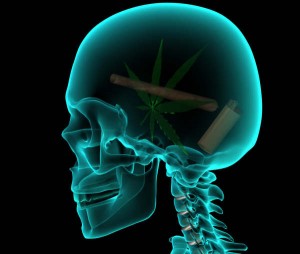
brain damage

Has a powerful effect on the brain:

“Marijuana overactivates the endocannabinoid system, causing the high and other effects that users experience. These include distorted perceptions, impaired coordination, difficulty with thinking and problem solving, and disrupted learning and memory.”

Interferes with successful lives:

“Heavy marijuana users generally report lower life satisfaction, poorer mental and physical health, relationship problems, and less academic and career success.”

Damages the brains of young people:

“Research from different areas is converging on the fact that regular marijuana use by young people can have long-lasting negative impact on the structure and function of their brains.”

Permanently lowers IQ:

“A recent study of marijuana users who began using in adolescence revealed a profound deficit in connections between brain areas responsible for learning and memory. And a large prospective study (following individuals across time) showed that people who began smoking marijuana heavily in their teens lost as much as 8 points in IQ between age 13 and age 38; importantly, the lost cognitive abilities were not restored in those who quit smoking marijuana as adults.”

Causes heart disease:

“Marijuana raises heart rate by 20-100 percent shortly after smoking; this effect can last up to 3 hours. In one study, it was estimated that marijuana users have a 4.8-fold increase in the risk of heart attack in the first hour after smoking the drug.” 
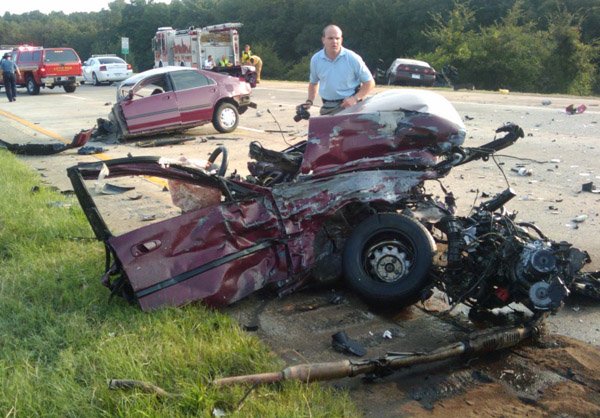
car wreck

Causes car wrecks:

“A recent analysis of data from several studies found that marijuana use more than doubles a driver’s risk of being in an accident.”

Damages the lungs:

“People who smoke marijuana frequently but do not smoke tobacco have more health problems and miss more days of work than nonsmokers, mainly because of respiratory illnesses.”

Causes psychiatric illness:

“A series of large prospective studies also showed a link between marijuana use and later development of psychosis. Associations have also been found between marijuana use and other mental health problems, such as depression, anxiety, suicidal thoughts among adolescents, and personality disturbances.”

fetus

Damages babies:

“Marijuana use during pregnancy is associated with increased risk of neurobehavioral problems in babies. Consequences for the child may include problems with attention, memory, and problem solving.”
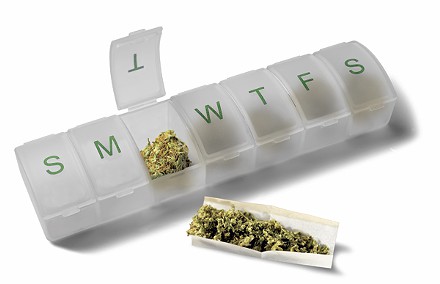
Medical-Cannabis

Is NOT a legitimate medicine:

“The FDA requires carefully conducted studies in large numbers of patients (hundreds to thousands) to accurately assess the benefits and risks of a potential medication. To be considered a legitimate medicine, a substance must have well-defined and measureable ingredients that are consistent from one unit (such as a pill or injection) to the next.”

Is definitely addictive:

“Contrary to common belief, marijuana is addictive. Estimates from research suggest that about 9 percent of users become addicted to marijuana; this number increases among those who start young (to about 17 percent, or 1 in 6) and among daily users (to 25-50 percent).”

And is more potent that ever:

“The amount of THC in marijuana samples confiscated by police has been increasing steadily over the past few decades.”

Read more:  http://www.drugabuse.gov/publications/research-reports/marijuana-abuse

drug facts week

Leadership Louisville Comes to The Old Medical School

old school now

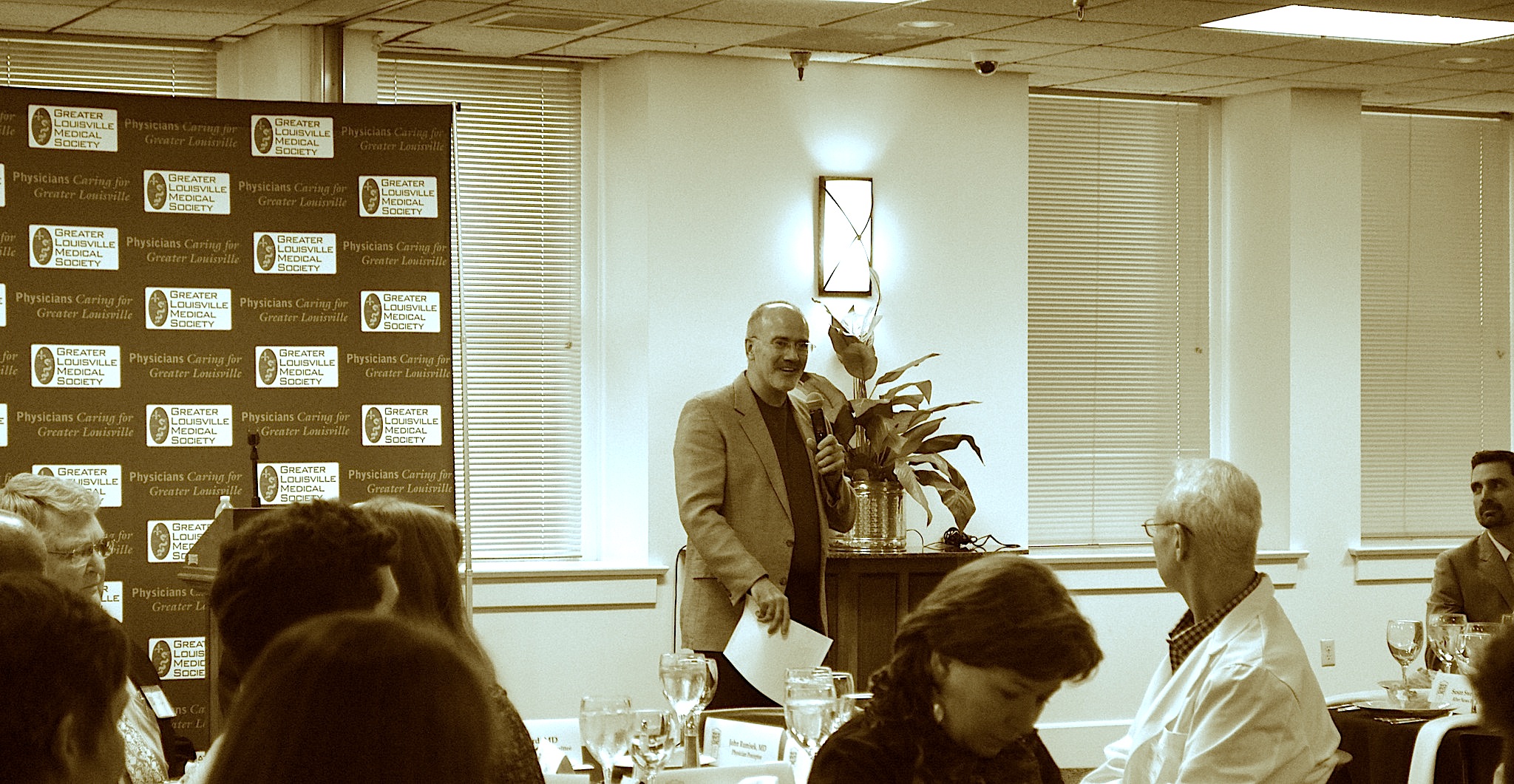
On January 7, 2014 the current Leadership Louisville class met at the Greater Louisville Medical Society Foundation’s “Old Medical School Building.” Here is a portion my welcome…

white coat

There is a lot of history in this room.

old_military at med school

The building was opened as a medical school in 1893 and has withstood The Great Depression, floods, two world wars, and the wrecking ball. It stands as a testament to the passion, resiliency and dedication of the medical profession. Today Leadership Louisville adds to that legacy.

Your director, Aaron Miller, asked me if I was “glad to be standing on this side of the podium” since I was a member of last year’s Leadership Louisville class.

“Sure,” I said. But I also enjoyed my time sitting in front of the podium in 2013. My days with Leadership Louisville were great. It was fantastic hanging out with dynamic people, focusing on topics relevant to the success of our city, making new friends outside of my medical cocoon, and taking a break from my cell phone to engage personally with diversely talented people.

So, why here? Why today?

In the last decade Louisville has shifted from an industrial to a service economy; with an emphasis on health care delivery. In fact, six of Louisville’s ten largest employers are in health care.

The Greater Louisville Medical Society is out in front of this transformation.

Our success is tied to our mission: “…to promote the art and science of medicine; to protect the patient-physician relationship; and to ensure the health of our community.” This journey is comprised of advocacy, education, creativity, mission work, public health, and philanthropy.  Our vehicle is our organization. Our structure is built by bonds of trust.  And our engine is fueled by our passion.

There are many illustrations of our commitment to this mission. These include the cutting-edgePulse of Surgery” program for students at the Louisville Science Center; the world-renowned Healing Place Addiction Recovery program; Supplies Over Seas, sending life-saving medical supplies and equipment to impoverished countries; and the OPIOID safe prescribing initiative, combatting prescription drug abuse. These and other efforts were born of GLMS member collaborations.

There is one program in particular of which you should take note – our “Wear the White Coat” internship program. Every year we team community leaders with physicians from various specialties and allow them to spend a day walking in the shoes of a physician. Later the group reconvenes in the very room you are in now to share. We physicians learn as much from our “interns” as they learn from us. At the end, everyone feels connected, hopeful and inspired.  Each of you will be invited this year.

old school postcard

So, there is a lot of history in this room. But there is a lot of future too.

Thanks for being here and being a part of that future.

 me and business with the residents

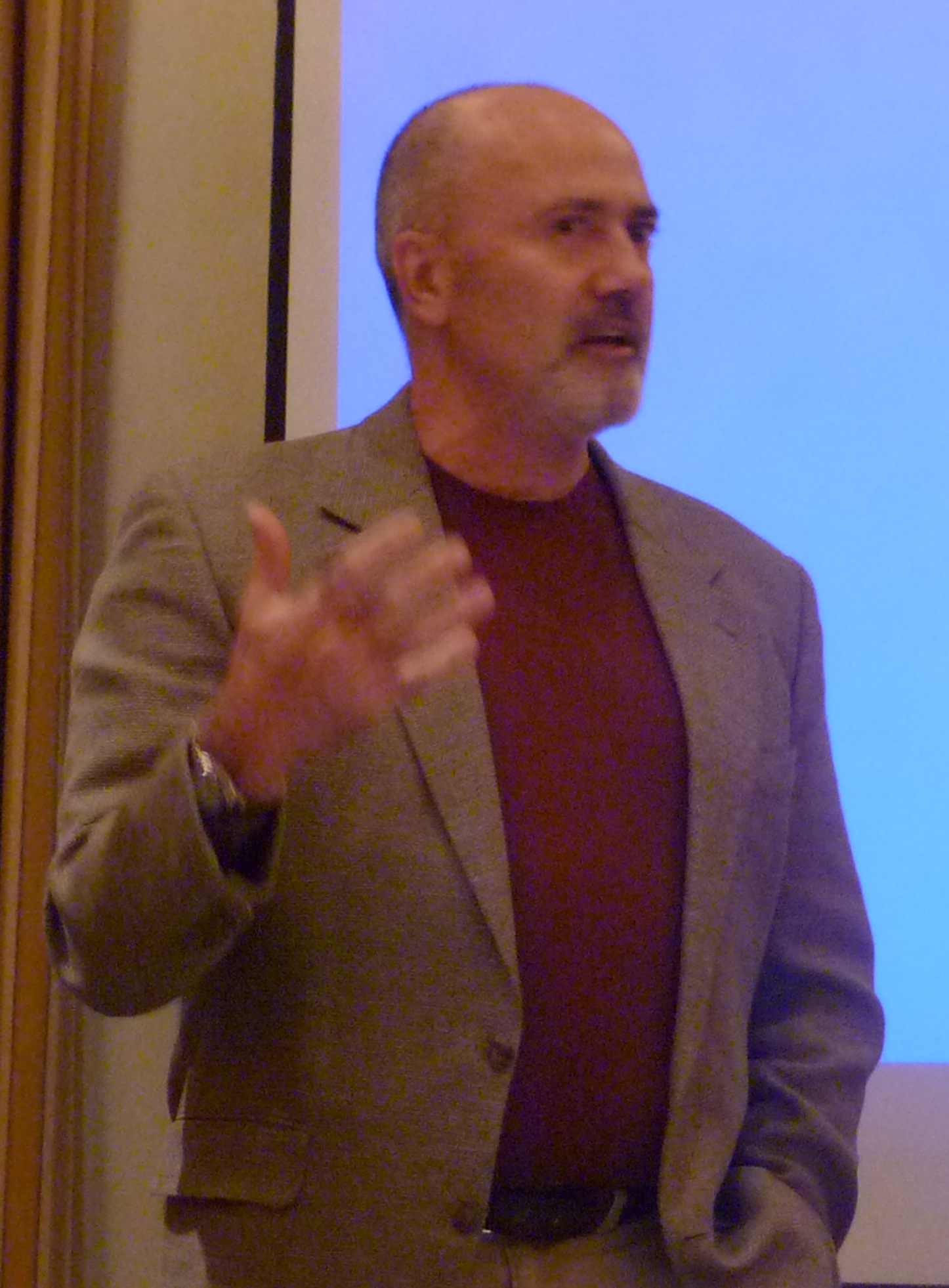
James Patrick Murphy, MD, MMM is President of the Greater Louisville Medical Society, Medical Director of Murphy Pain Center, and Assistant Clinical Professor at the University of Louisville School of Medicine. He is an alumnus of the Leadership Louisville Class of 2013. On his application to Leadership Louisville, he answered the question: “What is the best kept secret about Louisville?” with The Greater Louisville Medical Society. If you are reading this, hopefully it is not a secret any longer.

Dr Gupta, Seriously?

04C No truth sign

On December 21, 2013 at 12:28 am, in response to a story on Anderson Cooper 360 by CNN’s Chief Medical Correspondent Dr. Sanjay Gupta, about Dr. Lynn Webster,  I posted the following comment. 

RE:
December 19th, 2013 10:00 PM ET

Pain doctor investigation


Dr. Gupta, seriously?

You know that treating chronic pain is challenging. There is no pain “thermometer” or lab test to measure, monitor, or prove pain.  It is inherently personal and subjective.  Your implied dismissal of a mode of therapy (i.e. opioids) just because it is not “proven,” smacks of hypocrisy.

You know physicians offer treatments every hour of every day that have not been proven by ivory tower standards (e.g. Many of the drugs used in Pediatrics have only been researched in adult studies and are not FDA approved for children).  Medicine is as much art as it is science. At the end of the day, it comes down to the caring personal connection between the physician and the patient – understanding that the outcome is not guaranteed.

My knowledge of Dr. Lynn Webster is indeed that of a caring, expert, and passionate physician. I wish he could have given his candid opinions, but (again, you know) when there is a lawsuit the doctor is advised to keep silent.

Your CNN piece was anecdotal, unconvincing, sensational, and seemed like “gotcha” to me. I expect better from CNN and you.

Opioid therapy for chronic pain is not without risks.  Dr. Webster has been part of the solution exponentially more than he has been part of the problem. One-sided stories (like yours) cause harm by keeping silently suffering pain patients in the shadows and by discouraging physicians (like Dr. Webster) from taking on the challenge of chronic pain care.

Dr. Gupta, you have such an influential platform. Don’t give in to sensationalism.


James Patrick Murphy, MD, MMM

Certified, American Board of Pain Medicine
Certified, American Board of Anesthesiology
Subspecialty Certified in Pain Management
Certified, American Board of Addiction Medicine

 
jamespmurphymd.com
@jamespmurphymd

FOUR DAYS UNTIL INDIANA’S PAIN REGULATIONS GO INTO EFFECT

re re re

RE – view               RE – vise                 RE – fer 

December 12, 2013 – Counting today there are four days until Indiana’s Emergency Pain Regulations go into effect (on Sunday, December 15, 2013).

The Painful Truth (my opinion) today examines section NINE.

SECTION NINE  – When the morphine equivalent dose (MED) is more than 60 mgm/day, it’s time to REVIEW, REVISE, & REFER

When the 60 mgm per day MED threshold is exceeded, the following must be done:

  1. A face-to-face REVIEW of the treatment plan.
  2. Document a REVISED ASSESSMENT & PLAN  – including risk of DEATH.
  3. Consideration of REFERRAL to a “specialist.”

The Painful Truth notes that the main goal of the “revised” plan seems to be mitigation of risks (especially DEATH) associated with higher opioid dose regimens.

The Painful Truth notes that while the non-specific wording (i.e., “revised,” “consideration,” and “specialist”) allows application of a physician’s clinical judgment, it remains important that documentation adequately justify therapeutic decisions.

The Painful Truth recommends addressing the increased risks (including death) associated with MED greater than 60 mgm/day in a combined opioid INFORMED CONSENT & TREATMENT AGREEMENT (see section FIVE).

The Painful Truth has already examined the concept of a morphine equivalent threshold (see section TWO).

60mph

SEVEN DAYS UNTIL INDIANA’S “DRAMATIC” PAIN REGS GO INTO EFFECT

theatre_masks 

December 9, 2013 – Counting today there are seven days until Indiana’s Emergency Pain Regulations go into effect (on December 15, 2013).

The Painful Truth (my opinion) today examines section FOUR:

SECTION FOUR

This section deals with the Physician’s responsibility for performing the initial evaluation, including determination of level of risk.

It is clearly stated that the physician shall do the physician’s OWN evaluation and risk stratification of the patient by doing the following:

  1. Perform an APPROPRIATELY focused history and physical exam
  2. Obtain or order APPROPRIATE tests “as indicated”
  3. Make a DILIGENT effort to obtain and review records & document the effort.
  4. ASK the patient to complete an OBJECTIVE pain assessment tool
  5. Use a VALIDATED screening tool for mental health and substance abuse
  6. Establish a “working diagnosis”
  7. Tailor a plan with MEANINGFUL and FUNCTIONAL goals (to be reviewed “from time to time”)
  8. WHERE MEDICALLY APPROPRIATE use non-opioid options instead of or IN ADDITION TO prescribing opioids.

The Painful Truth believes the requirements of Section Four lend themselves to creating a checklist. Therefore, at the initial evaluation a Hoosier physician must be DRAMATIC.

o          D         diagnosis made (“working diagnosis”)

o          R         records obtained (a diligent effort made to obtain & review)

o          A          assessment of pain

o          M         mental health (and substance abuse) screen

o          A          activity goals established

o          T          tests ordered if indicated

o          I           instead of opioids, use non-opioid options

o          C         conduct focused history and physical

The Painful Truth notes that the terms “appropriate,” “as indicated,” “diligent,” “meaningful,” and “from time to time” are subjective. Physicians are advised to be able to defend his or her interpretation of these terms.

The Painful Truth believes it is acceptable for a prescribing physician use historical information obtained by sources other than the prescribing physician (i.e., office staff) as long as the physician personally verifies the information with the patient.

The Painful Truth points out that the initial physical exam must be done by the prescribing physician and cannot be delegated.

The Painful Truth notes that a truly “objective pain assessment tool” does not exist, as pain is personal and subjective. Nevertheless, at minimum, a visual analog scale (i.e., 0 to 10) or similar documentation aid should be employed in order to satisfy the regulatory requirement.

The Painful Truth believes that only in rare circumstances would a non-opioid treatment option fail to exist.

acting