National Pain Care Providers Day

meryl

Every dog has his day, right?

In our culture, groups, individuals, and even inanimate objects are frequently honored with their very own special twenty-four hours. These days of recognition give us pauses to examine their meanings and further their causes.

But there’s a compassionate and deserving group of people who have not yet made the list…the caring people who treat our pain. 

For now, National Pain Care Providers Day is only a dream.

It doesn’t exist.

It should.
It can.
And it will…with your help.

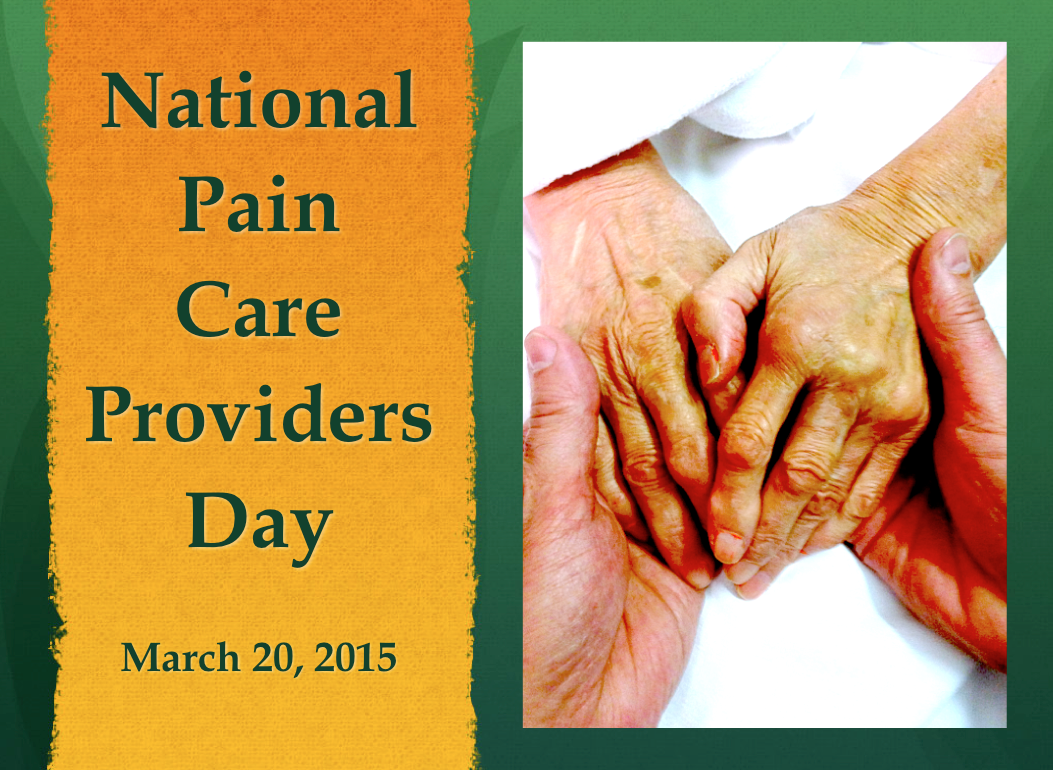
National Pain Care Providers Day
March 20, 2015

npcpd hands screen

It’s time to recognize all who generously and selflessly strive to alleviate suffering. This includes physicians, dentists, nurses, therapists, emergency responders, trainers, masseuses, pharmacists, caregivers, mothers and anyone who gives of her or himself to ease pain.

Why is National Pain Care Providers Day necessary?

Pain is universal. It is the most common medical complaint. There is no escaping it. Pain touches every life. And as our population continues to age, pain is occurring in epidemic proportion.

Pain care is sometimes simple and sometimes extremely complicated. Caregivers can feel tremendous pressure from government agencies, police, lawyers, administrators, addicts, abusers, patients, families, administrators, insurance providers, and the media. As a result, caregivers are too often reduced to feeling “You’re damned if you do and damned if you don’t.”

In reality, they should be praised because of what they do.

Caregivers who persevere deserve our support, gratitude and, at the very least, a day of recognition.

Popular opinions regarding pain care and treatments are evolving rapidly. Taking a special day to spotlight best practices and inspire possibilities would not only bolster the advancement of this vital field of medicine, it would encourage the legions of those who suffer in lonely silence. Less suffering and better lives for all are the goals.

Celebrating National Pain Care Providers Day on March 20, 2015 – the first day of spring – is akin to celebrating hope. From this day forward, the vernal equinox, light overcomes darkness.

RAINBOW SCREEN

So let’s join together and recognize the first day of spring, March 20, 2015, as National Pain Care Providers Day. Let’s make this day special for the special people who treat our pain. Start by sharing your comments and ideas on this blog and/or emailing paincareprovidersday@gmail.com. Pass along the message on social media (Twitter, Facebook, etc.) and contact your civic leaders. Be a vital part of this movement.

Let Hercules himself do what he may,
The cat will mew and dog will have his day.
~ William Shakespeare’s Hamlet

You are the playwright now.
The parchment is blank.
Imagine.
Create.

And celebrate!

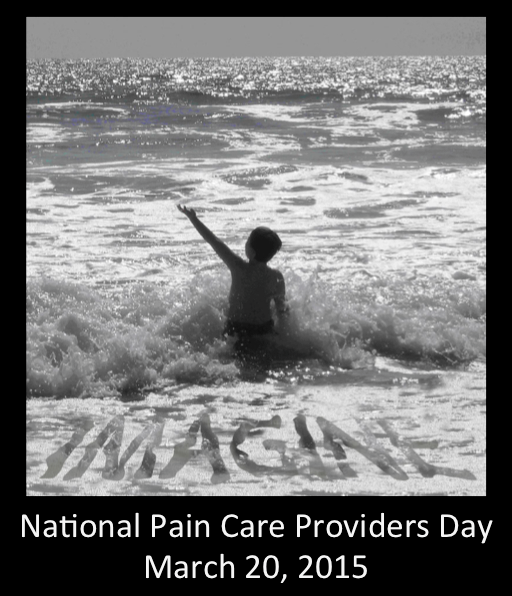
National Pain Care Providers Day
March 20, 2015

npcpd screen


*

Basic Pain Care Certification

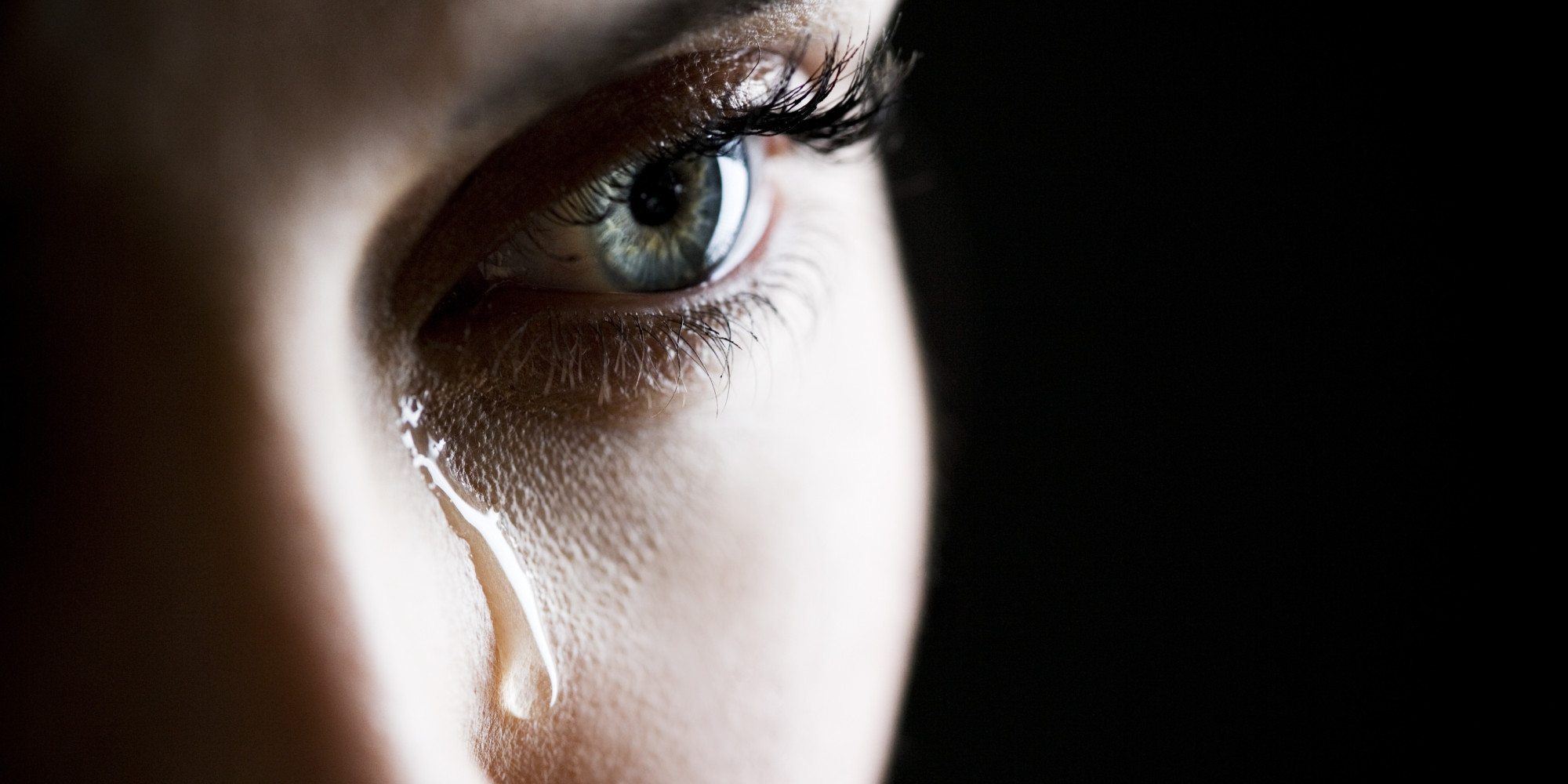
o-WOMAN-CRYING-CLOSE-UP-facebook

The consequences of pain…

A young mother is terrified helplessly watching her child spiral toward death in anaphylactic shock, because she did not know that an allergy to aspirin could also mean an allergy to ibuprofen.

An elderly man is no longer breathing, because he mistakenly thought he could break his pill in half to save money; when in fact, this caused the immediate release of a lethal dose from his time-release pill. He will die before the ambulance can arrive but could have been saved by a simple subcutaneous injection.

A business executive is transfused her tenth unit of whole blood, but it will not save her from dying from the hemorrhaging ulcer caused by excessive over-the-counter pain medications.

A young football star slumps silently in a corner at his high school friend’s party. Pills acquired from various unlocked medicine cabinets are coursing through his arteries. In three days his grieving parents will be struggling with the decision to remove him from life support.

With alarming frequency, stories like these touch every family.

All are preventable.


The consequences of pain…


More costly than cancer.

More deadly than car crashes.

More likely than a heart attack.

More common than the common cold.


With pain being so ubiquitous, so serious, so PAINFUL, why do we still not know how best to deal with the pain epidemic?

Perhaps, it is precisely because we don’t know?

Then, we should learn.

We should become knowledgeable, skilled, competent, and even certified.

Screen Shot 2014-08-05 at 11.10.30 PM

By “we” I mean everyone – not only health care providers. Pain and pain’s consequences touch every life. We all have a stake.

Lifeguards, plumbers, electricians, firemen, police, pilots, engineers, lawyers, nurses, pharmacists, physicians, etc., etc., etc., must earn certifications. Similarly, by the millions, people of all ages achieve certification in Basic Life Support – and we regularly hear stories of how a bystander stepped in to save a life. A standardized and universal understanding of pain, its treatments, complications, emergencies, and prevention could have similar results.

This point is bolstered by a recent letter from the American Society of Addiction Medicine calling upon the White House to:

…focus holistically on provider and community education, overdose death prevention and increased access to treatment, in order to effectively manage the (opioid) epidemic.

Knowledge is power.

It is time we, as a community, put that power to work.

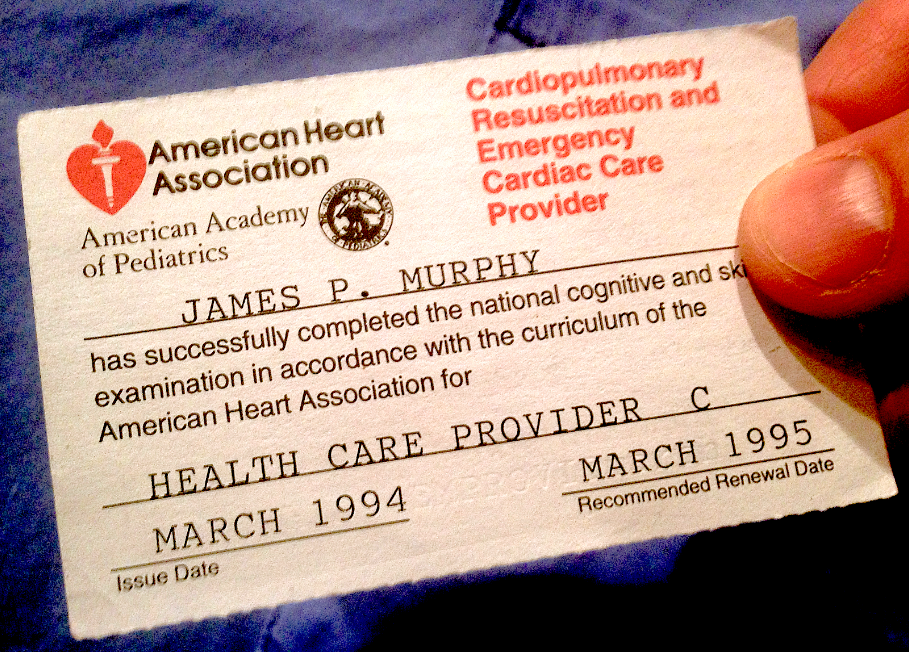
The roadmap is clear. Like the American Heart Association’s Basic Life Support certification, Basic Pain Care (BPC) can be taught in a standardized algorithmic manner. Learning can be didactic and hands-on. For most, it would only take a few hours to master the skills, earn the certification, and acquire the confidence.


A Basic Pain Care curriculum might include:

– Wellness and prevention (diet, exercise, stress)

– Acute care (ice, heat, etc.)

– Over the counter medications

– Prescription medications

– Opioids

– Alternative and complementary treatments

– Drug abuse prevention, recognition, and treatment

– Regulations

– Pitfalls and risks

– Emergency procedures (overdose, seizure, etc.)


Imagine how confident you would feel if you knew the best and safest way to treat pain, regardless of the situation – acute, chronic, traumatic, post-operatively, and palliative. Imagine that everyone knew.


Imagine the suffering that would be eased.

Imagine the resources that would be spared.

Imagine the lives that would be saved.

Imagine the tears that would never be shed.


Now make it real. Join with me in establishing the Basic Pain Care Certification. We can start by getting connected. Share this article. Offer your comments. Follow my Confluential Truth blog and the Twitter account @jamespmurphymd. Email your thoughts to basicpaincare@gmail.com.

Change the consequences of pain.

*

*   *

*   *   *

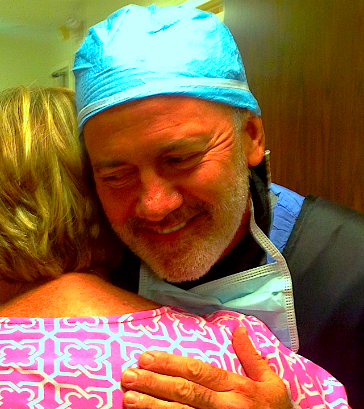
m hug

*   *   *

*   *

*

Talking Trash

cj title

On July 8, 2014, the Louisville Courier-Journal ran a front-page article about how hard it is to find a drug disposal drop-off in Louisville.  No mention was made of trashing the leftover meds.  Here is the letter to the editor I sent in response on July 10, 2014.

letter to editor

Dear Courier-Journal,

Drug abuse is epidemic.  So no one should trash talk about Martha Elson’s excellent article, Drug Disposal Boosted by Boxes.  But the trash is exactly where leftover abusable drugs can go.  Ms. Elson exposed the number one suppliers of abused pills, and surprisingly, it’s not the doctors. It’s you and me. In fact, about two-thirds of all abused pills come from family and friends, often right out of unlocked medicine cabinets.  As a specialist in Pain Medicine and Addiction, I require my patients to lock up their medications and properly dispose of any leftovers.  But with so few drug drop-off boxes available, what’s a responsible person to do?

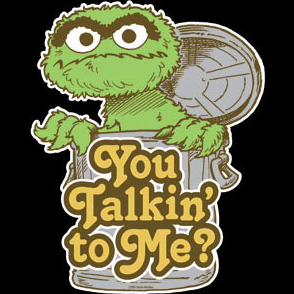
Trash them!

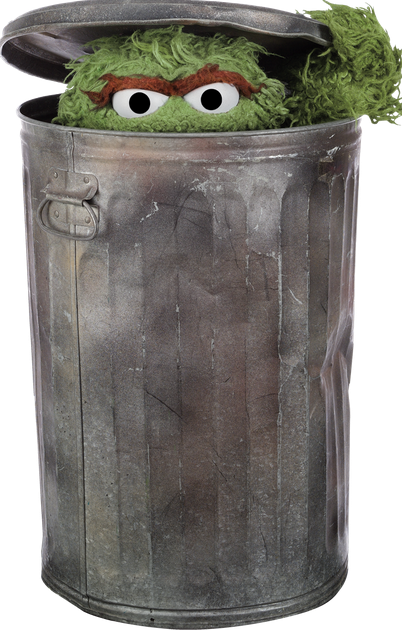
oscar

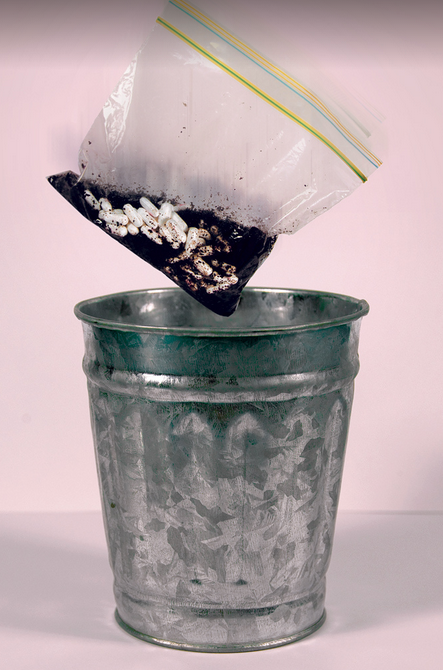
Yes, if you can’t get to a drop-off box, the FDA says it is acceptable to throw your old medications in the trash, provided you first “doctor them up” a bit. Simply mix the pills with kitty litter or coffee grounds.  Seal it in a leak-proof bag (like a zip-lock) and toss it in the garbage.  Easy.

dispose

The more potent the drug is, the greater the need for disposal of the unused leftovers.  The FDA has even determined that the danger from keeping unused powerful narcotics is so ominous, that flushing leftovers down the toilet is acceptable when a drop-off box is unavailable.ty d bol

The Environmental Protection Agency is OK with this policy.  And the FDA says there has been no indication of adverse environmental effects due to flushing leftover pills.

However, leftover pills do contribute to adverse societal effects.  About one-fourth of high school age youth have abused prescription drugs. Approximately three Americans die every hour of every day from a drug overdose.  More Kentuckians die from overdose than die in automobile accidents.  A very large percentage of these overdose deaths involve prescription drugs.

Ms. Elson’s timely article brought to light the progress we are making.  More and more drug drop-offs are becoming available.  We should take advantage of them when we can.  But please do not let your busy schedule, your concern for the environment, or your unfamiliarity with regulations deter you from properly disposing your unused medications.  We are battling a drug abuse epidemic.  People are dying.  Make sure you are not an unwitting supplier. You may save the life of someone you love…  And that’s not talking trash.

trash talk

*

*

*


Is it the singer or is it the song?

I love music.

I am not what one might call “musical.” I don’t have the pipes of a Whitney Houston (see: The Star Spangled Banner) or the soulfulness of a Bob Dylan (see: Blowing in the Wind), but I appreciate their unique virtuosity.

I am a pain care physician. Pain, like music, is a sensory and emotional experience. I don’t sing or play. I touch and treat.

Sometimes I may hit the perfect note, perform the perfect procedure, compose the perfect plan of care.

Other times, despite being well versed, my plan of care may not strike the right chord. Then creating a pleasant sensory and emotional experience depends upon the passion and conviction with which my care is conducted; my song is sung.

Is it the singer or is it the song?

Is it the caregiver or is it the care given?

Music is not only intertwined with my pain care. It is woven into every aspect of my life, including my Twitter feed.

Begging the question: Is it the tweeter or is it the tweet?

Let’s find out.

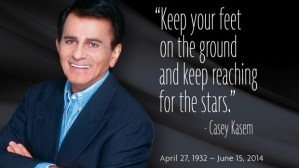
For a about a year I have been composing a Twitter message or two per day. Recently, I went back and was able to find forty tweets that were “musical” in some way. It may not be America’s top forty, but I think Casey Kasem would still have been pleased.

casey kasem b and w

There are songs from rock, country, and classical genres; from musicals, commercials, television, and the silver screen. Some are serious; some are silly. Original works, live performances, even parodies.

I now invite you to take a little journey through my musical tweets. Click on the image and the link should take you right to the performance. See if you can guess the song before you link to it. Ponder how it relates to the message. Enjoy the sensory and emotional experience. And decide for yourself…

Is it the tweeter or is it the twuuth* ?


* twuuth (definition)

  • noun\ˈtwüth\ the twuuth : the truth in a tweet


#40

1 25 oct 13

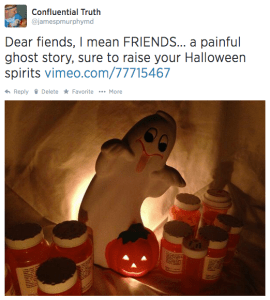
25 October 2013  How the Ghost Stole Pain Care. Dramatic reading by Phil Ward and music composed by Megan McIver

https://twitter.com/jamespmurphymd/status/393876826809843712/photo/1

http://vimeo.com/77715467


#39

2 21 dec 13

21 December 2013  A Winter’s Solstice

https://twitter.com/jamespmurphymd/status/414443104792354816?refsrc=email

https://www.youtube.com/watch?v=kh_sckAUkgE&list=PLe1seBFJFklgHIqjjUUUhxZmL_rchZau9


#38

3 10 jan 2014

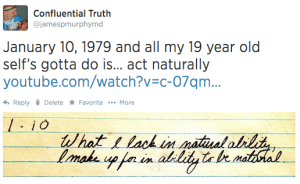
10 January 2014  Act Naturally

https://twitter.com/jamespmurphymd/status/421697528891854848/photo/1

https://www.youtube.com/watch?v=c-07qmTUi9A


#37

4 12 jan 2014

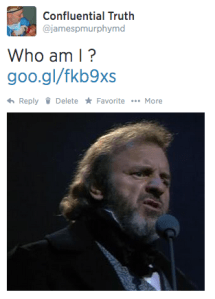
12 January 2014 Les Miserables

https://twitter.com/jamespmurphymd/status/422410734950043648/photo/1

https://www.youtube.com/watch?v=HPIos2mXbUE


#36

5 26 jan 14

26 January 2014 I’m Only Sleeping

https://twitter.com/jamespmurphymd/status/427318581399789569/photo/1

https://www.youtube.com/watch?v=8KAsr-hix9s


#35

6 10 feb 14

10 February 2014 The Gold and Beyond

https://twitter.com/jamespmurphymd/status/433042987648417792?refsrc=email

https://www.youtube.com/watch?v=2hBB4DPw-h4


#34

7 12 feb 14

12 February 2014 ABC

https://twitter.com/jamespmurphymd/status/433632926316515329/photo/1

https://www.youtube.com/watch?v=I8GvDLDYhNM


#33

8 12 feb 14

12 February 2014 Hearing Winter

https://twitter.com/jamespmurphymd/status/433655563193286656/photo/1

https://www.youtube.com/watch?v=VaXGGPVNnxU


#32

9 17 feb 14

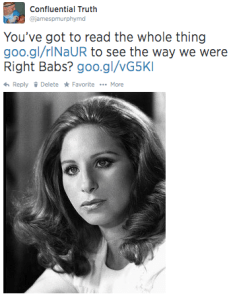
17 February 2014 The Way We Were

https://twitter.com/jamespmurphymd/status/435621354222526464/photo/1

https://www.youtube.com/watch?v=6VhNaXV8K4U


#31

10 17 feb 14

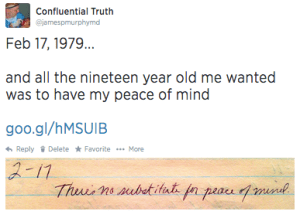
17 February 2014 Peace of Mind

https://twitter.com/jamespmurphymd/status/435639476686045184/photo/1

https://www.youtube.com/watch?v=Q5ZL8qvEmR0


#30

11 21 feb 14

21 February 2014 Doctor Pat

https://twitter.com/jamespmurphymd/status/437033465536462849/photo/1

https://www.youtube.com/watch?v=6vuUpSnPXz0


#29

12 22 feb 14

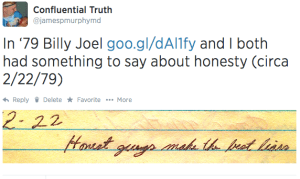
22 February 2014 Honesty

https://twitter.com/jamespmurphymd/status/437388430465462273/photo/1

https://www.youtube.com/watch?v=R4gOIt-M02A


#28

13 2 mar 14

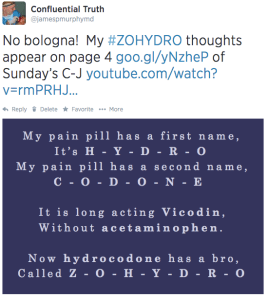
2 March 2014 My Bologna

https://twitter.com/jamespmurphymd/status/440310294867234816/photo/1

https://www.youtube.com/watch?v=rmPRHJd3uHI


#27

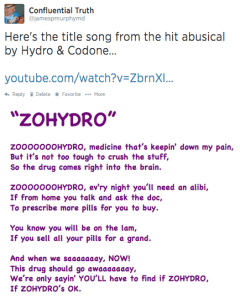
14 5 mar 14

5 March 2014 Oklahoma

https://twitter.com/jamespmurphymd/status/441273659001286657/photo/1

https://www.youtube.com/watch?v=ZbrnXl2gO_k


#26

15 14 mar 14

14 March 2014 Hair

https://twitter.com/jamespmurphymd/status/444682878396293120?refsrc=email

https://www.youtube.com/watch?v=7Qf2R-1saDQ


#25

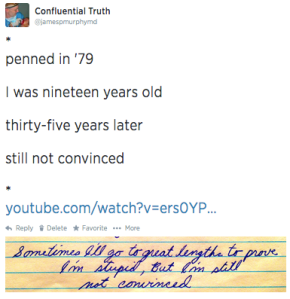
16 29 mar 14

29 March 2014 Stupid


https://twitter.com/jamespmurphymd/status/449943660134555649?refsrc=email

https://www.youtube.com/watch?v=ers0YPoMxbk


#24

17 4 apr 14

4 April 2014 Words

https://twitter.com/jamespmurphymd/status/452173873299980291?refsrc=email

https://www.youtube.com/watch?v=sr-WW5abcwQ


#23

18 7 apr 14

7 April 2014 Oops

https://twitter.com/jamespmurphymd/status/453267038077984768?refsrc=email

http://vimeo.com/54035300


#22

19 9 apr 14

9 April 2014 Call On Me

https://twitter.com/jamespmurphymd/status/453922140312440833?refsrc=email

https://www.youtube.com/watch?v=Wh86uSsux1M&feature=kp


#21

20 17 apr 14

17 April 2014 Lights Went Out

https://twitter.com/jamespmurphymd/status/456764575258402816?refsrc=email

https://www.youtube.com/watch?v=uSSJwKixbKU


#20

21 19 apr 14

19 April 2014 Little Wonders

https://twitter.com/jamespmurphymd/status/457546932161110016?refsrc=email

https://www.youtube.com/watch?v=tWU8_uUJJu0


#19

22 28 apr 14

28 April 2014 Undun

https://twitter.com/jamespmurphymd/status/460961322163642368?refsrc=email

https://www.youtube.com/watch?v=QzSLxYLuJhI


#18

23 15 may 14

15 May 2014 I’m Sorry 

https://twitter.com/jamespmurphymd/status/467135943741157378?refsrc=email

https://www.youtube.com/watch?v=4a_vhiBxi90


#17

24 5 june 14

5 June 2014 Let It Go

https://twitter.com/jamespmurphymd/status/474655637620535296?refsrc=email

https://www.youtube.com/watch?v=EtAG3e3JLNI


#16

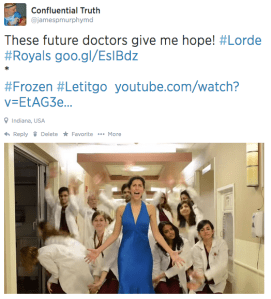
royals

5 June 2014 We Will Never Be Doctors

https://www.youtube.com/watch?v=mxyNzqQNa50


#15

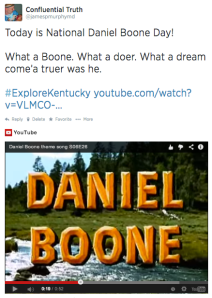
25 7 june 14

7 June 2014 Daniel Boone 

https://twitter.com/jamespmurphymd/status/475246656968200192?refsrc=email

https://www.youtube.com/watch?v=VLMCO-JZqWs


#14

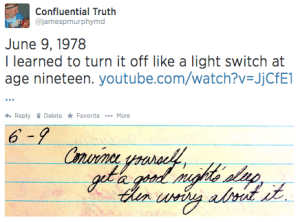
26 10 jun 14

10 June 2014 Turn It Off

https://twitter.com/jamespmurphymd/status/476212528289038336?refsrc=email

https://www.youtube.com/watch?v=JjCfE1n6nW4&list=PLf470HqOWw3d8Oj5uAXPV19yJ7E7aGDwX&index=163


#13

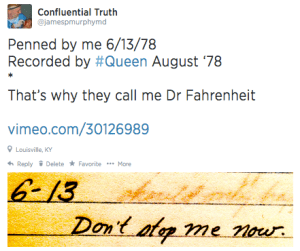
27 13 jun 14

27 June 2014 Don’t Stop Me Now

https://twitter.com/jamespmurphymd/status/477316980274237440?refsrc=email

http://vimeo.com/30126989


#12

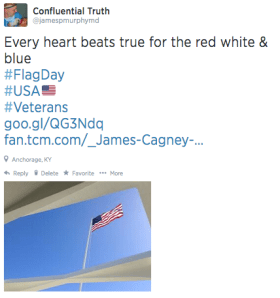
28 14 jun 14

 14 June 2014 It’s a Grand Old Flag

https://twitter.com/jamespmurphymd/status/477902903290515457/photo/1

http://fan.tcm.com/_James-Cagney-You39re-a-Grand-Old-Flag/video/1146300/66470.html?createPassive=true


#11

29 15 jun 14

15 June 2014 In the Living Years 

https://twitter.com/jamespmurphymd/status/478362296126013440?refsrc=email

https://www.youtube.com/watch?v=bWiwde4z9Qk


#10

30 16 jun 14

16 June 2014 Pressure

https://twitter.com/jamespmurphymd/status/478599157926473728?refsrc=email

https://www.youtube.com/watch?v=SJCTgtDU-74


#9

31 21 jun 14

21 June 2014 Sunrise

https://twitter.com/jamespmurphymd/status/480542585535352832?refsrc=email

http://vimeo.com/88197078


#8

32 27 jun 14

27 June 2014 Listen

https://twitter.com/jamespmurphymd/status/482653910616666112?refsrc=email

https://www.youtube.com/watch?v=K5aRRq9mquo


#7

33 29 jun 14

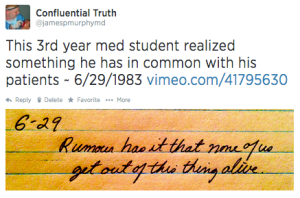
29 June 2014 Rumor Has It 

https://twitter.com/jamespmurphymd/status/483451855125479424/photo/1

http://vimeo.com/41795630


#6

34 the letter

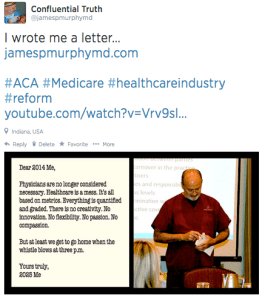
1 July 2014 The Letter

https://twitter.com/jamespmurphymd/status/484055472618500096

https://www.youtube.com/watch?v=Vrv9slgO7Ic


#5

35 all together now

2 July 2014 All Together Now

https://twitter.com/jamespmurphymd/status/484446529210445824

https://www.youtube.com/watch?v=xFpW8g83g6E


#4

36 dialogue

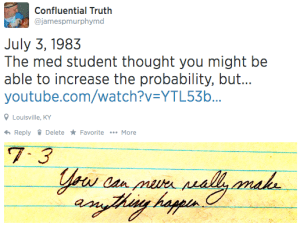
4 July 2014 Dialogue

https://twitter.com/jamespmurphymd/status/484941146976567296

https://www.youtube.com/watch?v=YTL53bmYqzM


#3

37 danger zone

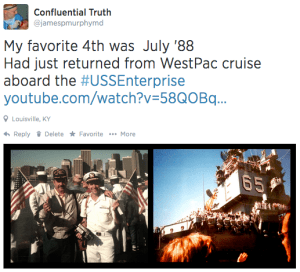
4 July 2014 Danger Zone

https://twitter.com/jamespmurphymd/status/484955780253106177

https://www.youtube.com/watch?v=58QOBqAWNzE


#2

38 if you want it

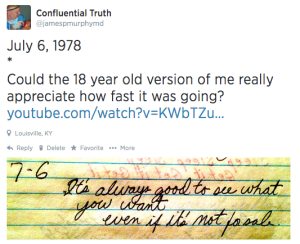
6 July 2014 If You Want It Here It Is 

https://twitter.com/jamespmurphymd/status/485956691708477442

https://www.youtube.com/watch?v=KWbTZuEWjnc


And the #1 musical tweet in the land is…

39 stipe tweet

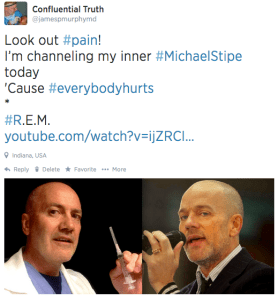
7 July 2014 Everybody Hurts 

https://twitter.com/jamespmurphymd/status/486224816618213376

https://www.youtube.com/watch?v=ijZRCIrTgQc


*

keep you feet on the ground


*

*


STRENGTH IN NUMBERS

office M

Show up at my office on a typical Friday afternoon and the waiting room generally will be well populated. People in groups of threes, twos, and solitary ones are scattered about, flipping through magazines, glancing at wristwatches, a few even catnapping, waiting to hear their names called.

However, on this Friday everyone was assembled in one end of the room, all facing the same direction, all listening to the same thing, all sharing in the same experience.

talking to

I still don’t have an official name for the happening, but I’ve nicknamed it a “SIN” session, i.e. Strength In Numbers.  However, there’s nothing sinful about it.

Strength in Numbers is geared toward patients, is part classroom, part group therapy, and entirely beneficial to all participants – including me.

I had no trouble selecting the didactic elements. My practice is located on the border between Kentucky and Indiana – two states that have recently enacted laws and regulations for treating pain with controlled substances.

bridge

Both states’ regulations are instructive regarding educational requirements.

Kentucky’s regulations mandate:

A physician prescribing or dispensing a controlled substance shall take appropriate steps to educate a patient receiving a controlled substance.

There’s even a list of educational points to consider on the Kentucky Medical Board’s website.

Not to be outdone, Indiana’s regulations state:

The physician shall discuss with the patient the potential risks and benefits of opioid treatment for chronic pain, as well as expectations related to prescription requests and proper medication use.

Hoosier State regulations go on to list specific educational points that prescribers must cover with patients that include obtaining a patient’s informed consent.

agree

Obviously, to obtain informed consent a patient must be informed.

Indeed, most states’ regulations require that physicians educate their patients. The Federation of State Medical Boards agrees:

The physician’s duty includes not only appropriate prescribing of opioid analgesics, but also appropriate education of patients… inadequate attention to patient education (is a clear) departure from accepted best clinical practices.       

But, aside from the learning part, there is another, less precise, less quantifiable, factor in the equation that produces strength at these Friday afternoon get-togethers.

The numbers.

A group dynamic is quite therapeutic. For some time, psychology researchers have been able to show that group therapy is a “powerful intervention.”

Groups foster a community spirit; a sense that “I’m not in this alone.”

The group offers a sounding board. Members can help each other come up with specific ideas for improving a difficult situation or life challenge and even offer some accountability along the way.

The key therapeutic principles involved in group therapy include:

*Hope: Being with people who are coping or recovering gives hope to others who may be running short on this.

*Universality:  People see that they are not alone.

*Information: They help each other by learning and sharing a consistent message.

*Altruism: Self-esteem and confidence is boosted by sharing and helping others.

*A sense of family: The therapy group is much like a family in some ways. And because the group shares common goals, members gain a sense of belonging and acceptance.

Now, more and more, group sessions are utilized in the treatment of conditions other than purely psychological. The American Academy of Family Physicians has stated their belief that “group visits are a proven, effective method for enhancing a patient’s self-care of chronic conditions, increasing patient satisfaction, and improving outcomes.”

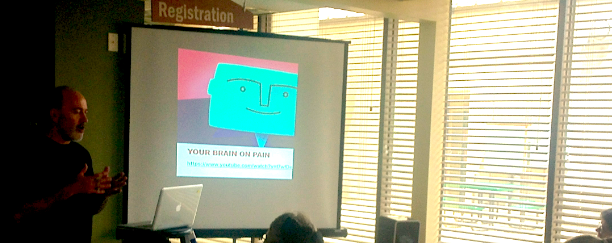
So, on this Friday afternoon we had a group “SIN” session. It started with a little levity and a brief informative video.

dr pat

Next, some definitions were explained, risks and alternatives were discussed along with “SMART” goals and proper stewardship of the medications. Patient responsibilities were explained. The educational points required by the Bluegrass and Hoosier States were covered. Some Q & A was encouraged throughout. It was interactive.

This was not a purely didactic session. There was eye contact and emotional contact. After all, pain is defined as a sensory and emotional experience.

And in the end, the participants didn’t just feel like a number.

And they had more strength to do battle.

As did their doctor.

On this atypical Friday afternoon.

There truly is strength in numbers.

Fireworks-047-screen

Giving them the business

Screen Shot 2014-06-22 at 11.21.32 PM

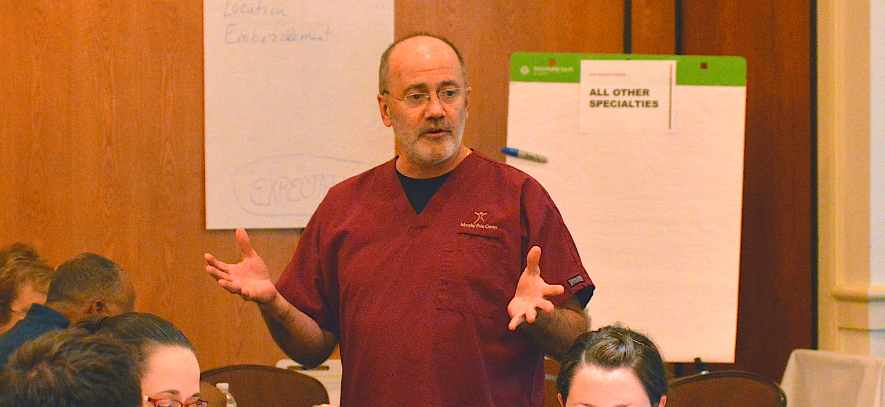
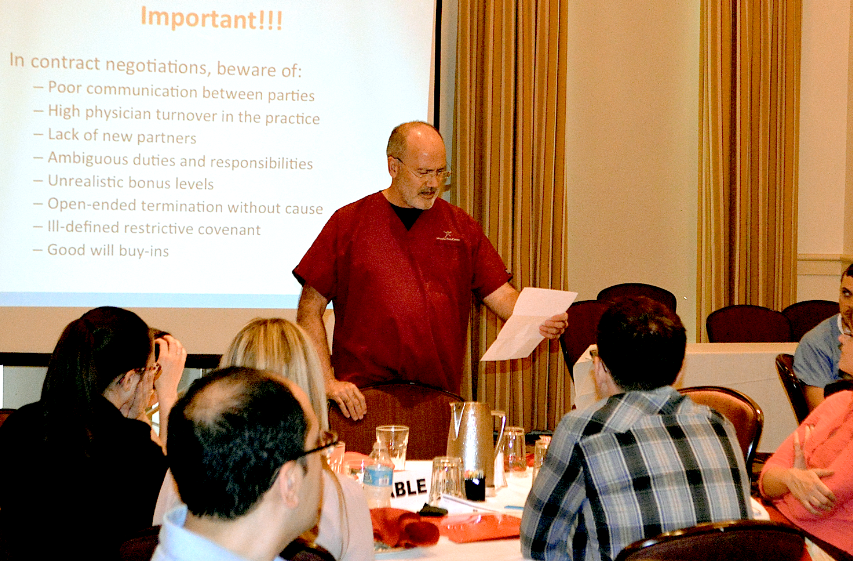
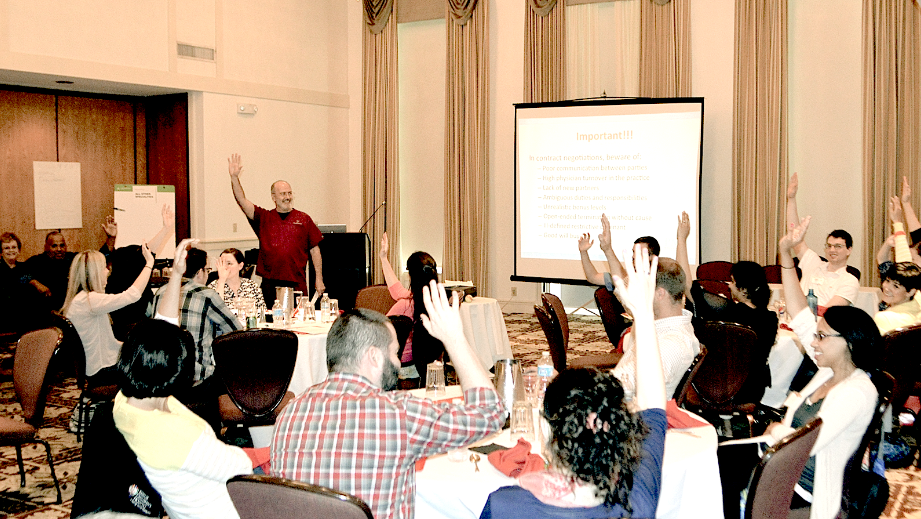
On May 22, 2014 the University of Louisville Residents’ Business seminar was the last group I would address as President of the Greater Louisville Medical Society. It went something like this…

hello 2 screen

I didn’t have a course like this when I was a resident.

I wish I had.

Somewhere between respiratory acidosis and cardiac preload, learning to read a spreadsheet could have been worked in.

But it wasn’t.

You’re very fortunate that your university is enlightened and generous enough to offer this course for you.

Today, with healthcare taking up about 20% of our nation’s GDP, there are many non-medical types grasping for our nation’s healthcare steering wheel.

Soon you will be finishing your residencies.

You’ll board the healthcare industry train.

You can either be a passenger or a driver.

It’s your choice.

As I prepared for today’s seminar, I thought about what I would say to myself if I could time travel back fifteen years to when I was sitting where you are now, finishing my residency.

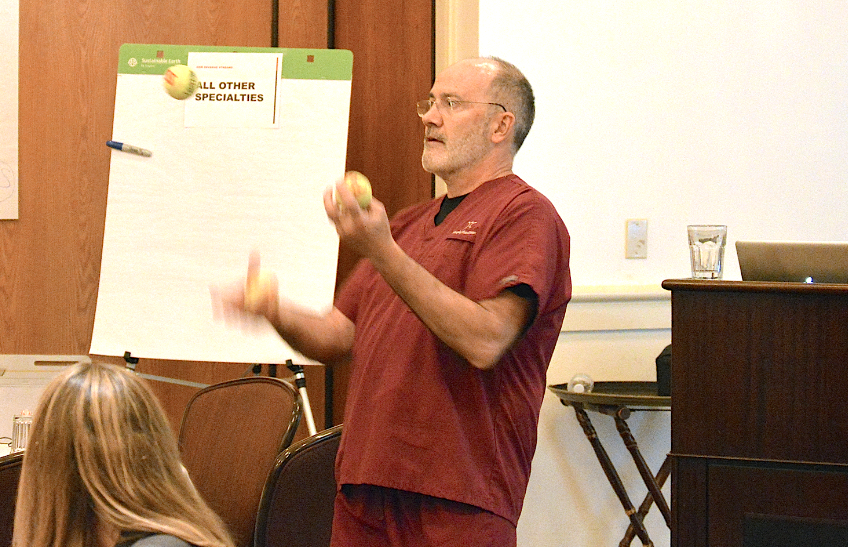
3 balls screen

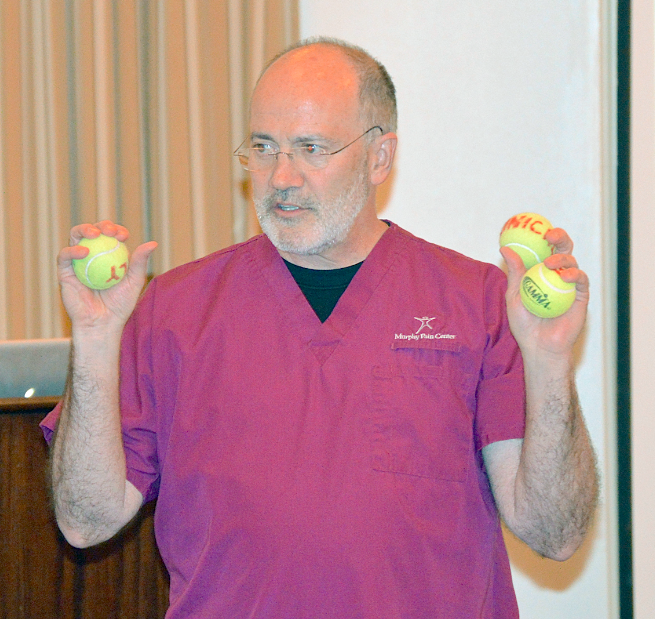
I would tell myself that there are three balls I will have to juggle.

The first ball is your “clinical” ball. Thus far, keeping this ball in the air has been the primary focus of medical school and residency training. Patients’ needs must be met. Your patients must be well.

The second ball is your “family” ball. You’re not on this journey alone. Your loved ones and close friends depend upon you as much as you depend upon them. Lose their support and the stress of being a physician can be overwhelming. Your family must be well.

The third ball is your “self” ball. Do not neglect your own health, outside interests, passions, talents, or loves. Your self must be well.

juggle screen

The best way to keep these balls in the air is by juggling them yourself. Don’t delegate that job. Even though most of you will be employed, avoid dependence by becoming as comfortable in boardrooms as you are in operating rooms. You must not ignore the business of medicine.

*
open letter screen

(A letter arrives. It is from the future. It reads…)

Dear 2014 Me,

I’m writing you from the year 2025. Physicians are no longer considered necessary. They just get in the way. Healthcare is a mess. It’s all based on metrics. Everything is quantified and graded. There is no creativity. No innovation. No flexibility. No passion. No compassion. But at least we get to go home when the whistle blows at three p.m.

Yours truly,

2025 Me

*

letter 1 screen

This does not have to be our default future. We can do better. But only if we have physicians willing to lead. And physician leaders now must understand the business of medicine, or else medicine will be nothing more than a business. We must be in boardrooms and wrestle back control of the steering wheel.

*
letter 2 screen

(Another letter from the future arrives…)

Dear 2014 Me,

I’m writing you from the year 2025. Physicians are the essential driving force in medicine. Metrics are used to add structure to the art of medicine, not to govern or discipline. The patient-physician relationship is secure and flourishing. Creativity, innovation, and compassion fuel our passions. I don’t know what you told those residents back in 2014, but it must have worked. Thank them for me and for all of us.

 Yours truly,

2025 Me

*
Someone here must have listened. Someone decided to fill the vacuum created by the lack of physician business leadership. Someone stepped up and took firm grasp of the steering wheel guiding our nation’s healthcare. Someone refused to accept our default future.

Who was it?

hands 2

*
*
 

Continuity of Care

TourtheTower

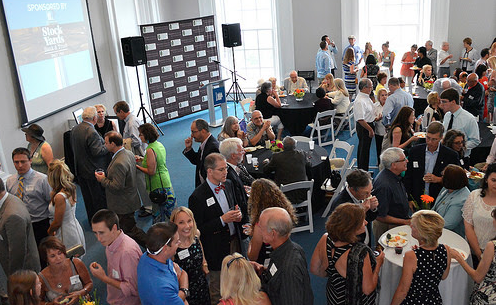
On June 1, 2014 at Louisville’s historic and newly renovated Water Tower, the Greater Louisville Medical Society held its annual Presidents’ Celebration.

crowd at watertower

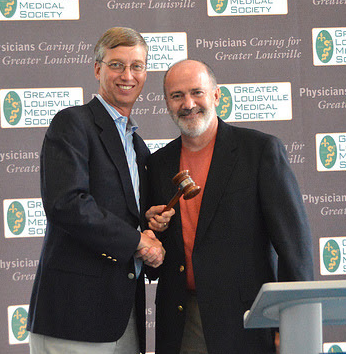
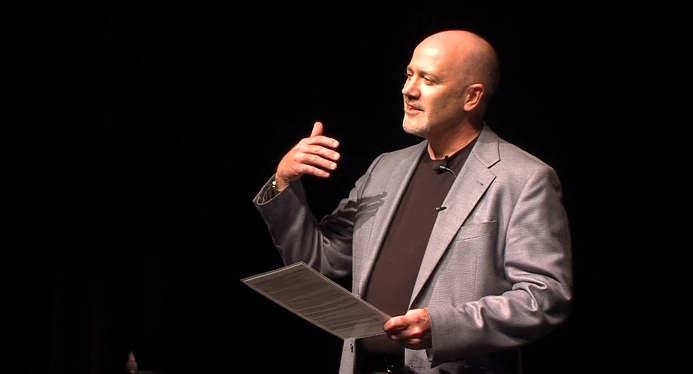
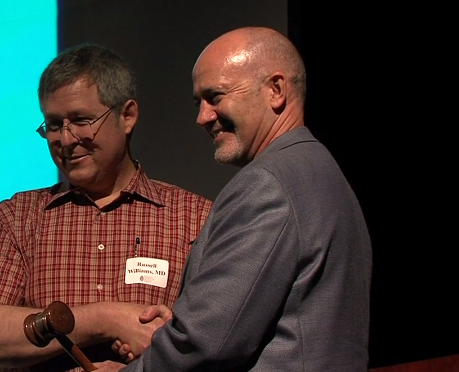
As outgoing president I had the honor of introducing Dr. Bruce Scott – my esteemed colleague and childhood friend – as our new President. I also thanked some of the many great folks who worked so hard to make this the most satisfying year of my professional life.

pat and bruce screen

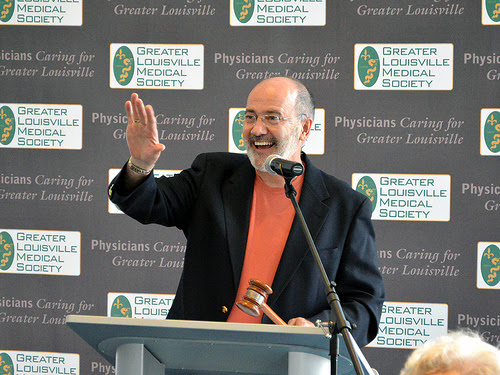
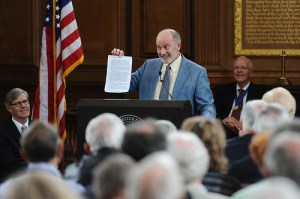
Before I handed over the President’s gavel to Bruce and assumed my new role as Chair of the GLMS Board of Governors, I had this to say…

pat podium

A year ago, as your newly elected President, the last words I said on that stage were:

The Greater Louisville Medical Society is our organization, our tribe, our road to a place where medicine is both science and art, where our community enjoys wellness, and the sacred bond between our patients and us is secure. And my goal this year is to see us united.

murphy speech at pres celeb

It’s one year later, and our profession is under attack as never before. Physician burnout is an epidemic. This is why, more than ever, we must be united.

Back in the day, physicians were a more homogenous group. There were fewer specialists. We shared common values and common goals.

Now government, employers, specialties, patients, and family pull us in many directions. There is an ever-increasing burden for maintenance of board certifications and licensure. Each separate payer and practice facility requires its own credentialing. Medical liability risks keep mounting. The insatiable quest for quantifying quality with data points and benchmarks threatens to crush our creativity and mandate cookbook-style care. Rival non-physician tribes continuously grab pieces of what used to be our acknowledged scope of practice.

How do we respond? All too often by retreating to presumed “safe houses” provided by the one, two, three or more specialty societies each of us believes offers the most protection of our turf.

Got to survive, you know.

The irony is that these refuges are not safe at all. They are static. Stationary. It makes us benign targets for attack by all who would prefer a leaderless mechanized conveyor belt of universal one-size-fits-none healthcare. This sanctimonious deconstruction of our profession is done in homage and servitude to the inscrutable holy trinity of cost-effectiveness, quality, and value.

Survive?

Why not thrive!

Regardless of where your professional journey has led, you and I and our colleagues remain connected at our roots. We still share common values and must share common goals. We are physicians by education, oath, and calling.

And more…

We love our profession.

We love humanity.

And we love each other.

That is why we get up every day, put on our white coats, and go out to save the world.

Because it must be saved.

And we know…

We are the ones who must do it.

United.

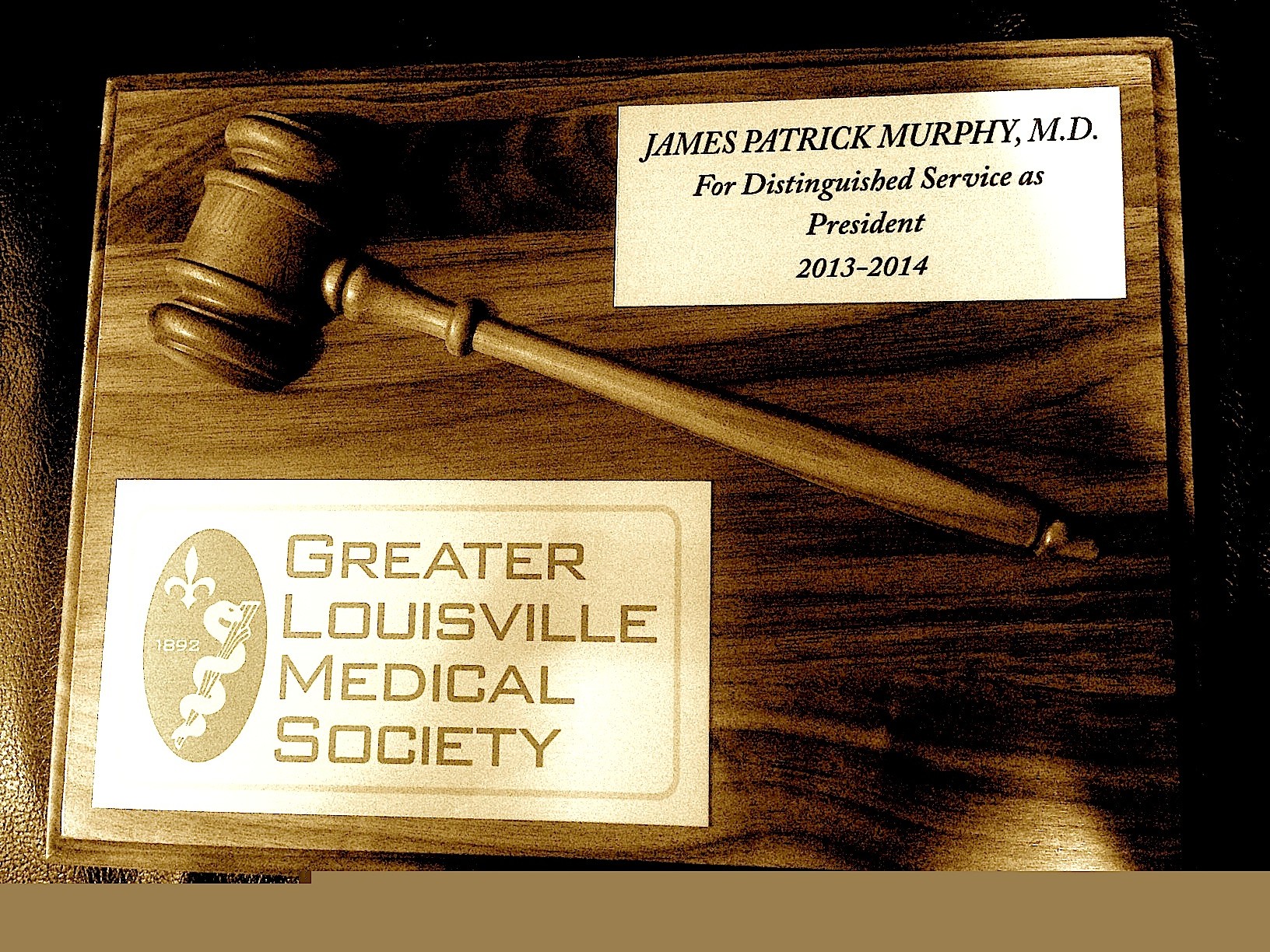
gavel trophy

Art Imitates Life Imitates Art

celebration invite screen

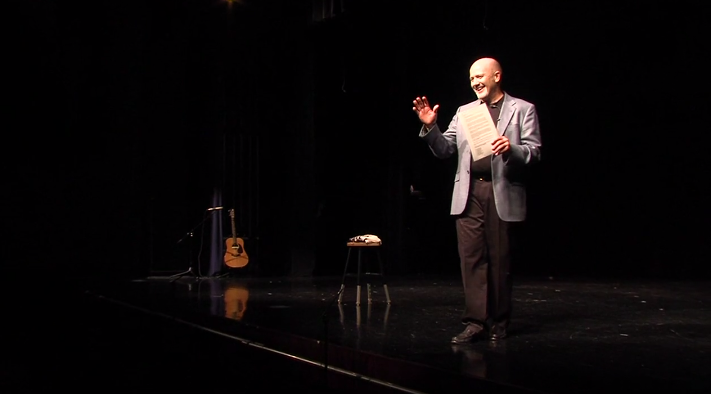
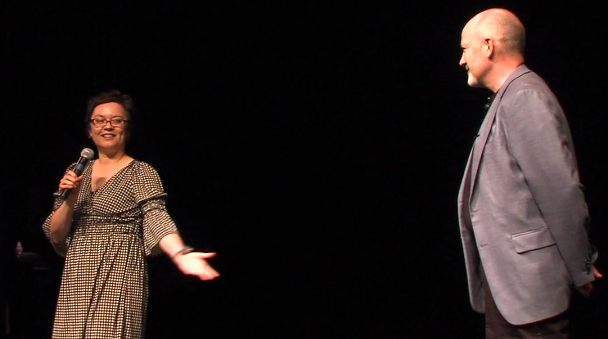
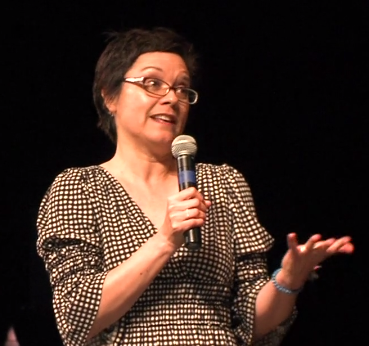
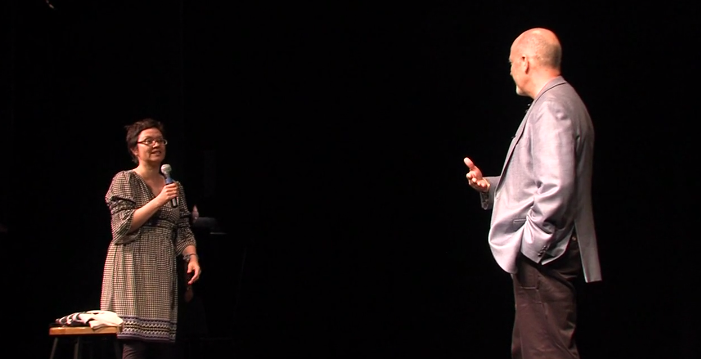
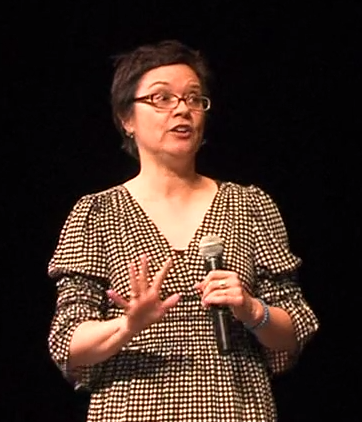
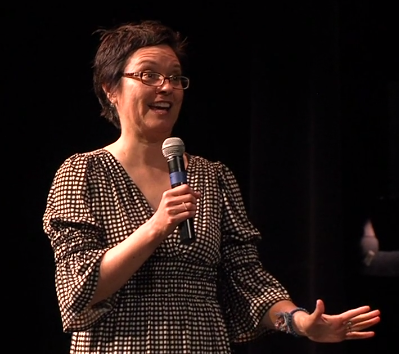
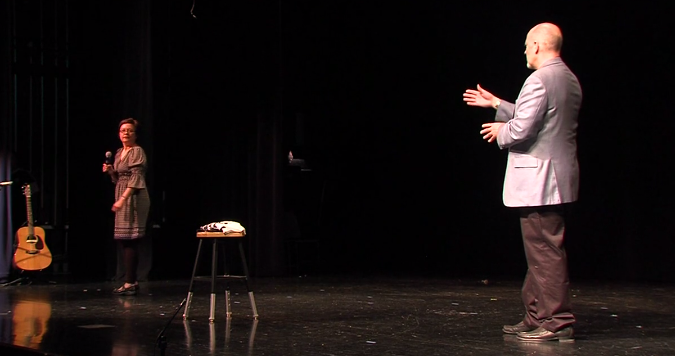
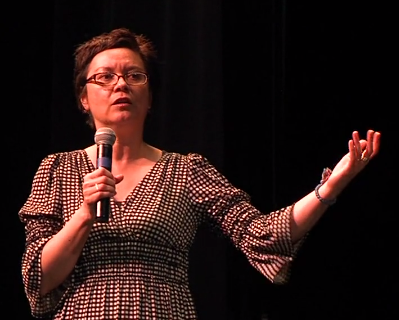
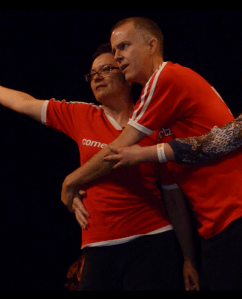
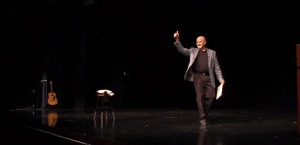
On May 19, 2013 the Greater Louisville Medical Society held its annual Presidents’ Celebration at the Kentucky Country Day School Performing Arts Center in Louisville, Kentucky. On that day I was honored by inauguration as president of the medical society. Early in my address to those in attendance I was abruptly interrupted by a “heckler” in the audience. Here is a transcript of that encounter…


fraud title pose


Fraud


A play in one act by James Patrick Murphy, M.D.

gettng the gavel

Characters:

Doctor Murphy (DOCTOR) – A physician who has just been given the gavel and installed as the next president of his medical society.

Patient (PATIENT) – A female audience member.

Voices in unison (VOICES) – A group of people off stage who are never seen, but say the last line in unison.

*
The lights come up to reveal DOCTOR on the stage, addressing the audience. DOCTOR’s first line is somewhere in the middle of his acceptance speech.

doctor address  crowd 1

                                                  DOCTOR

I know there are actually some of my patients out here too. And I won’t ask anybody to raise their hand, because I understand the confidentiality but thank you…

(DOCTOR is interrupted by a voice from the darkened audience)


                                                  PATIENT

Thank YOU Doctor Murphy.

(Audience applauds)

silvie full in audience 2


                                                  DOCTOR

(Peering out into the audience, sheepishly)

Who was that?


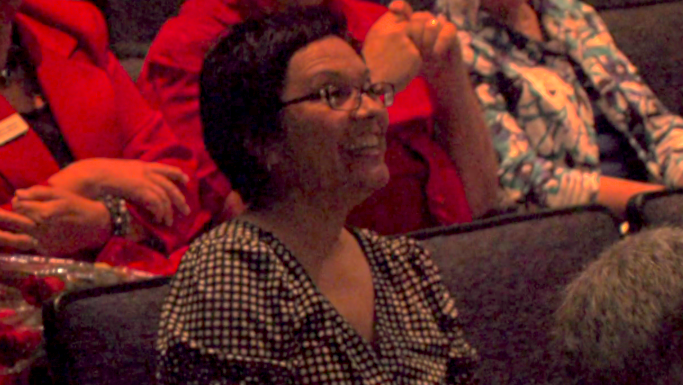
                                                  PATIENT

(Raising hand)

Me.


                                                  DOCTOR

Do I…?

audience silvie 2

                                                  PATIENT

Yeah, you may not remember me, but I sure remember you. Thank you.

(DOCTOR is smiling, but is clearly rattled by this interruption)


                                                  DOCTOR

Thank you. Uh… Just a second. Can I talk to you?

(PATIENT gets up from audience and meets DOCTOR at the corner of the stage. After brief hushed conversation, DOCTOR invites PATIENT up onto the stage)


                                                  DOCTOR

(To audience)

This is kind of unusual, but she’s going to say something that really fits into what I’m going to say later on. This is kind of amazing.

first patient 3

                                                  PATIENT

(To audience, holding a microphone)

Well, I was Doctor Murphy’s first patient, ever. I was only eight years old. And he was on his… (Turns to address DOCTOR) You were on your first clinical rounds, your rotation in med school. And you came every morning and looked in on me and checked my pulse and my temperature and my lungs and got me ready for my open-heart surgery. (To audience) I had open-heart surgery. I was so little and so scared.

going to be okay 4

(To DOCTOR) And you just let me know that everything was going to be OK, that I was going to do great. And I did! And I swore I would never forget you. And I haven’t.


                                                  DOCTOR

Well, thank you so much. That’s great. (To audience) Isn’t that great? I remember that. Thank you.

(DOCTOR reaches to take the microphone from PATIENT, but at the last moment PATIENT pulls away and continues speaking into the microphone)

microphone 5

                                                  PATIENT

Thank you and I didn’t…I…I…You rotated away after that.


                                                  DOCTOR

Yeah, I know. I rotated in medical school.

that's OK navy 7


                                                  PATIENT

But that’s OK. You don’t have to explain anything, because I understood. I know how those things go. I trusted you and I was grateful for all that you did for me.

dont have to explain 6

                                                  DOCTOR

Thank you.

(DOCTOR attempts to applaud, but is cut off by PATIENT)


                                                  PATIENT

(Backing away a little more)

Oh and I remember I saw you at that clinic in the navy hospital in San Diego. Yeah, I was so nervous and you had some really bad news to give me, but you set me up with a specialist. But then after that I never saw you. You left the hospital after that.


                                                  DOCTOR

Well, I was in the navy. I had to go out on the ship.


                                                  PATIENT

(Backing away a little more)

Yeah, I understand. You don’t have to say anything. You don’t have to explain. I completely understand. I was grateful for all that you did for me. I trusted you.

(Backing away)

And then I remember you were my anesthesiologist before my surgery. I was waiting for my surgery. And you were a little bit under the gun, because the OR was ready and the surgeon was ready and standing by. And right before we were going to leave to go in I asked if I could pray with my pastor. And you stopped everything and let that happen.

pray 8

                                                  DOCTOR

Yeah, I remember that. And I hope you don’t think that you were inconveniencing me at that time.


                                                  PATIENT

(Backing even farther away)

Oh no no no. You don’t have to say anything. I understand. I trusted you. And I was grateful for all that you did for me.

And then I had to have all those pain medications because I had five back surgeries. And the insurance company had some doctor I’d never seen before look at my records and not at me. And you did write a letter after they said that the insurance shouldn’t have to pay for my medications. You wrote a letter but they still denied my medicine.

wrote me a letter 9

                                                  DOCTOR

I know. I was going to call, but, you know, the preauthorization takes so much time. And I’m so busy. And I have to see a lot of patients. I have to pay my bills.


                                                  PATIENT

(Backing still farther away)

Yeah, I understand. You don’t have to say anything. I trusted you. I was grateful for all that you did for me.

start all over 10

And then I got that letter. I got that letter that started off, “Dear Valued Customer.” And then went on to say that I was going to have to get another doctor because you were not in my plan. You’d been cut out of my plan. Or because you’d started working for this big health care corporation and they didn’t accept my insurance. So I had to go find someone else and start all over.


explaining 10.5

                                                  DOCTOR

Well you know there are so many regulations now. There’s so much. There’s laws. And there’s the EMR. I have to document so much stuff. I can’t do it on my own. I have an employer now. I’m part of a corporation. I have corporate policies. (PATIENT is now exiting the stage) You know, I want to be your doctor. I want to be the leader of the health care team.

not okay 11


                                                  PATIENT

(No longer on stage, now only a voice on the PA system)

I don’t think that’s OK. I really don’t like your explanation. I’m not sure I trust you anymore. I am not grateful to you. I’m not a person anymore.


                                                  VOICES

(Off stage)

I am a population.

population 12


                                                     END


sad at end


*
Postscript: Silvie Zamora played the role of PATIENT. Silvie is an incredibly talented actress and dear friend. She and her equally talented husband, Phil Ward (also a lifelong dear friend), were vital to this little one-act’s artistic value and true message.

 phil and silvie

When you watch the video, keep in mind this was never rehearsed on stage. Silvie is the queen of improvisation!

Initially, the audience was not aware that this was a ruse. From my vantage point on stage it was fun to sense each individual gradually becoming aware that they were taking part in a group theatrical event.

“FRAUD” was written to be a wake up call for all physicians.

And, by the way, the events depicted in the play actually happened.
…and this just scratches the surface.

thumbs up

*

*
*


Here’s the link to the “Fraud” video:

http://vimeo.com/67679697


*


A love letter to a liberal arts education

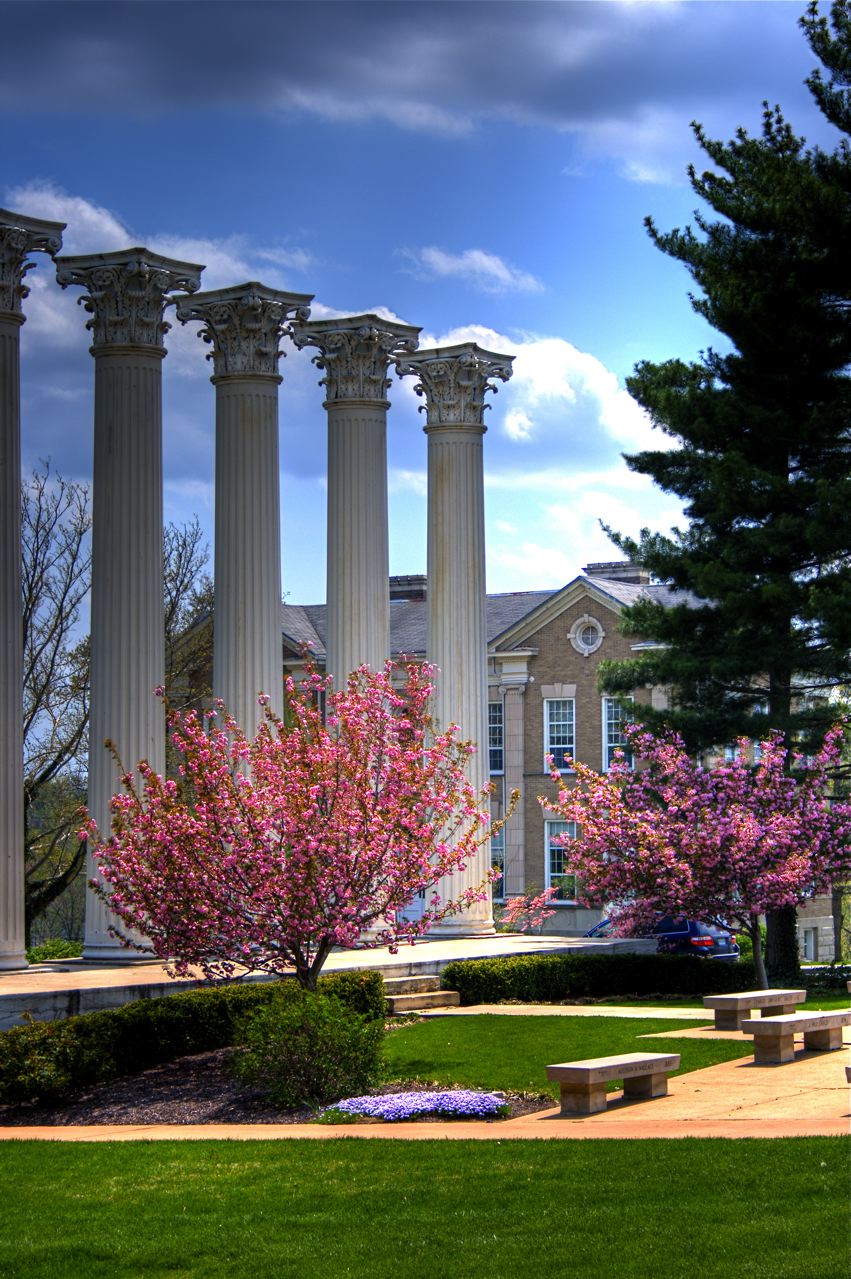
The_columns_at_Westminster_College 

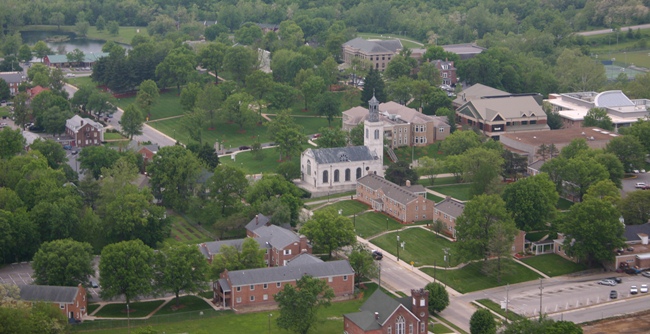
At Westminster College my intellect was challenged, my imagination was freed, and my passions were set ablaze. Here I made lifelong friendships that have sustained me. Here I thrived in the glow of mentors who sparked confidence and convictions.

–       This is my quote as it appeared in the Westminster College Alumni Awards Convocation program, April 26, 2014. It’s only a portion of what I submitted and does not tell the whole story.


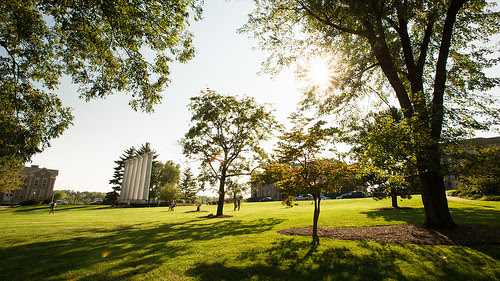
walking on the grass at westminster

April 26, 2014 was a typical springtime Missouri morning – cool, crisp, sunny, and I was my typical running late self. Not to worry, a shortcut across the lawn and I should make it to the ceremony with at least thirty seconds to spare. Just behind me, I noticed a smartly attired lady who had chosen the same trajectory as me. Assuming we were going to the same place, I tried to be cute:

“Back when I went to this school they would fine you for cutting across the grass.”

She was cuter:

“Don’t worry. I know someone.”

That someone was her husband and Westminster College President, Dr. George B. Forsythe. Jane and I were going to be fine. She had her connections and I had a half-minute cushion. It was just like old times.

church inside

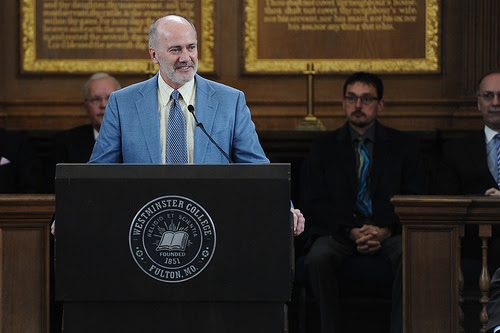
Twenty minutes later, standing at the business end of the center aisle in that iconic Christopher Wren church, came my singular three-minute opportunity to channel my inner Winston Churchill and somehow explain what this Lifetime Achievement Award means to me. As best I can remember, this is what this English major said…

*

at podium smiling

President Forsythe, distinguished guests, faculty, friends, students, and fellow award recipients, I am deeply honored by this recognition. If I am truly the person you described in that gracious introduction, then Westminster College deserves much credit.

I want to first thank my wife, Adele, and my son, Kellen, who are here to in share this experience. You didn’t know me while I was at Westminster, but this place helped make me the person you now know.

And I must thank my mom and dad for the foresight, vision, sacrifice and love it took to provide me this opportunity. My dad was a city fireman and my mom worked her way from our school lunchroom to registered nurse. I was their first-born and the first in our family to go to a four-year college. Sending me away was tough on them economically and emotionally. I can clearly remember Mom’s tearful goodbye as they drove away from the steps of Marquess Hall. Dad said Mom cried all the way to St. Louis. But they were very proud to send their son to Westminster College. And they would have loved being here today, but due to health issues couldn’t make the trip. This is their award too.

I also want to mention and thank the late Charles King McClure, a successful Louisville entrepreneur, who lived in my dad’s fire district. Mr. McClure was a Westminster alum and trustee. When he learned of my dad’s bright son, he convinced us to look at Westminster. But it really didn’t take much convincing. After one visit I knew this was the place for me.

There’s something about this small midwestern liberal arts college. I still can’t put my finger on it, but it might be akin to Kentucky’s unique nurturing of horses.

kentucky horses

The Bluegrass State has gently rolling hills for building strong muscles, nutritious grass for grazing, and abundant limestone in the soil to provide calcium for strong bones. There foals become colts, then competitors, then champions. Likewise, Westminster provides the essential ingredients to nurture thoroughbred students who become champions.

route z screenshot

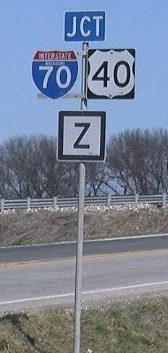
Driving to Fulton this Thursday I longingly scanned the horizon for the exit onto route Z; my first opportunity to get off I-70 and into the countryside. Like the college, there’s something about the locale – an historic small town in central Missouri.

fulton the setting

This idyllic environment lends itself perfectly as the setting for a coming-of-age story.

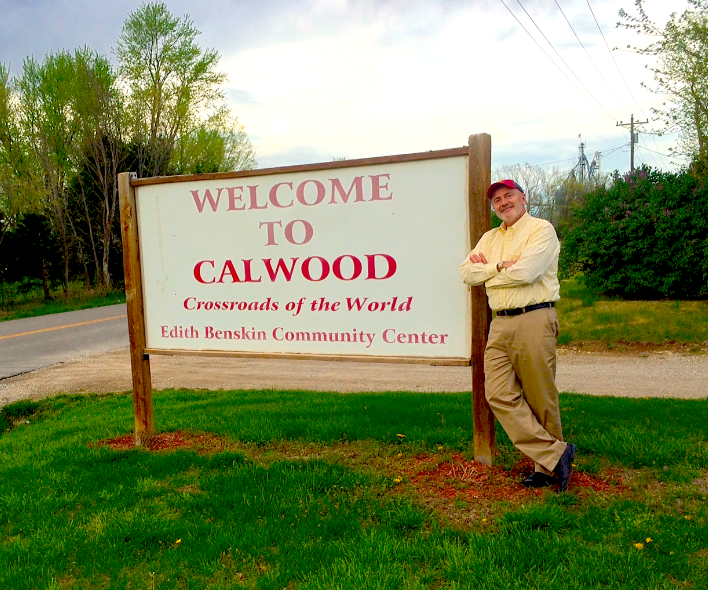
Not to diminish the importance of academics, but driving on route Z through Calwood, the self-proclaimed “Crossroads of the World”…

welcome to calwood screen shot

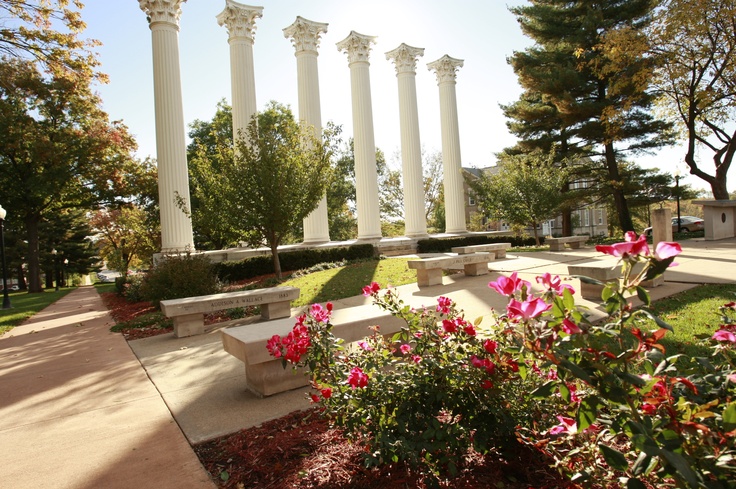
…past farms, over creeks, to finally arrive in Fulton, my only thoughts were of my classmates, friends, professors, and fraternity brothers. Our four-year odyssey began trudging uphill through the Westminster columns as freshmen and ended downhill, as graduates, through those same columns on a misty day in May of ’81.

westminster columns sunny

These relationships were forged in a pivotal time – riding the last waves of adolescence; on the cusp of adulthood – and wove the calico fabric of who I would become.

At Westminster, “who I would become” seemed always to be in a state of flux. But contrary to popular belief, my decision to apply to medical school was not a last minute afterthought. I came to Westminster with that goal in mind. The problem was that I loved poetry more than chemistry. However, my faculty mentors – some of whom have honored me with their presence here today – advised me I could major in my first love and still take advantage of the breadth of educational opportunities encompassed by a liberal arts curriculum. I always felt a bit like their little experiment. But the experiment worked – and their Westminster English major got early acceptance to medical school.

I may not have been sure of my destination, but I never doubted the vital role Westminster played in my journey.

Our Town - filmstill

In Thornton Wilder’s Our Town, Emily asks, “Do any human beings ever realize life while they live it — every, every minute?”

Well, Emily, during my four years at Westminster I tried to realize it. And I have proof.

the med school ap

A few weeks ago, while going through some old boxes I came across a copy of my hand-typed medical school application from the summer of 1980. Reading the personal statement section took me back to that late night when, alone in my parents’ basement, my appreciation of my college experience took center stage:

I believe well roundedness is one of the most essential characteristics one can possess. This is one reason why I chose to attend a small liberal arts college. I am so thankful that I have been blessed with the opportunity to attend such an institution as Westminster College. There I have been able to assume leadership roles in honorary, scholastic, administrative, artistic, and social societies. I have experienced music, theatre, dance, creative writing, athletics, as well as the classroom. Also the year and one-half that I served as a dorm counselor and resident advisor allowed me to develop my understanding of human nature. At Westminster I was able to major in English and still pursue a pre-med curriculum. I chose English for two reasons: (a) I think the art of communicating with another human being with clarity, precision, and feeling is one of the most important skills one can possess; and (b) I simply love it. But just as important as anything else, I have made many dear friends at school who will remain with me in my heart as long as I shall live.

Yesterday, I had the pleasure of meeting with some current Westminster students.

Ya got trouble Westminster

My goal was to help them understand the value of a liberal arts education. In this day, where jobs are tight and competition is fierce, learning what and how might seem more practical than learning why. However, I stood before them as a testament to how practically perfect a Westminster education in search of why can be. There are many destinations in life, but only one journey. I left Westminster prepared for a journey.

last line screen shot

As I showed the copy of my med school application to the students, I noticed for the first time the last sentence and realized that it illustrates the most valued attribute born of a liberal arts education:

I am confident I could fulfill myself in medicine, but as sure as truth is always changing, should I discover later that it is not right for me, I know I would have the courage to move on in search of that which is.

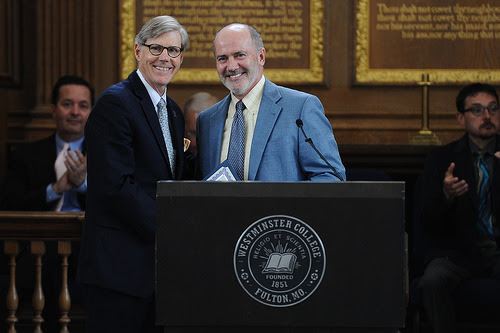
 award from pres at podium

Today, alongside these other worthy honorees, I gratefully and humbly accept Westminster’s Alumni Lifetime Achievement Award. However, my journey is not over. Each day I feel it has just begun. And I do have the courage to move on in search of the next destination. I hope I have and will continue to prove worthy of this beautiful award. I will cherish it.

the dream of westminster

I leave you now with the full text of the quote I submitted; i.e.: the rest of the story:

At Westminster College my intellect was challenged, my imagination was freed, and my passions were set ablaze. Here I made lifelong friendships that have sustained me. Here I thrived in the glow of mentors who sparked confidence and convictions. My appreciation of those who shaped my collegiate odyssey is only exceeded by the profound gratitude I have for my mother and father. My parents’ love and sacrifice allowed me to realize my Westminster College dream, which has been one of the greatest blessings in my life. 

westminster sign

The Dream of Pain Care… Enough to Cope. the Seventeenth R. Dietz Wolfe Memorial Lecture

wolfe trophy

On April 12, 2014 my Norton Healthcare colleagues bestowed upon me the 17th R. Dietz Wolfe Education Award. Hopefully my presentation of the Wolfe Lecture adequately honored the legacy of the esteemed and beloved Dr. Wolfe.

For now, I humbly offer this synopsis…

Note: This article was updated on April 1, 2015 to reflect the most recent changes to states’ regulations.


The Dream of Pain Care… Enough to Cope

   – the 17th R. Dietz Wolfe Memorial Lecture 


karen neck

the algiatrist


a private place

study her face

fix on his eyes

feel her sinew

give an embrace


innovation

radiation

numb a raw nerve

eradicate

pain creation


to interlope

to offer hope

through some relief

tiny solace

enough to cope


– James Patrick Murphy


caring hands copy 2

Contrary to what one might think, it is generally not difficult to satisfy the needs of patients with chronic pain. Like the poem says, they simply need “enough to cope.” What’s difficult is the juggling act providers must perform to keep three “balls” in the air: patients must do well, regulations must be followed, and drug abuse must be prevented. Drop any of these three balls and you fall as well.

Sometimes the fall is hard. A couple of weeks ago I learned of a pain doctor in northern Kentucky who, on the heels of lawsuits and a medical board investigation, took his own life.

Then there was Dr. Dennis Sandlin, an eastern Kentucky country doctor who was shot and killed in his office by a patient upset because the doctor would not prescribe pain pills to him without first doing a drug screen.

Unfortunately, these scenarios are not our only threat. Federal prosecutors have even tried to use overdose deaths to trigger death penalty statues when seeking indictments against doctors.

And we hear sobering statistics like:

One person dies every 19 minutes from an overdose.

One “addicted” baby is born every hour.

Opioid pain drugs cause more overdose deaths than heroin and cocaine combined.

And now more people die from drug overdose than car accidents.

blame

For this crisis physicians take the brunt of the pundits’ blame, despite the fact that more than two-thirds of the diverted medications are acquired from family, friends, and acquaintances – not from a prescription by their doctor.

So why do it? Why treat chronic pain?

Perhaps because:

Over 100 million Americans suffer from pain, and that number is growing.

Pain affects more Americans than cancer, heart disease, and diabetes combined.

Up to 75% of us endure our dying days in pain.

True. But pain care, perhaps, means a little bit more?

Hypnosis-Pain-Control

To answer that question we must first understand what pain is: an unpleasant sensory and emotional experience associated with actual or potential tissue damage or described in terms of such damage.

Second, let’s understand the distinction between addiction and abuse. Addiction is a primary, chronic disease of brain reward, motivation, memory and related circuitry. Drug abuse describes behavior born of bad decision-making; not the disease of addiction. But indeed, bad choices, bad behavior, and drug misuse lead to crime, accidents, social instability, and addiction. The developing adolescent brain is particularly susceptible to addiction, while the elderly brain is practically immune.

nucleus

Third, let’s understand the risk factors for addiction: (a) environmental, (b) patient-related, and (c) drug-related. We cannot control our patient’s environment, occupation, peer group, family history, or psychiatric issues. But we can gather information and get a feel for his or her risk level. Then we can control what we prescribe – understanding the characteristics of an “addictive” drug include the drug’s availability, cost, how fast it gets to the brain (i.e. lipid solubility), and the strength of the “buzz” it produces.

And thus we can understand how important it is to prescribe the lowest dose possible for the minimum amount of time necessary, based on the level of risk in properly screened patients; then reassess. When in doubt, prescribe even less and reassess more often. Never feel obligated to prescribe more than what you are comfortable prescribing. Pain may be the number one reason a patient visits a doctor and pain care is indeed a patient’s right; however, controlled substances for pain care are a privilege. And just like it is with prescribers, the patients have responsibilities and obligations to meet, lest they endanger their privileges. They must become good stewards of the medications they are prescribed.

eVoice pic

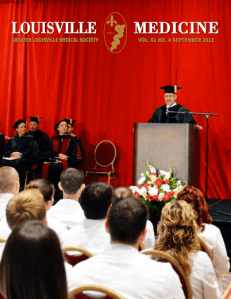
Despite these serious risks to their community, their patients, and their medical licenses, physicians regularly rise to the occasion and treat pain. Over the past year as President of the Greater Louisville Medical Society, I have written a monthly article for our journal, Louisville Medicine. The reasons that physicians so often rise are woven throughout those essays. Here are few selected passages…

*

June: We have core values that we share, and when our strategy is in line with achieving the greater good our choice of profession becomes a higher calling.

*

July: We can positively affect people’s lives in a dramatic way and on a grand scale if we commit to our shared values, reconnect and work together. It is not only possible. It is our inherent duty.

*

August: Think back to when you were happiest as a physician. It was probably when you did something that was completely selfless, without any concern that the benefit outweighed the cost, without consideration of a return on investment. 

*

September: It is why we started down this tortuous path. It’s why we gave up our youth to endless lectures, textbooks, labs, insomnia, and stress, risked our health, and stole from our family life. We went into debt, endured ridicule on morning rounds, and exposed our careers to legal ruin – all so we could commit to helping the people important to our profession: our patients.

*

October: Her strength, courage and positive attitude have always inspired me. In the cacophony of that noisy mall time stood still as our eyes met. I told her who I was and how inspiring she is to me. She smiled and we hugged. That was a moment of confluential truth. Never take for granted this precious gift.

*

November: I can never be 100 percent sure why I do what I do… but I do know the best decision is always the honest decision, regardless.

*

December: I have been blessed with the opportunity to connect intimately with people on many levels. I’ve noticed those who preserve their joy despite insurmountable challenges… They have perspective. Humans are the only organisms aware of concepts like the past, the future, beauty, love, death, and eternity.

*

January: Every imperceptible moment that passes is not only a new reality; it is rebirth, renewal, and redefinition. How will I define myself?

*

February: The place where you started is your true self; the self that is your center; the self that creates your thoughts and actions. Regardless of your life’s circumstances, success is achieved when your thoughts and actions are in harmony with the true you.

*

March: Failure can be painful. It exposes vulnerability. Physicians, myself included, can be very hard on ourselves sometimes, thinking that by intense training and adherence to protocol, preparation, and planning we are somehow immune to failure. This is, of course, not true. Failure is painful – necessary pain – providing motivation to change, evolve, and realize your role in nature’s play of perfection. Failure is not a result as much as it is a feeling. Failure is… a conduit to greatness.

*

April: I will connect with you as a person – not a diagnosis. …No phone calls, no texting, no social media are allowed to come between you and me. Only then, with laser focus, do I proceed. The job demands this. You deserve this.

*

May: There is a shortage in our profession – a shortage of practical dreamers who can remain child, student, explorer, and physician. Your profession and your patients need you to be this physician. And you need you to be this person.

*

While becoming this physician requires the acquisition of vast knowledge, no one cares what you know until they know that you care. But even the most caring physicians find it hard to keep aim at the moving target of pain regulations. Still, if we are going to do this (i.e. treat pain) we should do it right; in a manner that keeps our community safe and our medical licenses secure.

EinsteinAtBlackboard-259x300

Throughout my years of medical training I have organized data by creating poems, algorithms, and acronyms. It’s been helpful for me. Maybe they will be helpful for you. Here are some such aids I find useful in the care of pain patients.

AAAA – items to address at pain reassessments

Analgesia level (e.g. a “zero to ten” scale)

Activity level (e.g. functional goals)

Adverse effects (e.g. side effects)

Aberrancy (e.g. worrisome behavior, diversion, addiction, depression)

*

PPPP – the differential diagnosis when they ask for more medication

Pathology (e.g. new or worsening disease)

Psychology (e.g. depression, anxiety, addiction)

Pharmacology (e.g. tolerance, altered metabolism, hypersensitivity, neuropathic pain)

Police-related (e.g. unlawful diversion)

*

Kentucky has adopted (and revised) a law and numerous regulations that address the prescription of controlled substances. Here’s some helpful advice pertinent to prescribers in Kentucky:

Plan to THINK – What to do initially when prescribing for the first 90 days

Plan – Document why the plan includes controlled substances.

Teach – Educate the patient about proper use and disposal.

History – Appropriate history and physical

Informed consent – Risks need to be explained and consent documented.

No long acting – Don’t prescribe sustained release opioids for acute pain.

KASPER – Query the state’s prescription monitoring program.

*

COMPLIANCE – That which needs to be done by the 90 day mark

C          Compliance monitoring (i.e. Query KASPER, check a urine drug screen)

O         Old records (obtain more records if necessary)

M         Mental health screening (i.e. depression, anxiety, personality disorders)

P          Plan (establish specific functional goals for periodic review)

L          Legitimate working diagnosis established (i.e. objective evidence)

I           Informed consent (written) & treatment agreement (recommended)

A         ADDICTION / Diversion Screening

N         Non-controlled medications tried before going to controlled substances.

C          Comprehensive history needs to be obtained and documented.

E          Exam “appropriate” to establish baselines for follow-up.

*

PQRST – That which needs to be ongoing after the ninety-day mark

P          Periodic review (after the first month, up to physician’s judgment)

Q         Query KASPER every three months

R         Refer to specialists and consultants as necessary

S          Screen annually for general health concerns

T         Toxicology screens (i.e. urine) and pill counts randomly and at intervals dependent on the patient’s level of risk.

For more detail please review: THE CHRONIC PAIN PATIENT’S GUIDE TO KENTUCKY’S REGULATIONS” -available at https://jamespmurphymd.com/2015/02/13/pathway-to-partnership

indiana

Let’s not forget Indiana. In December 2013 emergency regulations in the Hoosier state were enacted. These were updated and filed as permanent regulations on October 7, 2014. Indiana’s permanent pain regulations apply when any of the following conditions are met:

  1. DOSE & DURATION >15 MED for >3 months

DAILY MED (“morphine equivalent dose”) greater than FIFTEEN for DURATION of more than three consecutive months

Or…

  1. QUANTITY & DURATION >60 pills for >3 months

More than SIXTY opioid pills per month for DURATION of more than THREE consecutive months

Or…

  1. PATCHES > 3 months

Any opioid skin patches (e.g., fentanyl or buprenorphine), regardless of the dose or quantity, for DURATION of more than THREE consecutive months

Or…

  1. Hydrocodone-Only Extended Release

Any hydrocodone-only extended release medication that is NOT in an “abuse deterrent” form, regardless of the DOSE, QUANTITY or DURATION

Or…

  1. TRAMADOL (My advice) >150 mgm for >3 months

Actual language in the regulations state: “If the patient’s tramadol dose reaches a morphine equivalent dose of more than sixty (60) milligrams per day for more than three (3) consecutive months.”

This tramadol dose limit seems to be overly generous. My advice: Since 150 mgm of tramadol is equivalent to a FIFTEEN (15) MED, I believe it is more consistent with the other Indiana opioid dosage limits to consider TRAMADOL greater than 150 mgm/day for more than THREE consecutive months as the dosage limit congruent with other opioid dosage limits.

Reference: The online opioid calculator from GlobalRPH http://www.globalrph.com/narcoticonv.htm

For more detail please review: THE CHRONIC PAIN PATIENT’S GUIDE TO INDIANA’S REGULATONS” -available at https://jamespmurphymd.com/2015/03/29/pathway-to-partnership-part-ii-in


Indiana Physicians have DRIVE

When these thresholds are met, Indiana physicians must DRIVE

  • DRAMATIC at the start;
  • REVIEW the plan, REVISE the plan & REFER if the morphine equivalent dose is greater than 60 mg/day;
  • INSPECT at least annually;
  • VISIT face-to-face with the patient at least every 4 months; and
  • EXAMINE a drug screen if there is any indication.

Drug screening takes up a significant portion of Indiana’s regulations. The regulations actually list eighteen “factors” to consider. But the bottom line is that a drug screen (with lab confirmation) shall be ordered: “At any time the physician determines that it is medically necessary…(for any) factor the physician believes is relevant to making an informed professional judgment about the medical necessity of a prescription.”

 Indiana Physicians are DRAMATIC

At the initial evaluation a Hoosier physician must be DRAMATIC

         Diagnosis (establish a “working diagnosis” of the painful condition)

         Records obtained (a diligent effort made to obtain & review)

         Assessment of pain level

        Mental health (and substance abuse) screening

         Activity (functional) goals need to be established

         Tests should be ordered, if indicated

          Instead of opioids, use non-opioid options first

C          Conduct a focused history and physical


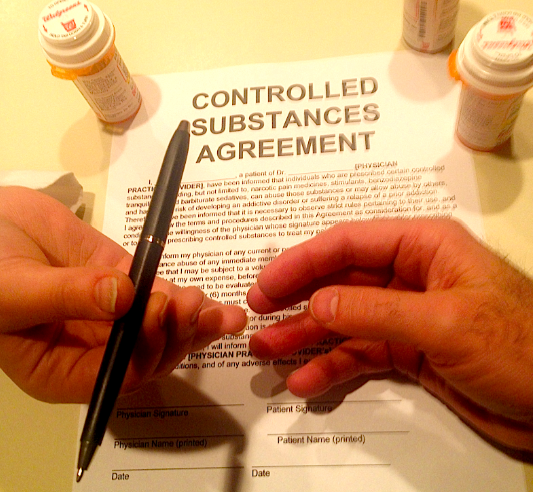
Both states emphasize the importance of treatment agreements, informed consent, and patient education. These subjects, along with helpful examples are presented in my article: “Are We In Agreement?” -available for review and download at: https://jamespmurphymd.com/2014/02/19/are-we-in-agreement

*

Regardless of one’s locale, treating pain with controlled substances can be dramatic. I’m reminded of a scene from the movie “The Music Man,” where Professor Harold Hill warned the people of River City:

prof

Either you’re closing your eyes to a situation you do not wish to acknowledge, or you are not aware of the caliber of disaster indicated by the presence of a pool hall in your community.

Well my friends, the same emotional message is often said of physicians who treat pain. This “mass-staria” can be lessened by utilizing REMS (Risk Evaluation and Mitigation Strategies). REMS has been promulgated by the FDA with the goal of decreasing the risk associated with some risky drugs – especially the opioids.

The yin and yang of REMS is education and monitoring. The informed consent, patient agreement, and educational points together serve as a foundation for a medical practice’s effective REMS program.

Two prime examples of efforts to educate prescribers are (a) the OPIOID course sponsored by the Greater Louisville Medical Society and (b) the First Do No Harm Providers Guide from Indiana’s Prescription Drug Abuse Taskforce.

opioid logo

no harm

When both prescriber and patient understand the risks and watch for the telltale signs, early intervention can keep you out of trouble, despite what the Harold Hills of the world might say.

In my experience, most people will do the right thing if they know what the right thing is. President Ronald Reagan’s Cold War policy with the Soviet Union was to “trust but verify.” When you give someone a reputation to live up to, they are positively motivated to deserve that reputation – and deserve that trust. The various measures prescribers take to verify proper use of pain medications provide boundaries that can guide and comfort all parties involved. Beyond the rules, regulations, and guidelines that make up these boundaries, lies the indisputable truth that physicians have an obligation to treat suffering. It’s our calling.

Hess obit

I’m reminded of these words from our departed colleague, Dr. Patrick Hess:


All physicians are artists,

not always in disguise.

Our way of looking at a patient,

allowing our minds to roam,

all over those perceptions of our previous life,

often forgotten,

to scan these memories,

and pull something from our unconscious mind,

all with the purpose of creating something,

something to help the patient.

This creation is,

itself,

a work of art.


When I decided to include this poem in my lecture presentation, I really had no inkling that Patrick Hess was Dr. Wolfe’s “oldest friend.” Nor was I aware Dr. Wolfe’s first love was journalism, or that he was the “bright” nephew of his beloved uncle, famed novelist Thomas Wolfe. I only knew that there was a message of conviction, hope, and inspiration that needed to be heard. I would like to think that these three kindred spirits were in attendance and that they approved of my message. And I would like to think that you will not merely approve, but will take action so that the dream of pain care, enough to cope, devoid of drug abuse, can be realized.

kel in surf


*

This summary is my own opinion and is not legal advice. Each facility and physician should consult its own legal counsel for advice and guidance.